

Alyssa's Legacy Youth in Schools Safety Alert Act or the ALYSSA Act This bill addresses school security by requiring silent panic alarms in elementary and secondary schools and reauthorizing a program to train school resource officers. First, the bill requires that each elementary and secondary school have a silent alarm to alert local law enforcement authorities and emergency responders about a safety issue at the school. Further, the bill conditions receipt of funds by a local educational agency (LEA) upon each elementary and secondary school served by the LEA being equipped with at least one panic alarm for use in a school emergency. The bill reauthorizes for FY2021-FY2030 the school resource officers program.
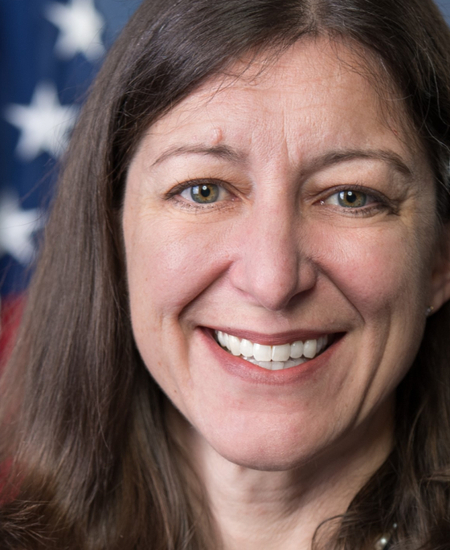
Rep. Elaine G. Luria
Sponsored bills
Law Enforcement Training for Mental Health Crisis Response Act of 2021 This bill authorizes the Office of Justice Programs within the Department of Justice to award grants to law enforcement and corrections agencies for behavioral health crisis response training.
Extreme Risk Protection Order Act of 2021 This bill establishes grants to support the implementation of extreme risk protection order laws at the state and local levels, extends federal firearms restrictions to individuals who are subject to extreme risk protection orders, and expands related data collection. Extreme risk protection order laws, or red flag laws, generally allow certain individuals (e.g., law enforcement officers or family members) to petition a court for a temporary order that prohibits an at-risk individual from purchasing and possessing firearms. Among its provisions, the bill directs the Office of Community Oriented Policing Services within the Department of Justice to establish a grant program to help states, local governments, Indian tribes, and other entities implement extreme risk protection order laws; extends federal restrictions on the receipt, possession, shipment, and transportation of firearms and ammunition to individuals who are subject to extreme risk protection orders; and requires the Federal Bureau of Investigation to compile (and later destroy) records from federal, tribal, and state courts and other agencies that identify individuals who are subject to extreme risk protection orders.
Major Richard Star Act This bill provides that combat-disabled uniformed services retirees with fewer than 20 years of creditable service may concurrently receive, without reduction, veterans' disability compensation and retired pay or combat-related special compensation.
Credit Union Board Modernization Act This bill revises the frequency of meetings required to be held by a credit union's board of directors. Specifically, the bill requires monthly meetings for new credit unions during their first five years and for credit unions with a low soundness rating. All other credit unions must hold at least six meetings annually, with at least one meeting held during each fiscal quarter. Currently, all credit union boards must meet at least once a month.
Veterans' Compensation Cost-of-Living Adjustment Act of 2022 This act requires the Department of Veterans Affairs (VA) to increase the amounts payable for wartime disability compensation, additional compensation for dependents, the clothing allowance for certain disabled veterans, and dependency and indemnity compensation for surviving spouses and children. Specifically, the VA must increase the amounts by the same percentage as the cost-of-living increase in benefits for Social Security recipients that is effective on December 1, 2022. The act requires the VA to publish the amounts payable, as increased, in the Federal Register. The VA is authorized to make a similar adjustment to the rates of disability compensation payable to persons who have not received compensation for service-connected disability or death.
This bill designates the facility of the United States Postal Service located at 3900 Crown Road Southwest in Atlanta, Georgia, as the John R. Lewis Post Office Building.
Chincoteague Water Well Replacement Act This bill authorizes the National Aeronautics and Space Administration (NASA) to reimburse the town of Chincoteague, Virginia, for costs associated with the removal, relocation, and replacement of drinking water wells located on NASA property.
Reinvesting In Shoreline Economies and Ecosystems Act of 2022 or the RISEE Act of 2022 This bill expands the amount of revenue generated from leases for energy development on federal land or submerged lands in the Outer Continental Shelf that is shared with certain states and coastal communities. For example, the bill dedicates a percentage of the revenue generated from offshore wind leases for coastal states. Currently, this revenue is deposited in the U.S. Treasury. In addition, the bill increases the amount of revenue generated from offshore oil and gas leases that is shared with states under the Gulf of Mexico Energy Security Act. States must use the funding from the revenue for specified purposes, such as coastal restoration, conservation, or infrastructure.
Maximizing Outcomes through Better Investments in Lifesaving Equipment for (MOBILE) Health Care Act This bill allows a health center that currently receives funding through a Health Resources & Services Administration Health Center Program grant to use a New Access Point grant to set up a mobile unit regardless of whether the health center also establishes a permanent health care delivery site. New Access Point grants help health centers establish new delivery sites to provide comprehensive primary care to medically underserved populations. Under current law, health centers may only use the grants to set up a mobile unit if they also establish a permanent site.