

Foreign Service Families Act of 2021 This bill increases access to career and educational opportunities for eligible family members of foreign service employees. Specifically, the Department of State must use additional hiring preferences and apply appropriate hiring standards to eligible family members seeking employment in certain civil service positions overseas. Additionally, the State Department may take other steps to improve job portability and otherwise support employment of eligible family members who work in the federal civil service or private sector jobs. The State Department must also report on the implementation of the Foreign Service Family Reserve Corps, a program that expedites hiring and onboarding processes for family members who are eligible for appointment to positions overseas. Furthermore, each federal agency must include in its telework policy the circumstances under which an employee may temporarily work from an approved location overseas. The bill also makes foreign service employees (or their spouses and dependent children) who are domiciled or assigned to a duty station in a given state eligible for in-state tuition at public institutions of higher education in that state. Such individuals retain their eligibility for in-state tuition provided they maintain continuous enrollment even if their domicile or duty station changes.
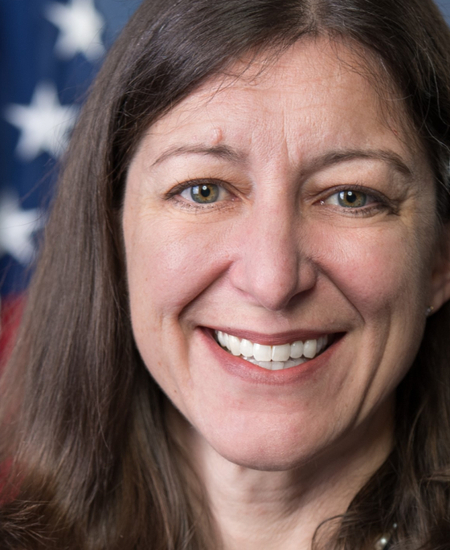
Rep. Elaine G. Luria
Sponsored bills
Build Local, Hire Local Act This bill imposes various requirements on certain federally assisted infrastructure projects. The bill also creates infrastructure-related grant programs and establishes the Buy America Bureau. Such federally assisted infrastructure projects must (1) employ a certain percentage of local workers to the maximum extent practicable; and (2) prioritize hiring certain individuals, such as veterans and those facing barriers to employment. A certain percentage of funds for these projects must be used for contracts with small businesses that have fewer than 10 employees. When applying for a contract, grant, or loan related to a project, the applying entity must disclose whether there are any rulings, such as a civil judgment, finding that the entity has violated certain federal labor and occupational safety laws in the last three years. In addition, the Department of Transportation must award grants to entities in disadvantaged and underserved communities for infrastructure projects that create connected, economically prosperous, and environmentally healthy communities. Further, the Department of Labor must provide grants to workforce development boards and industry partnerships for job training programs to train certain groups, such as individuals with barriers to employment, for jobs in targeted infrastructure industries. The bill also establishes the Buy America Bureau within the Department of Commerce to oversee project compliance with existing laws that require the use of U.S.-made materials in certain federally funded projects.
Pet Safety and Protection Act of 2021 This bill revises requirements concerning the sources of dogs and cats used by research facilities. Specifically, the bill revises the list of permissible sources of dogs and cats used by research facilities to include dogs and cats obtained (1) from a licensed dealer, (2) from a publicly owned and operated pound or shelter that meets specified requirements, (3) by donation from a person who bred and raised the dog or cat or owned it for not less than one year, or (4) from a research facility licensed by the Department of Agriculture. The requirements pertaining to sources apply to dogs and cats obtained through sales, donations, or offers. Monetary penalties are established for violations.
This resolution supports the designation of a National Warrior Call Day to encourage Americans to talk with members of the Armed Forces and veterans to connect them with support.
Strategic Lebanon Security Reporting Act This bill requires the Department of State to submit to Congress a strategy and report concerning the implementation of a United Nations (U.N.) Security Council resolution adopted on August 11, 2006, which calls for the disarming of armed groups along the Israeli-Lebanese border. Specifically, the State Department must develop a strategy for implementing the resolution. The strategy must address Lebanon's control of its southern border, cooperation between Lebanon and U.N. forces, and prevention of border tunnels. In addition, the State Department must report on the implementation of the resolution, including issues related to the Lebanese armed forces, U.S. security interests, and the extent of Hizballah's influence within Lebanon and its armed forces.
Rebuilding Communities After Disasters Act This bill requires the Small Business Administration (SBA) to increase the loan limits for the disaster loan program and to communicate certain information about the program following disasters. Specifically, the bill raises from $40,000 to $75,000 the loan amount for repair or replacement of household and personal effects and from $200,000 to $400,000 the loan amount for repair or replacement of a primary residence. Further, the bill requires the SBA to communicate through radio, television, print, and web-based outlets all relevant information needed by disaster loan applicants if a disaster is declared or the SBA declares eligibility for additional disaster assistance. (Currently, the SBA is only required to endeavor to communicate such information.) The SBA must submit a report on the disaster loan program that includes information such as the number and dollar value of program loans and the average estimated dollar value of damage sustained by borrowers.
Essential Caregivers Act of 2021 This bill requires skilled nursing facilities, nursing facilities, intermediate care facilities for the intellectually disabled, and nearby inpatient rehabilitation facilities to establish an essential caregivers program during a public health emergency. Under the program, facilities must allow each resident to select up to two essential caregivers to provide daily living assistance, emotional support, or companionship during the emergency. Facilities must afford such caregivers 12 hours of access to residents each day (or unlimited access for end-of-life care), and caregivers must agree to follow facility protocols for staff safety. Facilities may deny access to caregivers who violate protocols, subject to certain notification requirements; the Centers for Medicare & Medicaid Services must establish an appeals process relating to such decisions and may take specified enforcement actions against facilities that violate the bill's requirements.
This resolution supports the designations of National Post-Traumatic Stress Injury Awareness Month and National Post-Traumatic Stress Injury Awareness Day. The resolution supports (1) the education of members of the Armed Forces, veterans, their families, and the public about post-traumatic stress; and (2) efforts by the Department of Veterans Affairs and the Department of Defense to foster cultural change around the issue of post-traumatic stress. The resolution also encourages the leadership of the Armed Forces to support treatment of members of the Armed Forces who suffer from post-traumatic stress.
Therapeutic Fraud Prevention Act of 20 21 This bill prohibits commercial conversion therapy, which is a practice or treatment designed to change a person's sexual orientation or gender identity or otherwise change behaviors, thoughts, or expressions related to gender or sexual attraction. This prohibition does not apply to treatment that assists an individual undergoing a gender transition or facilitates identity exploration and development.
Arctic Security Initiative Act of 2021 This bill requires the Department of Defense (DOD) to conduct an assessment and implement a program related to national security interests in the Arctic region. Specifically, the Commander of the United States Northern Command of DOD must consult and coordinate with specified defense entities to conduct an independent assessment with respect to the activities and resources required for FY2023-FY2027 to achieve specified objectives related to national security interests in the Arctic region. The assessment must focus on the activities and resources required to achieve the following objectives: the implementation of the National Defense Strategy and military service-specific strategies with respect to the Arctic region; the maintenance or restoration of the comparative military advantage of the United States in response to great power competitors in the Arctic region; the reduction of the risk of executing operation and contingency plans of DOD; and to maximize execution of DOD operation and contingency plans, in the event deterrence fails. Additionally, DOD must establish the Arctic Security Initiative program to enhance security in the Arctic region, to be informed by the assessment required by this bill. DOD must annually submit an unclassified future years plan, which may include a classified annex, for the activities and resources of the program that includes specified elements (e.g., a detailed time line for achieving requirements). The plan must also be included in budget materials submitted by DOD in support of the budget of the President for FY2023.