

Rebuild America's Schools Act of 2022 This bill provides support for long-term improvements to public elementary and secondary school facilities. First, the bill sets forth allocations to states and establishes a need-based grant program for local educational agencies (LEAs) to improve school facilities. Further, the bill specifies allowable uses of grant funds, including carrying out major repairs, improving indoor air quality, and making facilities accessible to disabled individuals. Additionally, the bill requires LEAs that receive funds for new construction, modernization, or renovation projects to comply with hazard-resistance building codes and performance criteria under the WaterSense program of the Environmental Protection Agency. Further, the bill requires such LEAs to adopt certain green practices (environmental standards) and requires the use of iron, steel, and manufactured products that are made in the United States (Buy America). The bill restores school infrastructure tax credit bonds. The bill also sets forth reporting requirements, including annual reports on grant program projects and a report by the Government Accountability Office that requires a study of the geographic distribution of projects, the impact of selected projects on student and staff health and safety, and the accessibility of projects to high-poverty schools. The bill also establishes the Office of School Infrastructure and Sustainability within the Department of Education. Next, the bill extends through FY2027 the Impact Aid Construction program. Finally, the bill establishes a grant program to assist LEAs with repairing or replacing concrete foundations affected by pyrrhotite (an iron sulfide material linked to crumbling foundations).
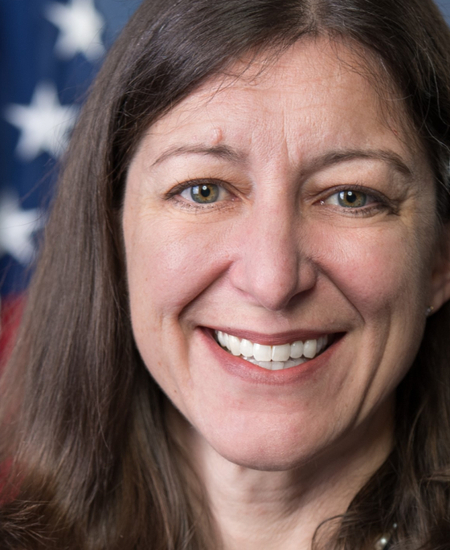
Rep. Elaine G. Luria
Sponsored bills
Maddy summaryHRES 1525 is a non-binding House resolution condemning antisemitism spread by public figures, celebrities, and officials on social media. It cites the Anti-Defamation League’s report of 2,717 antisemitic incidents in 2021 (a 34% increase from 2020) and urges influential people to use their platforms to speak out against antisemitism. The resolution calls for unity with Jewish communities and emphasizes the need for Holocaust education to combat rising hate. As a symbolic measure, it does not create new laws or penalties but formally expresses the House’s stance against antisemitic rhetoric.
VA Employee Fairness Act of 2021 This bill repeals provisions excluding any matter or question concerning professional conduct or competence; peer review; or the establishment, determination, or adjustment of employee compensation from the applicability of collective bargaining rights for Veterans Health Administration employees.
Equal Access to Green cards for Legal Employment Act of 2022 or the EAGLE Act of 2022 This bill modifies requirements related to employment-based visas and addresses related issues. The bill increases the per-country cap on family-based immigrant visas from 7% of the total number of such visas available that year to 15% and eliminates the per-country cap for employment-based immigrant visas. The bill establishes transition rules for employment-based visas such as (1) reserving a percentage of EB-2 (workers with advanced degrees or exceptional ability) and EB-3 (skilled and other workers) visas for individuals not from the two countries with the largest number of recipients of such visas, and (2) allotting a number of visas for professional nurses and physical therapists. The bill imposes additional requirements on an employer seeking an H-1B visa, such as prohibiting (1) an employer from advertising that a position is only open to H-1B applicants or that H-1B applicants are preferred, and (2) certain employers from having more than half of their employees as nonimmigrant visa workers. The Department of Labor shall create a publicly available website where an employer seeking an H-1B visa must post certain information about the open position. The bill also expands Labor's authority to review and investigate H-1B applications for fraud or misrepresentations. The bill also allows certain aliens to obtain lawful permanent resident status if the alien (1) is in the United States as a nonimmigrant, (2) has an approved immigrant visa petition, and (3) has waited at least two years for a visa.
Respect for Marriage Act This act provides statutory authority for same-sex and interracial marriages. Specifically, the act replaces provisions that define, for purposes of federal law, marriage as between a man and a woman and spouse as a person of the opposite sex with provisions that recognize any marriage between two individuals that is valid under state law. (The Supreme Court held that the current provisions were unconstitutional in United States v. Windsor in 2013.) The act also replaces provisions that do not require states to recognize same-sex marriages from other states with provisions that prohibit the denial of full faith and credit or any right or claim relating to out-of-state marriages on the basis of sex, race, ethnicity, or national origin. (The Supreme Court held that state laws barring same-sex marriages were unconstitutional in Obergefell v. Hodges in 2015; the Court held that state laws barring interracial marriages were unconstitutional in Loving v. Virginia in 1967.) The act allows the Department of Justice to bring a civil action and establishes a private right of action for violations. The act does not (1) affect religious liberties or conscience protections that are available under the Constitution or federal law, (2) require religious organizations to provide goods or services to formally recognize or celebrate a marriage, (3) affect any benefits or rights that do not arise from a marriage, or (4) recognize under federal law any marriage between more than two individuals.
Designates the facility of the United States Postal Service located at 2200 North George Mason Drive in Arlington, Virginia, as the "Jesus Antonio Collazos Post Office Building."
Uyghur Policy Act of 2021 This bill addresses human rights issues concerning the Uyghurs and other minority groups in the Xinjiang Uyghur Autonomous Region in China. The bill authorizes the establishment of a Special Coordinator for Uyghur Issues position within the Department of State. The State Department's Bureau of Educational and Cultural Affairs may, subject to appropriations, make certain funds available to human rights advocates working on behalf of Uyghurs and members of other ethnic and religious minority groups persecuted in China. The funds, if made available, shall be used to facilitate the presence of such human rights advocates at public diplomacy forums to speak on issues related to the human rights and religious freedoms of minority groups persecuted in China. The State Department must ensure that Uyghur language training is available to Foreign Service officers. It must also ensure that a Uyghur-speaking member of the Foreign Service is assigned to U.S. diplomatic and consular missions in China.
Mark O'Brien VA Clothing Allowance Improvement Act This bill modifies the Department of Veterans Affairs (VA) clothing allowance policy for veterans who, due to a service-connected disability, wear a prosthetic, use an orthopedic appliance (e.g., a wheelchair), or use a prescription skin medication that the VA determines causes irreparable damage to clothing. The bill requires the VA to continue the clothing allowance for such a veteran on an annual basis until the veteran elects to no longer receive the allowance, or the VA determines the veteran is no longer eligible for the allowance, whichever occurs first. The bill sets forth a procedure by which the VA must conduct reviews of clothing allowance claims to determine the continued eligibility of veterans. Specifically, the VA must conduct a review (1) five years after the date on which a veteran initially receives a clothing allowance and periodically thereafter, and (2) whenever the VA receives notice that the veteran no longer meets eligibility requirements. If a veteran is eligible for a clothing allowance based on a circumstance that is not subject to change, the VA does not need to review whether the veteran has continued eligibility. If the VA determines, as the result of a review of a claim, that a veteran no longer meets the eligibility requirements for a clothing allowance, the VA must provide notice of the determination and discontinue the clothing allowance. The notice must include a description of applicable actions that may be taken following the determination (e.g., filing a notice of disagreement). The bill also extends certain loan fee rates through January 15, 2031, under the VA's home loan program.
Computers for Veterans and Students Act of 2022 or the COVS Act This bill requires the General Services Administration (GSA) to transfer certain surplus computers and technology equipment to nonprofit computer refurbishers for repair and eventual distribution to schools (including home schools), veterans, seniors, and other specified populations in need. Specifically, not later than 30 days after the GSA provides state agencies for surplus property an opportunity to review surplus computer or technology equipment that has been determined to be repairable, the GSA must transfer such equipment to participating nonprofit computer refurbishers for repair, distribution, and subsequent transfer to eligible recipients.
Ensuring Phone and Internet Access Through Lifeline and Affordable Connectivity Program Act of 2022 This bill requires reporting on enrollment in the Lifeline program and the Affordable Connectivity Program. The Lifeline program is designed to reduce the cost of communications services for low-income consumers, and the Affordable Connectivity Program subsidizes the cost of broadband internet for low-income households. Both programs allow participants to qualify for assistance based on their participation in particular federal assistance programs (e.g., Medicaid or Federal Public Housing Assistance). The Federal Communications Commission must report on enrollment in both programs, including the number of participants who qualify through each of the particular federal assistance programs. Additionally, the Government Accountability Office must report on outreach and publicity efforts to promote participation in the Lifeline program and the Affordable Connectivity Program.