

Canyon's Law This bill prohibits the preparing, placing, installing, setting, deploying, or otherwise using an M-44 device on public land. An M-44 device is defined as a device designed to propel sodium cyanide when triggered by an animal, including any device that may be commonly known as an M-44 ejector device or an M-44 predator control device. No later than 30 days after the enactment of this bill, any federal, state, or county agency that has prepared, placed, installed, set, or deployed an M-44 device on public land shall remove each such device from such land.
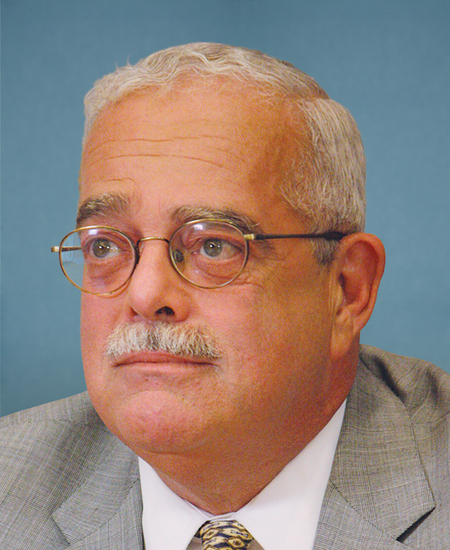
Rep. Gerald E. Connolly
Sponsored bills
LGBTQI+ and Women's History Education Act of 2022 This bill directs the National Museum of American History of the Smithsonian Institution to carry out, among other things (1) the development and national dissemination of accurate, relevant, and accessible national resources for classrooms to administer LGBTQI+ and women's history education in an inclusive and intersectional approach; (2) the development, national dissemination, and implementation of principles of sound pedagogy for administering LGBTQI+ and women's history education; and (3) the development, operation, and expansion of a teacher fellowship program to cultivate and support leaders in LGBTQI+ and women's history education. In addition to the activities described in this bill, the museum shall develop and maintain on its website content designated for educators, students, and families to improve their awareness and understanding of LGBTQI+ and women's history education.
Reproductive Health Travel Fund Act of 2022 This bill authorizes the Department of Health and Human Services to award grants to pay for travel, childcare, and other expenses of an individual seeking access to abortion services. Eligible grant recipients must be nonprofit or community-based organizations that assist individuals seeking abortion services through programs that are unbiased and medically and factually accurate. The grants may not be used to pay for abortion procedures.
No Tax Breaks for Union Busting (NTBUB) Act This bill denies employers a tax deduction for any expenditures incurred for attempting to influence their employees with respect to labor organizations or labor organization activities, such as elections, labor disputes, and collective actions. The bill requires employers to report on their attempts to influence their employees with respect to labor organizations and their activities.
Strengthening Tools to Obstruct and Prevent Fraud Act of 2022 or the STOP Fraud Act This bill addresses issues of fraud and improper payments, including by establishing the Federal Real Antifraud Unified Directorate within the Office of Management and Budget (OMB). The bill requires agencies to designate any program exceeding certain payments thresholds as a program susceptible to significant improper payments and to implement proactive analytics for a high-risk area of each designated program. The OMB must designate any program with outlays equal to or in excess of $50 billion with respect to the preceding fiscal year as a high-priority program. An agency administering a high-priority program must develop a plan to implement anti-fraud controls that include digital identity-proofing solutions, threat intelligence, and proactive analytics. Such plan must take into consideration the administrative burden of implementing such anti-fraud controls. The bill establishes in the Treasury a Program Integrity Fund. The bill modifies improper payments provisions, including by requiring compliance reports by inspectors general of executive agencies at least every three fiscal years (currently, annually).
Justice in Power Plant Permitting Act This bill addresses renewable energy use and facility contracting requirements and also establishes the Just Energy Transition Fund to, among other purposes, support projects to replace plants that are denied under the revised Clean Air Act permitting process established by this bill.
Improving Digital Identity Act of 2021 This bill establishes the Improving Digital Identity Task Force to establish a government-wide effort to develop secure methods for governmental agencies to validate identity attributes to protect the privacy and security of individuals and support reliable, interoperable digital identity verification in the public and private sectors. The National Institute of Standards and Technology (NIST) shall develop and periodically update a framework of standards, methodologies, procedures, and processes as a guide for federal, state, and local governments to follow when providing services to support digital identity verification. The Department of Homeland Security (DHS) shall award grants to states to upgrade systems that provide drivers' licenses or other types of identity credentials to support the development of highly secure, interoperable state systems that enable digital identity verification. The Government Accountability Office shall submit to Congress a report that includes (1) an analysis of legal and regulatory requirements with respect to the collection and retention of Social Security numbers by nongovernmental organizations, and (2) a recommendation on the necessity and effectiveness of any such legal and regulatory requirement analyzed and the use of a form of identification other than a Social Security number. DHS shall issue binding operational directives to federal agencies to implement (1) the Digital Identity Guidelines published by NIST; and (2) the memorandum of the Office of Management and Budget issued on May 21, 2019, which includes the subject Enabling Mission Delivery through Improved Identity, Credential, and Access Management .
This resolution expresses support for Finland and Sweden's historic decision to apply to the North Atlantic Treaty Organization (NATO). The resolution also opposes any attempt by the Russian government to act in an adverse way in response to Finland and Sweden's decision to apply to join NATO. Finally, the resolution calls on the member states of NATO to formally support the accession of Finland and Sweden into NATO.
Ensuring Women's Right to Reproductive Freedom Act This bill prohibits anyone acting under state law from interfering with a person's ability to access out-of-state abortion services. ( Abortion services includes the use of any drugs that are approved to terminate pregnancies and any health care services related to an abortion, whether or not provided at the same time or on the same day.) Specifically, the bill prohibits any person acting under state law from preventing, restricting, impeding, or retaliating against health care providers who provide legal abortion services to out-of-state residents, any person or entity who helps health care providers to provide such services, any person who travels to another state to obtain such services, any person or entity who helps another person travel to another state to obtain such services, or the movement in interstate commerce of drugs that are approved to terminate pregnancies. The Department of Justice may enforce this bill through civil actions; the bill also establishes a private right of action for violations.
Access for Veterans to Records Act of 2022 This bill directs the Office of the Archivist of the United States to submit to Congress a comprehensive plan for reducing the backlog of requests for records from, and improving the efficiency and responsiveness of operations at, the National Personnel Records Center. Such plan must include an estimate of the number of backlogged record requests for veterans; target time frames to reduce the backlog; a detailed plan for using existing funds to improve technology infrastructure, including secure access to appropriate agency federal records, to prevent future backlogs; actions to improve customer service for requesters; measurable goals with respect to the comprehensive plan and metrics for tracking progress toward such goals; and strategies to prevent future record request backlogs, including backlogs caused by an event that prevents employees of the center from reporting to work in person. The office must submit updates of such plan at specified intervals.