

Maddy summaryHR 1601, the Defending Ukraine’s Territorial Integrity Act, prohibits U.S. federal funds from being provided to any foreign government that recognizes Russian-occupied Ukrainian territories (including Crimea, Donetsk, Kherson, Luhansk, and Zaporizhzhia) or supports Russia's annexation of Ukraine. The bill requires the Secretary of State to publish a list of such countries on the State Department website and allows limited waivers for national security reasons. It directly affects foreign governments that formally acknowledge Russian control over these regions, restricting their access to U.S. aid. The law aims to uphold U.S. policy against recognizing Russia's territorial claims in Ukraine through concrete funding restrictions.
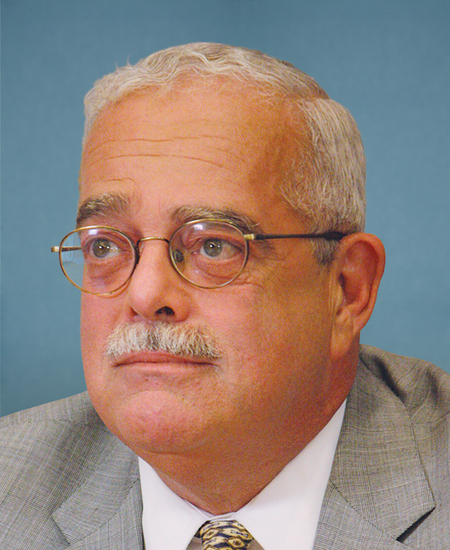
Rep. Gerald E. Connolly
Sponsored bills
Maddy summaryHR 1600, the Crimea Annexation Non-Recognition Act, prohibits U.S. federal departments and agencies from taking any action that implies recognition of Russia's claim to Crimea, its airspace, or territorial waters. The bill states U.S. policy explicitly rejects recognizing Russia's sovereignty over Crimea and requires federal agencies to avoid any actions that could be interpreted as such recognition. This directly affects all U.S. federal agencies by restricting their activities related to Crimea, such as diplomatic engagements or aid programs that might imply acceptance of Russia's control. The bill does not impose new sanctions or funding changes but establishes a clear policy stance on diplomatic recognition.
Maddy summaryHR 670, the Lady Liberty Act of 2025, sets a minimum annual refugee admission target of 125,000 people for fiscal years after 2026. It directly affects the U.S. refugee resettlement program by overriding the President’s usual authority to set admission numbers. The key provision amends the Immigration and Nationality Act to require that the number of refugees admitted each year cannot fall below 125,000, regardless of presidential determination. This creates a fixed minimum floor for refugee admissions starting in fiscal year 2027.
Maddy summaryThe Protect America's Workforce Act cancels an executive order issued on March 27, 2025, that excluded certain groups from federal labor-management relations programs, making it legally unenforceable. It also ensures that all collective bargaining agreements between federal agencies and labor unions, which were active as of March 26, 2025, remain fully effective until their agreed terms expire. This directly affects federal agencies, labor unions, and the employees covered by these agreements. The bill prevents federal funds from being used to implement the canceled executive order while preserving existing labor agreements.
Veteran Fraud Reimbursement Act of 2025 This act modifies the procedures by which the Department of Veterans Affairs (VA) reissues misused benefits to a beneficiary, including by requiring the VA to establish methods and timing with respect to determining whether an instance of misuse by a fiduciary is the result of negligence by the VA. The act also provides that if a beneficiary predeceases a reissuance, the VA must pay the amount to a surviving beneficiary in the same method as certain other VA benefits are paid upon the death of a beneficiary. Under the act, the VA may not withhold the reissuing of a benefit payment by reason of a pending determination regarding the VA's negligence in relation to the instance of misuse by a fiduciary. Additionally, the VA is not required to make a determination regarding its negligence for each instance of misuse by a fiduciary of all or part of an individual's benefit paid to such fiduciary.
Maddy summaryHR 1512, the Taiwan Assurance Implementation Act, requires the U.S. Department of State to conduct a comprehensive review of its Taiwan-related guidelines every five years and submit updated reports to Congress within 90 days of each review. This amendment to the 2020 Taiwan Assurance Act mandates that the State Department’s reports include all information required under existing rules and explain how updated guidelines align with prior policy goals. The bill directly affects the Department of State (which must conduct reviews) and Congress (which receives the reports for oversight). It does not change U.S. policy toward Taiwan but establishes a formal, recurring process for updating and reporting on State Department guidance governing U.S.-Taiwan relations.
Maddy summaryThis bill allows Inspector General (IG) offices to continue operating during government funding gaps. It permits IGs to spend funds at the previous year's funding rate to cover basic operations and oversee programs that remain active when Congress hasn't passed new appropriations. The law directly affects federal IGs and the agencies they monitor, ensuring oversight continues without interruption during shutdowns. It amends existing law to provide this authority without requiring new appropriations.
Maddy summaryHR 1560, the Postal Supervisors and Managers Fairness Act of 2025, requires the U.S. Postal Service to formally negotiate pay and benefits changes with supervisors' organizations. It mandates that the Postal Service provide written proposals to these organizations 60 days before pay decisions expire or after new collective bargaining agreements affecting supervisor pay are reached. The bill also shortens dispute resolution timelines, requiring binding final decisions within 15 days of a panel's recommendation. This directly affects postal supervisors and managers covered under recognized bargaining organizations. The law changes the negotiation process but does not alter specific pay rates or benefits.
Maddy summaryThis bill amends federal law to expand appeal rights for certain postal employees to the Merit Systems Protection Board (MSPB). It specifically applies to postal workers in supervisory, professional, technical, clerical, administrative, or managerial roles who are not represented by a union under Section 1203 of federal labor law. The key change clarifies that these employees can now directly appeal personnel decisions (like discipline or termination) to the MSPB, rather than relying solely on internal postal processes. This modifies eligibility criteria for MSPB appeals under Title 39 of the U.S. Code.
Maddy summaryThis bill establishes fairer pay and retirement benefits for federal firefighters. It requires that overtime hours worked during a firefighter's regular schedule be included in retirement calculations, improving retirement payouts. The bill also sets a maximum 60-hour regular workweek for federal firefighters, to be defined by the Office of Personnel Management within one year. These changes directly affect federal firefighters by addressing pay disparities with municipal firefighters and enhancing recruitment and retention.