

Elijah E. Cummings Lower Drug Costs Now Act This bill establishes several programs and requirements relating to the prices of prescription drugs. In particular, the bill requires the Department of Health and Human Services (HHS) to negotiate prices for certain drugs (current law prohibits HHS from doing so). Specifically, HHS must negotiate maximum prices for single-source, brand-name drugs that lack certain generics and that are among either the 125 drugs that account for the greatest national spending or the 125 drugs that account for the greatest Medicare spending. HHS must negotiate the prices of at least 25 such drugs for 2024 and of at least 50 such drugs thereafter and must also negotiate prices for certain newly approved drugs and for insulin products. The negotiated prices must be offered under Medicare and may also be offered under private health insurance unless the insurer opts out. The negotiated maximum price may not exceed (1) 120% of the average price in Australia, Canada, France, Germany, Japan, and the United Kingdom; or (2) if such information is not available, 85% of the U.S. average manufacturer price. Drug manufacturers that fail to comply with the bill's negotiation requirements are subject to civil and tax penalties. The bill also makes a series of additional changes to Medicare prescription drug coverage and pricing, including by (1) requiring drug manufacturers to issue rebates to the Centers for Medicare & Medicaid Services for covered drugs that cost $100 or more and for which the average manufacturer price increases faster than inflation, and (2) capping annual out-of-pocket spending under the Medicare prescription drug benefit. The bill also requires drug manufacturers to report specified information for certain high-cost drugs, and it provides funds for opioid epidemic initiatives and biomedical research.
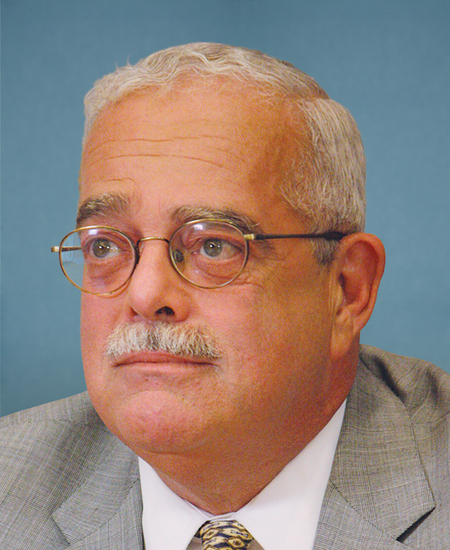
Rep. Gerald E. Connolly
Sponsored bills
This resolution urges (1) the President to issue a proclamation recognizing Earth Day; and (2) governments and people to continue building upon the Paris Agreement and other efforts to ensure that future generations inherit a livable, sustainable, and ecologically rich planet. The resolution reaffirms that immediate action is needed to reduce greenhouse gas emissions and ameliorate environmental injustices in order to protect our planet, public health, and overall well-being of all people and wildlife. In addition, it encourages the American people to mark Earth Day by working to address environmental challenges, educate others about the need for year-round action, and honor the stewardship ethic for which Senator Gaylord Nelson stood.
Job Creation through Energy Efficient Manufacturing Act This bill requires the Department of Energy (DOE) to establish a Financing Energy Efficient Manufacturing Program that provides grants for energy efficiency improvement projects in the manufacturing sector. The following types of entities are eligible for grants: state energy offices; Native American tribes; nonprofit organizations that focus on providing energy efficiency or renewable energy services and receive funding from states, tribes, or utilities; electric cooperative groups; or entities with a public-private partnership under the Hollings Manufacturing Extension Partnership. The entities that receive grants must then distribute subgrants to certain small- or medium-sized manufacturers (employing no more than 750 employees) located in the same states as the entities. Recipients of subgrants must carry out projects that (1) improve the energy efficiency of the manufacturers, and (2) develop technologies that reduce electricity or natural gas use by the manufacturers. The bill establishes labor requirements for projects that receive grant funding under this bill. In addition, grant projects may only use iron and steel products that are produced in the United States, unless DOE grants a waiver of the requirement.
Agriculture Resilience Act This bill establishes, expands, and revises multiple programs and activities of the Department of Agriculture (USDA) primarily to reduce carbon emissions from the agriculture sector. Specifically, USDA must finalize and implement a plan to achieve net-zero emissions from the sector by 2040. USDA must periodically review and revise the plan, as necessary, and annually report on its implementation. Additionally, the bill expands the scope of various USDA research, extension, and education programs; conservation programs; and livestock programs to incorporate climate change adaption and mitigation. Expanded activities include efforts to improve soil health and preserve farmland and grassland. Further, the bill changes programs that support renewable energy in rural areas to address carbon emissions in the agriculture sector. Among these changes, the bill provides statutory authority for a program for reducing methane emissions from livestock waste that is carried out by the Environmental Protection Agency and transitions the program to USDA. The bill also addresses food waste, for example, by (1) standardizing the voluntary labels used by food producers to indicate the date by which food should be used or discarded, and (2) making composting activities eligible for support through USDA conservation programs. Moreover, the bill establishes grants to reduce and prevent food waste in landfills and in schools.
Healthy Flights Act of 202 1 This bill provides authority for the Federal Aviation Administration (FAA) to impose requirements on passenger and cargo air travel to protect the health and safety of air carrier crewmembers and passengers and to reduce the spread of infectious diseases through the aviation system during public health emergencies. For example, the bill (1) sets forth requirements relating to the use of masks and other protective equipment for airline passengers and certain airline employees; (2) requires the FAA to provide certain employees, including any air traffic controller and airway transportation systems specialists, with masks and other protective equipment; and (3) mandates the development of a national aviation preparedness plan to ensure the aviation system is prepared to respond to epidemics and pandemics of infectious diseases. Additionally, the bill directs each air carrier operating an aircraft with a seating capacity of 20 or more to implement appropriate measures on a flight to reduce the likelihood of any passenger or crewmember contracting an infectious disease. The FAA must enter into an agreement with the National Academies to conduct a study on the transmission of infectious diseases, such as respiratory diseases, in the cabins of passenger airplanes. Further, the bill (1) establishes a Center of Excellence for Infectious Disease Response and Prevention in Aviation within the FAA; and (2) directs the FAA to revise airline passenger briefing requirements, including briefings during a national emergency pertaining to a respiratory disease.
Justice is Not For Sale Act of 2021 This bill prohibits private for-profit entities from operating confinement facilities (e.g., prisons) or providing electronic monitoring of released persons at the federal, state, and local levels. The bill also establishes various requirements related to the standards of detention and availability of services at confinement facilities. The bill provides for the establishment of limits on the fees and charges for financial services (e.g., money transfer services), caps on the rates charged for communications services, detention standards and oversight requirements related to the detention of noncitizens, and community-based alternatives to the detention or separation of family units apprehended under immigration authorities.
Lady Liberty Act of 2021 This bill sets a floor of 125,000 for the maximum number of refugees who may be admitted into the United States each fiscal year. Under current law, the President sets the annual cap on refugee admissions at the beginning of each fiscal year. (The cap for FY2021 is 15,000, and the cap for FY2020 was 18,000.)
Hadiya Pendleton and Nyasia Pryear-Yard Gun Trafficking and Crime Prevention Act of 2021 This bill makes trafficking in firearms a stand-alone criminal offense. A person who commits or conspires to commit a gun trafficking offense is subject to criminal penalties—a prison term of up to 20 years (or up to 25 years, if the person also acted as an organizer), a fine, or both.
Black Maternal Health Momnibus Act of 2021 This bill directs multi-agency efforts to improve maternal health, particularly among racial and ethnic minority groups, veterans, and other vulnerable populations. It also addresses maternal health issues related to COVID-19 (i.e., coronavirus disease 2019). The Department of Health and Human Services (HHS) and other specified departments must address the social determinants of maternal health, which include child care, housing, food security, transportation, and environmental conditions. The bill also extends to 24 months postpartum eligibility for the Special Supplemental Nutrition Program for Woman, Infants, and Children. Additionally, HHS and other agencies must take actions to grow and diversify the maternal health workforce. To increase access to maternity care, HHS and other agencies must (1) award specified grants; (2) test an alternative payment model for perinatal care under Medicaid and the Children's Health Insurance Program (CHIP); and (3) support training, technology, and telehealth initiatives. The bill also increases research and data collection on maternal morbidity and mortality, particularly among tribal populations and minority groups. The Bureau of Prisons and the Department of Justice must establish programs to improve maternity care for incarcerated populations. The Medicaid and CHIP Payment and Access Commission must also report on the impact of Medicaid ineligibility for pregnant and postpartum prisoners. Additionally, as a condition for certain grants, states and territories must have laws limiting the use of restraints on pregnant individuals in prisons. The bill also directs activities to mitigate adverse maternal health outcomes associated with climate change and to improve maternal vaccination rates.
Debt-Free College Act of 2021 This bill establishes measures to cover the unmet financial need of students who are enrolled at certain institutions of higher education (IHEs). Unmet financial need refers to the difference between a student's cost of attendance and the student's expected family contribution, plus any federal, state, and local sources of grant aid. In addition, the bill makes certain Dreamer students (i.e., students who have been granted Deferred Action for Childhood Arrivals status) eligible for federal financial aid. First, the bill requires the Department of Education (ED) to award grants for state-federal partnerships with a goal of providing debt-free college for all eligible students at in-state public IHEs. Eligible student refers to an individual who (1) is enrolled or is eligible to enroll in an in-state public IHE, (2) demonstrates eligibility for a Federal Pell Grant through institutional financial-aid eligibility forms, and (3) demonstrates satisfactory academic progress. Next, the bill requires ED to award grants to historically Black colleges and universities and minority-serving institutions to cover the unmet financial need of enrolled students. ED must establish an office to administer grants and provide oversight. In addition, the bill makes Dreamer students who entered the United States before the age of 16 and who meet certain educational criteria eligible for federal student aid.