

Health Equity and Access under the Law for Immigrant Women and Families Act of 2021 or the HEAL Immigrant Women and Families Act of 20 21 This bill extends Medicaid and Children's Health Insurance Program coverage to individuals lawfully present in the United States who otherwise meet eligibility requirements. Individuals granted federally authorized presence also are required to maintain minimum essential health insurance coverage and are eligible for health insurance exchanges, reduced cost sharing, premium subsidies, and premium tax credits.
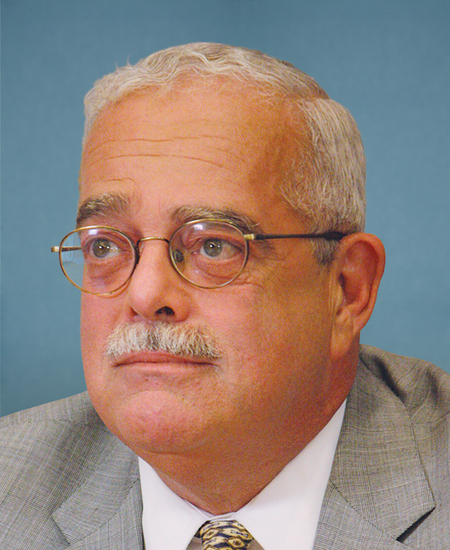
Rep. Gerald E. Connolly
Sponsored bills
Clean Ocean And Safe Tourism Anti-Drilling Act or the COAST Anti-Drilling Act This bill prohibits the Department of the Interior from authorizing the exploration, development, or production (i.e., offshore drilling) of oil or natural gas in specified planning areas of the Outer Continental Shelf along the Atlantic Coast, including the Straits of Florida.
Integrity Committee Transparency Act of 2021 This bill addresses issues regarding inspectors general (IGs) and the Council of the Inspectors General on Integrity and Efficiency (CIGIE) Integrity Committee. The committee is charged with investigating allegations of wrongdoing against office of IG officials. The committee must notify Congress when an allegation of wrongdoing made by a Member of Congress is closed without referral for investigation. The bill requires CIGIE to report semiannually to Congress and the President on the activities of the committee. The bill requires the appointment of a former IG to the committee. An IG must refer to the committee any allegation of wrongdoing against that IG.
Federal Advisory Committee Transparency Act This bill revises provisions regarding federal advisory committees, including to (1) require designation of committee members as special government employees or representatives, (2) apply the Federal Advisory Committee Act (FACA) to subcommittees and subgroups, and (3) require publication of certain information about advisory committees. The bill requires appointments to advisory committees to be made without regard to political affiliation or campaign activity, unless required by federal statute. Each agency, prior to appointing members to an advisory committee, must solicit nominations for potential committee members. The agency shall solicit nominations at least once every two years. The bill provides statutory authority for the designation of advisory committee members as special government employees (if they are appointed to exercise their individual best judgement) or representatives (if they are appointed to represent a nongovernment entity). Agencies may not designate committee members as representatives to avoid federal ethics rules. Each agency shall make available on its website specified information about each of the agency's advisory committees, including membership, meeting minutes, and notices of future meetings. The General Services Administration must also publish this information. The bill revises requirements for Advisory Committee Management Officers, including to require them to be senior officials with expertise in implementing FACA. The Government Accountability Office shall report on agency compliance with FACA.
Mental Health Services for Students Act of 2021 This bill provides specific statutory authority for the Project AWARE (Advancing Wellness and Resiliency in Education) State Educational Agency Grant Program that is administered by the Substance Abuse and Mental Health Services Administration. The program supports school-based mental health services, including screening, treatment, and outreach programs.
Suicide Training and Awareness Nationally Delivered for Universal Prevention Act of 20 21 or the STANDUP Act of 2021 This bill requires state, tribal, and local educational agencies that receive grant funding for priority mental-health needs, including through the Project AWARE State Education Agency Grant Program, to establish and implement evidence-based suicide awareness and prevention training policies. In addition, the Substance Abuse and Mental Health Services Administration, in coordination with the Department of Education and Bureau of Indian Education, must provide educational agencies with best practices for these trainings.
Buyback Our Safety Act This bill directs the Office of Justice Programs within the Department of Justice to establish a gun buyback grant program for state, local, and tribal law enforcement agencies.
Healthy Maternity and Obstetric Medicine Act or the Healthy MOM Act This bill expands health insurance coverage availability for pregnant individuals. It requires health insurers, health insurance exchanges, and group health plans to offer a special enrollment period to pregnant individuals. The special enrollment period offered by an insurer or exchange must begin when the pregnancy is reported to the insurer or exchange. The special enrollment period offered by a group health plan must begin when the pregnancy is reported to the plan or is confirmed by a health care provider. The bill also makes pregnancy a qualifying life event for the purpose of enrolling in a federal employee health benefit plan. Additionally, a group health plan or health insurer that covers dependents must provide coverage for maternity care to all covered individuals. Any individual who is eligible for Medicaid and is, or becomes, pregnant maintains such eligibility for one year after the end of the pregnancy. The bill revises the range in which a state must establish a maximum level of family income for pregnant women and infants to be eligible for Medicaid. The upper limit of the range is eliminated and the lower limit is set to the level in place on January 1, 2014.
Accelerating Kids' Access to Care Act This bill requires state Medicaid programs to establish a process through which qualifying out-of-state providers may enroll as participating providers without undergoing additional screening requirements. Among other things, a qualifying provider must (1) serve minors, or adults whose condition began as a minor; and (2) have previously been screened for Medicare participation or for participation in the Medicaid program of the state in which the provider is located.
Equity in Neuroscience and Alzheimer's Clinical Trials Act of 2021 or the ENACT Act of 2021 This bill sets out activities and requirements to increase the participation of underrepresented populations in research and clinical trials for Alzheimer's disease and related dementias. Specifically, the National Institute on Aging (NIA) must establish and provide technical assistance to Alzheimer's research centers located in areas with higher concentrations of minority groups. These centers must establish diagnostic and treatment clinics designed to serve minority, rural, and other underserved populations; operate clinical trials; and carry out public outreach to encourage members of minority populations to participate in clinical trials and research. Additionally, the NIA must disseminate information to members of minority populations about participating in clinical trials and take other actions to enhance diversity with respect to the Alzheimer's research that it conducts or supports. The bill also directs the NIA to increase diversity among Alzheimer's researchers by encouraging the participation of individuals who are from groups that are underrepresented in clinical, behavioral, and social sciences.