

Youth, Peace, and Security Act of 2021 This bill requires the Department of State to coordinate the development and implementation of a whole-of-government strategy to promote the inclusive and meaningful participation of youth in peace building and conflict prevention, management, and resolution, as well as post-conflict and recovery efforts. The President must appoint a coordinator who, in addition to being responsible for leading the implementation of such strategy, is authorized to provide grants, emergency assistance, and technical assistance to eligible youth-led civil society organizations and youth peace-building implementers. The bill also authorizes the President to provide development assistance to expand training, technical assistance, and grants managed and controlled by youth leaders.
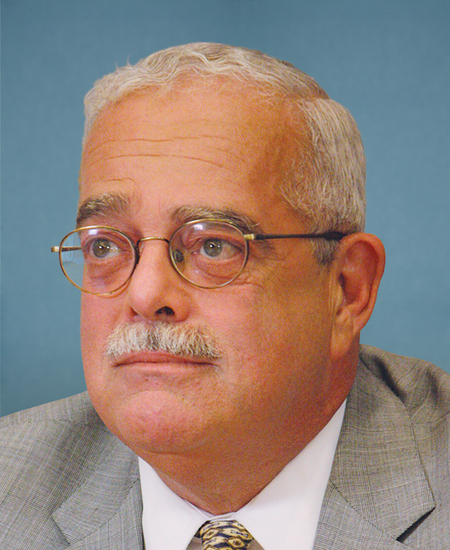
Rep. Gerald E. Connolly
Sponsored bills
Diversity and Inclusion at the Department of State Act This bill establishes a new position and requires other activities to promote diversity and inclusion in the Department of State. The bill creates the presidentially-appointed position of Chief Diversity and Inclusion Officer in the Office of the Deputy Secretary of State to, among other activities, develop a strategic plan to guide implementation of diversity and inclusion efforts and support State Department personnel from traditionally underrepresented groups. The officer reports directly to the Secretary of State. Additionally, the State Department must establish a Diversity and Inclusion Leadership Council to coordinate applicable strategic plans, initiatives, and policies. The bill also modifies merit selection processes for promotions, performance pay, and related matters to promote diversity and inclusion in the Foreign Service. Specifically, it adds factors (e.g., testimony from peers and subordinates or demonstrated support for diversity and inclusion) that may be considered in recommendations and rankings related to a Foreign Service officer's performance. The State Department must also establish a mentorship program for entry- and mid-level members of the Foreign Service and periodically offer a Senior Executive Service development program to members of the civil service in the top two pay grades. Senior Executive Service members serve as high-level managers within federal agencies. The bill requires the State Department to report on its diversity and inclusion efforts, as well as demographic information about members of boards that make personnel decisions and candidates for the Senior Executive Service.
City and State Diplomacy Act This bill establishes within the Department of State the Office of City and State Diplomacy, which shall coordinate federal support for engagement by state and municipal governments with foreign governments. The head of the office shall be the Ambassador-at-Large for City and State Diplomacy, who shall be appointed by the President with the advice and consent of the Senate.
Captive Primate Safety Act This bill limits the trade and possession of nonhuman primates. For example, the bill prohibits most individuals from owning a nonhuman primate as a pet.
Bear Protection Act of 2021 This bill prohibits the import, export, and commerce of bear viscera or related products except for limited acts carried out solely to enforce wildlife protection laws.
Exercise and Fitness for All Act This bill requires the Architectural and Transportation Barriers Compliance Board (Access Board) to develop guidelines for exercise or fitness service providers regarding the provision of accessible exercise or fitness equipment. The Access Board must subsequently promulgate regulations, consistent with the guidelines, requiring that exercise or fitness classes and instruction provided by fitness providers are accessible to people with disabilities. The regulations also must require that each provider make at least one employee available to assist people with disabilities with using the accessible exercise or fitness equipment.
United States Commitment to Peacekeeping Act of 2021 This bill repeals a limit on U.S. funding for, details U.S. policy objectives for, and revises reporting requirements related to United Nations (U.N.) peacekeeping operations. Under current law, the United States may contribute no more than 25% of the assessed costs for a U.N. peacekeeping operation; the bill eliminates that funding restriction. The Department of State must instruct the U.S. Permanent Representative to the United Nations to advance the U.S. policy objectives outlined in the bill for standardizing performance assessments of, diversifying the funding base for, and other aspects of U.N. peacekeeping operations. The bill modifies annual reports about U.S. participation in U.N. activities by eliminating a requirement to report on costs of U.N. peacekeeping operations in the prior fiscal year and by adding a requirement to report on U.S. efforts to implement reforms of U.N. peacekeeping. Additionally, the State Department must report on (1) strengthening the role of conflict prevention in U.N. missions, and (2) transitioning U.N. peacekeeping operations to host-country security forces.
Saving America's Pollinators Act of 2021 This bill addresses the use of certain pesticides and the health and status of native bees and other pollinators. First, the bill requires the Environmental Protection Agency (EPA) to establish a Pollinator Protection Board to develop an independent review process for pesticides that pose a threat to pollinators and their habitats. All active ingredients and pesticide products that contain one or more specified neonicotinoid pesticides must be deemed to generally cause unreasonable adverse effects to the environment. Under the bill, the registration of all uses of neonicotinoid pesticides must be immediately and permanently canceled. The EPA must revoke any tolerance or exemption that allows the presence of a neonicotinoid pesticide, or any pesticide chemical residue that results from neonicotinoid pesticide use, in or on food. The continued sale or use of existing stocks of neonicotinoid pesticides is prohibited, and the EPA may not register any such pesticides under the Federal Insecticide, Fungicide and Rodenticide Act. The bill requires the Department of the Interior, the EPA, and the Department of Agriculture to coordinate monitoring activities and report on the health and population status of native bees and other pollinators. Finally, a state or federal agency may be granted an exemption to use neonicotinoid pesticides if the board votes that use of the pesticide is warranted (1) in an emergency situation to avert significant risk to threatened or endangered species, (2) to quarantine invasive species, or (3) to protect public health.
Closing the Meal Gap Act of 202 1 This bill revises the requirements for calculating Supplemental Nutrition Assistance Program (SNAP) benefits. The bill increases the minimum SNAP benefit and requires benefits to be calculated using the value of a low-cost food plan. The Department of Agriculture (USDA) must determine the requirements for the low-cost food plan, which is the diet required to feed a family of four, consisting of a man and a woman 19-50 years of age, a child 6-8 years of age, and a child 9-11 years of age. USDA must (1) reevaluate and publish the market baskets of the plan by January 1, 2027, and every five years thereafter, based on current food prices, food composition data, consumption patterns, and dietary guidance; and (2) make adjustments to the plan to account for household size, changes in the cost of the diet, and the costs of food in specified areas. The bill modifies the requirements for calculating household income to determine SNAP eligibility by (1) authorizing a standard medical expense deduction for households containing an elderly or disabled member, and (2) eliminating the cap on the excess shelter expense deduction. The bill eliminates certain work requirements for SNAP. The requirements apply to able-bodied adults who are ages 18-49 and have no dependent children. The bill allows Puerto Rico, American Samoa, and the Northern Mariana Islands to participate in SNAP. Currently, the three territories receive block grants instead of participating in SNAP.
Access to Congressionally Mandated Reports Act This bill requires the Government Publishing Office (GPO) to establish and maintain a publicly available online portal containing copies of all congressionally mandated reports. A federal agency must submit a congressionally mandated report and specified information about the report to the GPO between 30 and 45 days after submission of the report to either chamber or to any congressional committee or subcommittee. Upon the written request of the chair of a congressional committee or subcommittee to the GPO, a report submitted to that committee or subcommittee shall not be submitted or published on the portal. Federally chartered corporations, the Government Accountability Office, and any elements of the intelligence community are excluded from the requirements of this bill. The Office of Management and Budget must issue guidance to federal agencies on the bill's requirement for agencies to submit copies of congressionally mandated reports and related information to the GPO.