

Government Integrity is Not for Trade or Sale Act of 2021 or the GIFTS Act of 2021 This bill directs any federal entity accepting a gift or donation in exchange for naming rights to include certain conditions in the contract or agreement to accept such gift or donation. The entity may revoke any rights to name, designate, or redesignate the subject of any gift or donation contained in the contract without incurring liability or creating an obligation to return the gift or donation if a certain period of time has elapsed and in the reasonable view of such entity a criminal act or an ethical violation has been committed; and because of the act, the revocation of such rights is necessary to protect the reputation or integrity of the federal government.
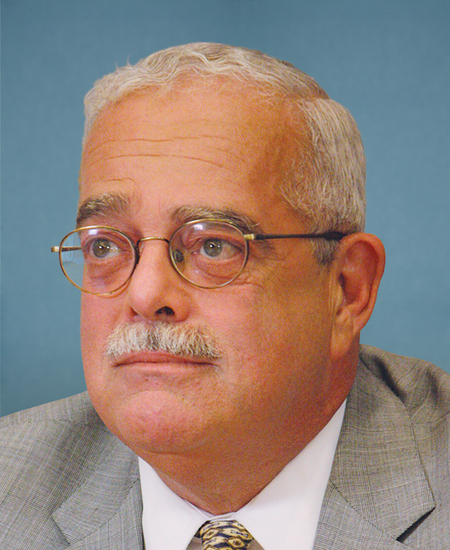
Rep. Gerald E. Connolly
Sponsored bills
Public Service Freedom to Negotiate Act of 20 21 This bill provides minimum collective bargaining rights and procedures for public employees and prohibits strikes by certain public safety workers. The Federal Labor Relations Authority (FLRA) shall determine for each state whether the laws of such state substantially provide for each of the minimum standard collective bargaining rights and procedures specified by this bill, including the right of public employees and supervisory employees to self-organize, form or join a labor organization, or collectively bargain. The FLRA must issue rules and take actions to establish and administer bargaining rights and procedures for those states that do not substantially provide for them. No employers, emergency services employees, or law enforcement officers may engage in a lockout, strike, or any other organized job action that is likely to result in a measurable disruption of the delivery of emergency or public safety services. Furthermore, no labor organization may be the cause of a violation of such prohibition.
This bill modifies the procedures by which the Department of Veterans Affairs (VA) reissues misused benefits to a beneficiary, including by requiring the VA to establish methods and timing with respect to determining whether an instance of misuse by a fiduciary is the result of negligence by the VA.
This resolution calls for the creation of a Green New Deal with the goals of achieving greenhouse gas and toxic emissions reductions needed to stay under 1.5 degrees Celsius of warming; establishing millions of high-wage union jobs and ensuring economic security for all; investing in infrastructure and industry; securing clean air and water, climate and community resiliency, healthy food, access to nature, and a sustainable environment for all; and promoting justice and equality. The resolution calls for accomplishment of these goals through a 10-year national mobilization effort. The resolution also enumerates the goals and projects of the mobilization effort, including building smart power grids (i.e., power grids that enable customers to reduce their power use during peak demand periods); upgrading all existing buildings and constructing new buildings to achieve maximum energy and water efficiency; removing pollution and greenhouse gas emissions from the transportation and agricultural sectors; cleaning up existing hazardous waste and abandoned sites; ensuring businesspersons are free from unfair competition; and providing higher education, high-quality health care, and affordable, safe, and adequate housing to all.
This resolution recognizes the opportunity for Black Maternal Health Week to raise national awareness of the state of Black maternal health in the United States.
Safeguarding Human Rights in Arms Exports Act of 2021 or the SAFEGUARD Act of 2021 This bill establishes specified measures to prevent the sale, export, or transfer of defense articles or defense services to foreign countries for use in violation of international humanitarian law or internationally recognized human rights. These measures include (1) prohibiting arms sales to countries committing genocide or war crimes, (2) requiring a consideration of human rights practices and democratization in any foreign country to which an arms sale is contemplated, and (3) providing for congressional oversight of arms exports to foreign countries wherein certain human rights violations have occurred.
Fifth Amendment Integrity Restoration Act of 2021 or the FAIR Act This bill revises federal laws governing civil asset forfeiture. Specifically, the bill makes various changes to the general rules governing civil forfeiture proceedings. Among the changes, the bill requires counsel for an indigent property owner regardless of whether the owner requests counsel, raises the evidentiary standard from preponderance of the evidence to clear and convincing evidence, and sets forth factors courts must consider in determining whether a forfeiture of facilitating property is excessive. Additionally, the bill eliminates statutory authority for equitable sharing and directs forfeiture proceeds to be deposited into the general fund of the Treasury instead of the Department of Justice Assets Forfeiture Fund. Finally, the bill makes changes with respect to the civil forfeiture of money involved in structuring offenses (i.e., structuring currency transactions to evade currency reporting requirements). Among the changes, the bill specifies an evidentiary standard of knowingly for structuring offenses, and requires a prompt probable cause hearing following the seizure of money involved in a structuring offense.
Families Belong Together Act This bill provides various immigration benefits for eligible alien parents (or legal guardians) and minor children who were separated by the Department of Homeland Security (DHS) between January 20, 2017, and January 20, 2021. Generally, to be an eligible parent or minor child under this bill, the alien must not be inadmissible for certain crime- or security-related grounds, though DHS may waive certain grounds for humanitarian or public interest reasons. Furthermore, an eligible child who was separated as a minor remains eligible for the immigration benefits after reaching majority. DHS must grant humanitarian parole into the United States to an eligible alien who requests such parole, regardless of whether the alien is physically present in the United States. An eligible alien in the United States may apply for lawful permanent resident status. U.S. Citizenship and Immigration Services shall grant a qualifying alien's lawful permanent resident status within 30 days of receiving the alien's application. An alien who receives lawful permanent resident status under this bill shall be eligible for benefits and services that are available to an alien who is admitted as a refugee. Certain annual numerical limitations shall not apply to aliens who receive lawful permanent resident status under this bill. If an alien seeks judicial review of a denial of an application for lawful permanent resident status under this bill, the Department of Justice shall appoint counsel to represent that alien upon request.
Green New Deals for Cities Act of 2021 This bill authorizes the Department of Housing and Urban Development to provide funding to states, local governments, or Native American nations to carry out Green New Deal projects, such as projects to clean up pollution, climate adaptation measures, or conservation projects on family farms. In order to receive such funding, a state, local government, or Native American nation must have a local Green New Deal program proposal and meet other requirements as specified by the bill. A proposal must contain certain commitments, including a commitment to zero greenhouse gas emissions by 2030 through a fair and just transition for all communities and workers.
Maddy summaryHR 2584, the Judiciary Act of 2021, would change the structure of the U.S. Supreme Court by increasing the number of associate justices from eight to twelve. This bill directly affects the Supreme Court's composition and operations, requiring a quorum of eight justices instead of six to conduct business. The key provision amends Title 28 of the U.S. Code to reflect these numerical changes to the Court's membership and quorum requirements. This is a procedural change to the Court's statutory structure, not a policy affecting the public.