

Maddy summaryThis bill adds Medicare coverage for multi-cancer early detection screening tests (blood or biological tests analyzing cell-free DNA) starting January 1, 2028. It directly affects Medicare beneficiaries aged 68 and older (starting in 2028, with the age limit increasing by 1 year annually), requiring tests to be FDA-cleared and deemed reasonable/necessary by the Secretary for early cancer detection across multiple organ sites. Payment will initially match current stool DNA test rates before 2031, then shift to a lower rate or new payment system after 2031, with limits preventing more than one test per year. The bill explicitly states it does not alter coverage for existing cancer screenings like breast, colorectal, or prostate cancer tests.
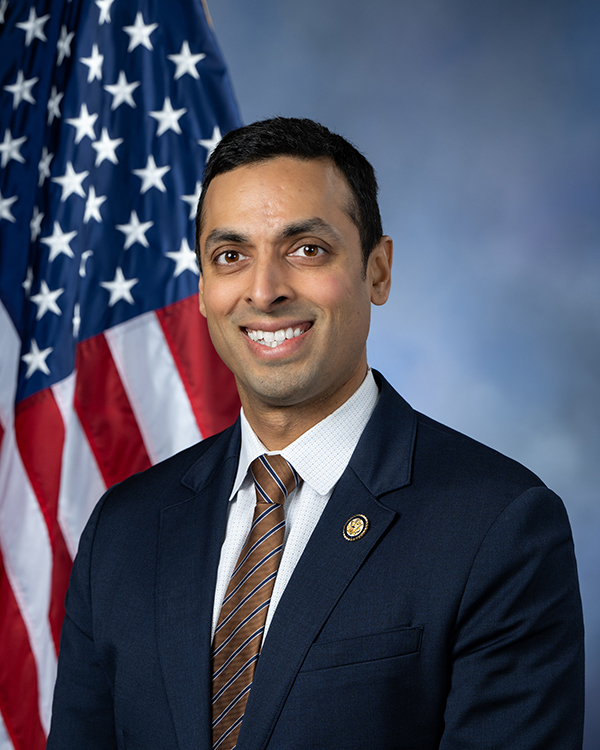
Rep. Suhas Subramanyam
Sponsored bills
Maddy summaryThis bill requires five federal agencies (Housing and Urban Development, Agriculture, Veterans Affairs, Treasury, and the Federal Housing Finance Agency) to coordinate housing data sharing and jointly propose policy solutions. Within one year of enactment, the agencies must establish a shared agreement and submit a report to Congress addressing mortgage costs, housing construction barriers, local regulations, insurance availability, down payment assistance, and disaster resilience. The report will outline specific proposals to improve housing affordability and market efficiency. This is a procedural bill focused on interagency coordination, not direct policy changes or benefits for homeowners.
Fair Pay for Federal Contractors Act of 2025 This bill provides back pay to employees of federal contractors who lost pay due to a lapse in appropriations (i.e., government shutdown) in FY2026. Specifically, the bill provides appropriations for federal agencies that are subject to a lapse in appropriations in FY2026 to adjust the price of contracts to compensate federal contractors for providing back pay to employees who were affected by the lapse in appropriations. The agencies must adjust the price of any contract for which the contractor stopped, suspended, delayed, or interrupted all or part of the work under the contract due to the lapse in appropriations. The price adjustment must compensate the contractor for reasonable costs incurred to (1) compensate employees who were furloughed or laid off, were not working, or experienced a reduction of hours or compensation due to the lapse in appropriations; or (2) restore paid leave taken by employees during the lapse in appropriations if the contractor required or permitted employees to use paid leave as a result of the lapse in appropriations. The maximum amount of weekly compensation of an employee for which an adjustment may be made under this bill may not exceed the lesser of (1) the employee's actual weekly compensation, or (2) $1,442 (or a lesser amount pro-rated for an employee who works less than 40 hours per week). The bill also requires the Office of Federal Procurement Policy to submit a report to Congress on the adjustments made under this bill.
Maddy summaryHR 5572, the Help FEDS Act, ensures federal employees who must work during government shutdowns (but aren't paid due to the shutdown) can access unemployment benefits through their state's program. The bill requires states to allow these "excepted" employees to apply for and receive unemployment compensation during fiscal years 2026-2027, while also mandating repayment if they later receive pay under a separate federal provision. The federal government will reimburse states 100% of the unemployment benefits paid to these employees plus related administrative costs, funded from the Unemployment Trust Fund. This directly affects federal workers performing emergency work during shutdowns and state unemployment systems managing these claims.
Maddy summaryThis bill prevents federal agencies from terminating employees during a government shutdown caused by a lapse in discretionary funding. It prohibits removals of civil service employees at any agency affected by a funding gap, and if an employee is wrongfully removed, they can return to their job with back pay once funding resumes. The law directly protects all federal employees covered by the civil service system during shutdowns. It applies automatically to any funding lapse, requiring automatic reinstatement without needing separate legal action.
Maddy summaryHR 5614, the "If You See It, Squish It Act of 2025," directs the Secretary of Agriculture to launch a national public awareness campaign about spotted lanternflies. The campaign requires placing TV, radio, and billboard ads in high-incidence areas to inform the public that spotted lanternflies are invasive pests threatening agriculture and to encourage people to kill any they encounter. It specifically mandates these public service announcements and allows the Secretary to use additional awareness tools. This bill directly affects residents in regions with spotted lanternfly infestations by providing information on identifying and addressing the pest.
Maddy summaryHR 5545, "Katie Meyer’s Law," requires colleges and universities receiving certain federal funds to provide students facing alleged violations of campus conduct codes with the option of having an adviser during disciplinary proceedings. Institutions must adopt policies allowing students to choose an outside adviser or request an independent adviser from the school, who must be trained on campus procedures and can participate in hearings as an advocate. The law also mandates that advisers may receive bi-weekly updates with student permission and ensures students are informed of their adviser options in written notifications. This directly affects students in disciplinary cases at participating higher education institutions across the U.S.
Maddy summaryThis bill removes time limits for victims to file civil and criminal cases related to child sexual abuse, exploitation, and sex trafficking. It requires states to eliminate statutes of limitations for these cases and revive previously time-barred claims, allowing victims a minimum of 2 years or until age 55 to pursue legal action (Section 3, Section 4). The bill provides federal grants to states that adopt these reforms, with funding tiers based on how many changes they implement (e.g., eliminating civil/criminal time limits or reviving expired claims) (Section 4). It directly affects survivors of child sexual abuse by expanding their legal options to seek justice, addressing findings that most victims delay reporting until decades later.
Maddy summaryHJRES 126 is a joint resolution directing the removal of U.S. Armed Forces from military operations against specific targets without congressional authorization. It requires the President to end hostilities involving: (1) foreign terrorist organizations designated after February 20, 2025; (2) countries where those groups operate; or (3) non-state groups trafficking illegal drugs, unless Congress explicitly authorizes such actions through a war declaration or specific law. The bill cites recent military strikes on vessels as examples of unauthorized hostilities and emphasizes that drug trafficking alone does not justify military force under the War Powers Resolution. This resolution applies to all current and future operations targeting these groups without prior congressional approval.
Maddy summaryHRES 746 is a non-binding resolution passed by the U.S. House of Representatives condemning all political violence - including attacks on elected officials, candidates, and public figures - and rejecting rhetoric that dehumanizes opponents. It specifically urges law enforcement to investigate and prosecute such violence, calls on public officials and media to avoid inflammatory language, and references recent incidents like the 2025 assassination of activist Charlie Kirk and targeted shootings of Minnesota legislators. The resolution does not create new laws but formally expresses the House’s commitment to protecting public servants and promoting peaceful political discourse. It directly affects the House’s public stance and serves as a call to action for officials, media, and communities to foster civil engagement.