

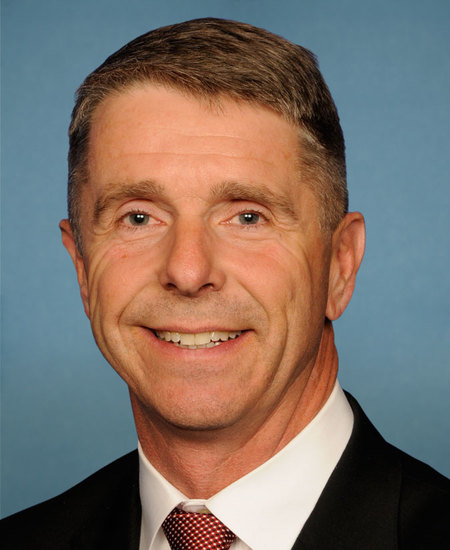
Photo of Robert J. Wittman
R United States House · District 1 · Virginia On the 2026 ballot

Rep. Robert J. Wittman

Compare
Total votes
2,837
all sessions
Attendance
97%
85 missed
Near the chamber average
With party
96%
of cast votes
Near the chamber average
Bipartisan score
2%
crosses aisle rarely
Near the chamber average
Sponsored
937
bills & resolutions
Near the chamber average
Committees
6
assignments
937 bills and resolutions

Sponsored bills

Total
937
Primary
88
Co-sponsor
849
This page
937
matching current filters
Co-sponsor HR 4008
In committee · United States House · Co-sponsor
Protecting Americans’ Retirement Savings Act

Maddy summaryThis bill prohibits retirement plan fiduciaries from investing in "sanctioned entities" or "foreign adversary entities" (as defined by specific U.S. government lists), including Chinese military-linked companies or entities tied to countries designated as national security threats. It requires retirement funds to disclose all holdings in these entities, including their value, the entity names, and the listing reasons. Existing investments held before the law's enactment may continue under specific conditions, and binding pre-enactment contracts can be fulfilled until expiration or termination. The law directly affects retirement plan managers and the funds they oversee, mandating new transparency about restricted investments.

In committee Jun 12, 2023 1 co-sponsor
Co-sponsor HR 3996
In committee · United States House · Co-sponsor
To amend the Internal Revenue Code of 1986 to impose a tax on the acquisition of United States agricultural interests by disqualified persons.

Maddy summaryHR 3996 would impose a 60% tax on the purchase of U.S. agricultural interests (including farmland and livestock production land) by individuals or entities from designated "countries of concern," such as China, Russia, Iran, North Korea, Cuba, and Venezuela. It requires transaction closers (like title companies or attorneys) to report buyer details to the IRS and request an affidavit confirming the buyer is not a disqualified person. If a disqualified person fails to provide the affidavit, the closing entity must inform them of the tax obligation, and the buyer would owe 60% of the purchase price. The tax does not apply to U.S. citizens, lawful permanent residents, or U.S. public companies not controlled by disqualified persons.

In committee Jun 9, 2023 1 co-sponsor
Co-sponsor HR 3940
In committee · United States House · Co-sponsor
Neighborhood Homes Investment Act

Maddy summaryThe Neighborhood Homes Investment Act creates a new tax credit for developers who rehabilitate or build affordable homes in distressed communities. The credit is calculated based on the difference between rehabilitation costs and the sale price, with homes required to be sold at affordable prices to qualified homeowners with incomes up to 140% of the local median family income. The bill targets specific "qualified census tracts" defined by high poverty rates, low homeownership, and below-average home values. Developers must ensure homes are sold to qualified homeowners who use them as primary residences for at least five years, with additional safeguards to prevent program abuse and ensure fair housing practices.

In committee Jun 9, 2023 1 co-sponsor
Co-sponsor HR 3889
In committee · United States House · Co-sponsor
No Federal Funding for CCP Spying and Persuasion In Education Settings (SPIES) Act of 2023

Maddy summaryThis bill prohibits federal funding for US colleges and universities that host Confucius Institutes - Chinese government-run cultural centers. It directly affects institutions participating in these programs by cutting their eligibility for certain federal funds under the National Defense Authorization Act. The key mechanism removes a previous waiver that allowed exceptions for such institutions, making the funding ban absolute. The policy change applies to all covered federal funding streams without exception.

In committee Jun 7, 2023 1 co-sponsor
Co-sponsor HJRES 46
In committee · United States House · Co-sponsor
Providing for congressional disapproval under chapter 8 of title 5, United States Code, of the rule submitted by the National Marine Fisheries Service relating to "Endangered and Threatened Wildlife and Plants; Regulations for Listing Endangered and Threatened Species and Designating Critical Habitat".

Maddy summaryHJRES 46 is a congressional resolution rejecting a specific rule issued by the National Marine Fisheries Service (NMFS) under federal environmental regulations. The resolution seeks to block the NMFS rule (published June 2022) that updated procedures for listing endangered/threatened species and designating critical habitats. If passed, this resolution would make the NMFS rule legally ineffective under federal law. The bill directly affects how the NMFS manages species protection programs but does not change the underlying environmental laws. This is a procedural disapproval resolution, not a new policy.

In committee Jun 5, 2023 1 co-sponsor
Co-sponsor HJRES 49
In committee · United States House · Co-sponsor
Providing for congressional disapproval under chapter 8 of title 5, United States Code, of the rule submitted by the United States Fish and Wildlife Service relating to "Endangered and Threatened Wildlife and Plants; Endangered Species Status for Northern Long-Eared Bat".

Maddy summaryHJRES 49 is a congressional disapproval resolution targeting a specific rule by the U.S. Fish and Wildlife Service that would have listed the northern long-eared bat as an endangered species under the Endangered Species Act. The rule, published in the Federal Register in November 2022 (87 Fed. Reg. 73488), would have imposed federal protections and restrictions on activities affecting the bat's habitat. This resolution, if passed, would nullify that rule, preventing the bat from receiving federal endangered species status and associated legal safeguards. It directly affects the regulatory status of the northern long-eared bat and activities regulated under the Endangered Species Act.

In committee Jun 5, 2023 1 co-sponsor
Co-sponsor HR 3347
In committee · United States House · Co-sponsor
Protect Lifesaving Anesthesia Care for Veterans Act of 2023

Maddy summaryThis bill prohibits the Department of Veterans Affairs from changing its anesthesia care policies to allow nurse anesthetists (CRNAs) to provide anesthesia independently without a physician anesthesiologist. It specifically blocks implementation of a 2016 proposed rule that would have expanded CRNAs' authority in VA facilities. The law maintains current requirements that physician anesthesiologists must oversee or provide anesthesia care for veterans during surgical procedures. Emergency orders for veteran safety during surgery remain permitted under the bill's exception clause.

In committee Jun 2, 2023 1 co-sponsor
Co-sponsor HR 3792
In committee · United States House · Co-sponsor
U.S.-Israel Partnership and Abraham Accords Enhancement Act of 2023

Maddy summaryHR 3792 extends U.S. security funding for Israel through 2028 (Section 3) and expands energy cooperation to include advanced nuclear technologies and carbon capture (Section 5). It requires annual reports on regional security partnerships involving Israel (Section 6) and ensures countries in the Abraham Accords can access U.S. development programs (Section 8). The bill also mandates reports on diplomatic efforts against ICC investigations targeting the U.S. and Israel (Section 10) and encourages people-to-people programs to strengthen the Abraham Accords (Sections 7, 9). These provisions directly affect Israel’s diplomatic engagement, security partnerships, and economic cooperation in the Middle East.

In committee Jun 1, 2023 1 co-sponsor
Co-sponsor HR 3702
In committee · United States House · Co-sponsor
Access Technology Affordability Act of 2023

Maddy summaryThis bill creates a new tax credit for expenses related to "qualified access technology for the blind" under the Internal Revenue Code. It allows taxpayers to claim a credit of up to $2,000 per year (adjusted for inflation) for costs paid for hardware, software, or IT that converts visual information into formats usable by blind individuals, covering the taxpayer, their spouse, or a dependent who is blind. The credit is limited to $2,000 over any three consecutive tax years per blind individual and expires after 2028. It directly affects blind individuals and their families who purchase qualifying assistive technology. The credit cannot be claimed for expenses already covered by other tax deductions or credits.

In committee May 25, 2023 1 co-sponsor
Co-sponsor HR 3639
In committee · United States House · Co-sponsor
After Hours Child Care Act

Maddy summaryHR 3639, the After Hours Child Care Act, creates a new Child Care and Development Innovation Fund to improve access to child care for parents working nontraditional hours (such as evenings, nights, or weekends). The bill directly affects working parents with young children and eligible child care providers who serve these families. It authorizes competitive grants (ranging from $25,000 to $500,000) to providers or partnerships with businesses/community organizations to expand after-hours care programs, establish workplace child care, or improve existing facilities. Grantees must cover 25% of costs, and the Secretary of Health and Human Services must report biennially on program impact to Congress.

In committee May 24, 2023 1 co-sponsor
Showing 501 to 510 of 937 bills
Previous 1 … 50 51 52 … 94 Next