

Maddy summaryHR 8066, the Ammunition Supply Chain Act, requires the Secretary of the Army to submit a report to Congress within 180 days of enactment. The report must assess the U.S. supply chain for ammunition components like nitrocellulose and smokeless gunpowder, focusing on improving sourcing, avoiding single points of failure, managing global demand risks, and leveraging private sector capacity. This bill directly affects the Department of Defense and ammunition manufacturers by mandating a review of supply chain vulnerabilities. It is procedural in nature, establishing a reporting requirement without creating new regulations or funding.
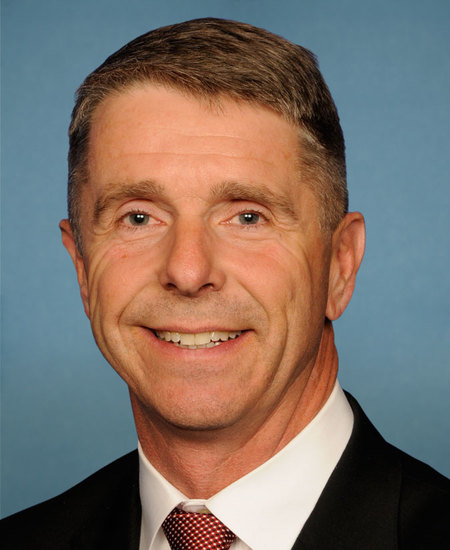
Rep. Robert J. Wittman
Sponsored bills
Maddy summaryHR 8061, the Crime Victims Fund Stabilization Act of 2024, ensures stable funding for the Crime Victims Fund by directing certain False Claims Act collections into it from 2024 through 2029. Specifically, it adds a provision requiring that amounts collected under the False Claims Act (excluding whistleblower rewards and government reimbursement for damages) be deposited into the fund during this period. This directly affects crime victims who rely on the fund for services like counseling and emergency aid, as it prevents potential shortfalls in funding. The bill makes a concrete policy change by redirecting specific federal civil penalties into the fund, rather than altering the fund's existing purposes or eligibility rules.
Maddy summaryHR 6046, the Standing Against Houthi Aggression Act, requires the Secretary of State to designate Ansarallah (the Houthis) as a Foreign Terrorist Organization within 90 days of enactment and mandates the President to impose sanctions under existing authorities (Executive Orders 13224 and 13780) against Ansarallah and its members, agents, or affiliates. The bill directly affects Ansarallah and any foreign entities linked to it by triggering U.S. sanctions. Key provisions set strict 90-day deadlines for both the designation and sanctions implementation. The law focuses on reversing a prior designation revocation and enforcing existing legal mechanisms against the group.
Maddy summaryHR 3649 establishes a 5-year pilot program to provide hyperbaric oxygen therapy (HBOT) to veterans diagnosed with traumatic brain injury (TBI) or post-traumatic stress disorder (PTSD). The program, limited to three Veterans Health Administration networks, offers HBOT through VA-approved providers using FDA-approved or investigational medical devices. Funding comes solely from donations to a dedicated VA HBOT Fund, with no annual budget constraints. This bill directly affects eligible veterans seeking this specific treatment option, but does not guarantee long-term coverage beyond the pilot's five-year term.
Maddy summaryHRES 1148 is a resolution passed by the U.S. House of Representatives that condemns the Iranian government for supporting terrorism, regional proxy conflicts, and internal suppression of dissent - including its crackdown on protests following Mahsa Amini's death in 2022. It specifically calls for maintaining sanctions against Iran, supporting the Iranian Resistance's Ten-Point Plan (which advocates for a democratic, secular, nonnuclear Iran), and protecting Iranian political refugees in Albania. The resolution also affirms the Iranian people's right to self-determination under international law and urges the U.S. to recognize their struggle for freedom. As a non-binding resolution, it does not create new laws but formally expresses congressional stance.
Maddy summaryThis bill amends U.S. Code to lower the minimum student enrollment required for high schools to establish or maintain a Junior Reserve Officers' Training Corps (JROTC) program, reducing the threshold from 100 to 50 students. It directly affects high schools seeking to start or sustain JROTC units, particularly those with smaller student populations. The key provision changes the existing requirement under Title 10, U.S. Code, making it easier for schools to qualify for JROTC participation. This is a straightforward policy adjustment to existing law, with no additional funding or program changes specified.
Maddy summaryThis bill removes a barrier preventing Selected Reserve and National Guard members (who also work as civilian government employees) from enrolling in TRICARE Reserve Select health insurance. It modifies a law to allow these service members to purchase TRICARE Reserve Select plans starting January 1, 2025, instead of the previous 2030 effective date. The change aims to provide healthcare continuity during military mobilization and improve overall military readiness by ensuring consistent access to affordable coverage. It directly affects eligible reserve component members and their families who currently cannot enroll in TRICARE Reserve Select while having Federal Employee Health Benefits (FEHB) coverage.
Maddy summaryThis bill reauthorizes and enhances NOAA's Chesapeake Bay Office to strengthen science-based management of the Bay ecosystem. It establishes new programs for integrated coastal monitoring (collecting data on water quality and habitats), expands school-based education initiatives for students and teachers, and funds habitat restoration projects targeting species like oysters, blue crabs, and submerged vegetation. The bill authorizes $17 million in fiscal year 2024, increasing to $22.6 million by 2027, and requires biennial reports to Congress on progress. These provisions directly support NOAA's work with the Chesapeake Executive Council, state agencies, and educational institutions to advance the Chesapeake Bay Program's goals.
Maddy summaryHR 7699 requires the Director of National Intelligence to develop a strategy within 90 days for sharing government intelligence with private companies involved in U.S. critical mineral projects abroad. The strategy must address threats like foreign adversary tactics undermining U.S. projects, risks from foreign government control of entities engaging in deceptive activities, and economic espionage targeting intellectual property. It also mandates an implementation plan for the strategy within 30 days of its completion, to be submitted to congressional intelligence committees. This bill directly affects U.S. companies operating in critical mineral supply chains and aims to enhance information sharing to protect national security interests.
Maddy summaryThis non-binding resolution expresses the House's support for in vitro fertilization (IVF) access, noting that 19% of women in the U.S. face infertility challenges. It states IVF is necessary for those unable to conceive naturally, emphasizes policies enabling family growth, and recognizes "life is precious." The resolution does not create new laws or change regulations but symbolically affirms the House's position on IVF as a vital medical option for individuals struggling with infertility. It was introduced by Rep. Chavez-DeRemer and others on February 29, 2024.