

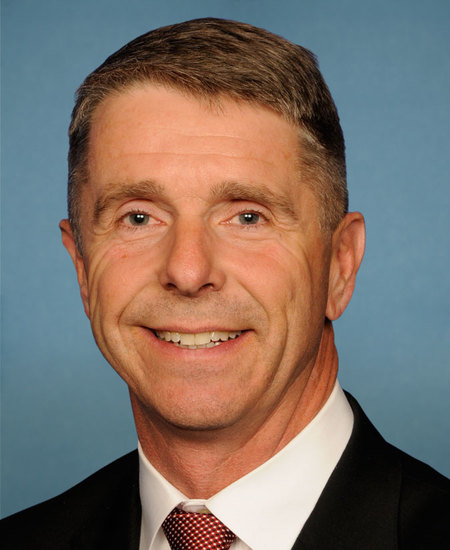
Photo of Robert J. Wittman
R United States House · District 1 · Virginia On the 2026 ballot

Rep. Robert J. Wittman

Compare
Total votes
2,837
all sessions
Attendance
97%
85 missed
Near the chamber average
With party
96%
of cast votes
Near the chamber average
Bipartisan score
2%
crosses aisle rarely
Near the chamber average
Sponsored
937
bills & resolutions
Near the chamber average
Committees
6
assignments
937 bills and resolutions

Sponsored bills

Total
937
Primary
88
Co-sponsor
849
This page
937
matching current filters
Co-sponsor HR 6319
In committee · United States House · Co-sponsor
911 SAVES Act of 2024

Maddy summaryHR 6319 (the 911 SAVES Act of 2023) requires the Office of Management and Budget to reclassify public safety telecommunicators as "Protective Service Occupations" within 30 days of enactment. This change corrects their current misclassification in the federal Standard Occupational Classification (SOC) system, which is used for statistical data on jobs. The bill directly affects how these professionals - critical in emergency calls involving missing children, active threats, and officer safety - are officially categorized in government workforce data. It does not create new benefits or funding but aims to better recognize their lifesaving role through accurate federal job classification.

In committee Sep 19, 2024 1 co-sponsor
Co-sponsor HR 358
In committee · United States House · Co-sponsor
Small Business Regulatory Flexibility Improvements Act

Maddy summaryThis bill requires federal agencies to better assess how regulations impact small businesses by expanding the types of regulations that must be analyzed, requiring consideration of both negative and positive economic effects, and adding detailed analysis requirements. It expands the definition of "small entity" to include tribal organizations, adds requirements for analyzing land management plans and certain tax-related rules, and gives the Small Business Administration's Chief Counsel additional authority to review agency rules. The bill also includes a provision to waive fines for small businesses' first-time paperwork violations, aiming to make the regulatory process more responsive to small business needs.

In committee Sep 19, 2024 1 co-sponsor
Co-sponsor HJRES 163
In committee · United States House · Co-sponsor
Providing for congressional disapproval under chapter 8 of title 5, United States Code, of the rule submitted by the Environmental Protection Agency relating to "New Source Performance Standards for Greenhouse Gas Emissions From New, Modified, and Reconstructed Fossil Fuel-Fired Electric Generating Units; Emission Guidelines for Greenhouse Gas Emissions From Existing Fossil Fuel-Fired Electric Generating Units; and Repeal of the Affordable Clean Energy Rule".

Maddy summaryThis bill (HJRES 163) is a congressional disapproval resolution targeting an Environmental Protection Agency (EPA) rule finalized on May 9, 2024. The EPA rule established new emissions standards for greenhouse gases from fossil fuel power plants (both new and existing) and repealed a previous rule called the Affordable Clean Energy Rule. The resolution would block this EPA rule from taking effect by invoking the Congressional Review Act (Chapter 8 of Title 5, U.S. Code). If passed, it would prevent the EPA rule from being enforced, directly affecting fossil fuel power plant operators and the EPA’s regulatory authority over emissions.

In committee Sep 18, 2024 1 co-sponsor
Co-sponsor HR 7891
In committee · United States House · Co-sponsor
Kids Online Safety Act

Maddy summaryThe Kids Online Safety Act (HR 7891) would require major online platforms (with high revenue or user numbers) to implement safety features for children and teens, including default protective settings, parental controls, and age verification. It would mandate platforms to report annually on risks to minors and their safety measures, and prohibit advertising harmful products (like tobacco, alcohol, or gambling) to minors. The bill directly affects social media platforms, online video games, and video streaming services that are used by minors, with the goal of preventing mental health harms, compulsive usage, and cyberbullying.

In committee Sep 18, 2024 1 co-sponsor
Co-sponsor HR 6969
In committee · United States House · Co-sponsor
To direct the Joint Committee on the Library to procure a statue of Benjamin Franklin for placement in the Capitol.

Maddy summaryThis bill directs the Joint Committee on the Library to procure a statue of Benjamin Franklin and place it in the U.S. Capitol. The committee must secure the statue within two years of the bill's enactment and install it in a public-accessible location by January 1, 2026, for viewing during Capitol Visitor Center guided tours. It is a procedural measure with no policy changes or direct impact on constituents or legislation.

In committee Sep 18, 2024 1 co-sponsor
Co-sponsor HR 4758
Passed · United States House · Co-sponsor
Accelerating Kids’ Access to Care Act

Maddy summaryThis bill modifies Medicaid and CHIP rules to let eligible out-of-state healthcare providers enroll without extra state screening. It applies to providers already in Medicare or their home state program, with low fraud risk, serving children under 21 with complex medical conditions. Providers would receive 5 years of enrollment under this streamlined process, eliminating state-level barriers. The change directly affects children seeking specialized care across state lines and the providers who serve them.

Passed Sep 18, 2024 1 co-sponsor
Co-sponsor HR 705
In committee · United States House · Co-sponsor
Veterans 2nd Amendment Protection Act

Maddy summaryHR 705, the Veterans 2nd Amendment Protection Act, prohibits the Department of Veterans Affairs (VA) from automatically sending veterans' personal information to the national background check system solely because a fiduciary (like a guardian) manages their benefits. It specifically blocks the VA from sharing this data with the Justice Department without a court order finding the veteran a danger to themselves or others. This directly affects veterans who have a fiduciary appointed due to incapacity but are not deemed dangerous, preventing automatic barriers to firearm purchases based only on their fiduciary status. The bill amends 38 U.S.C. § 5501B to require judicial authorization before such data can be transmitted.

In committee Sep 16, 2024 1 co-sponsor
Co-sponsor HR 9565
In committee · United States House · Co-sponsor
Securing Infrastructure from Adversaries Act

Maddy summaryThis bill prohibits U.S. Department of Transportation agencies from procuring or using LiDAR technology produced by companies from China, Iran, North Korea, or Russia in federal contracts or projects. It applies to all Department of Transportation contracts and funded projects starting June 30, 2026, affecting contractors and grantees receiving transportation funding. Contractors must certify they will not use prohibited LiDAR, with limited waivers permitted only for national security needs. The law directly restricts the use of specific foreign technology in U.S. infrastructure development.

In committee Sep 13, 2024 1 co-sponsor
Co-sponsor HR 9551
In committee · United States House · Co-sponsor
NO FAKES Act of 2024

Maddy summaryThe NO FAKES Act of 2024 establishes legal rights for individuals (living or deceased) to control how their voice and visual likeness are used in digital replicas (highly realistic computer-generated representations that are readily identifiable as the individual). It requires authorization from the individual or their designated right holder for any digital replica, with specific rules for licenses (including 10-year limits for living individuals, 5-year limits for minors, and post-mortem rights for 10 years with possible 5-year renewals). The bill creates civil liability for unauthorized production or distribution of digital replicas, with exceptions for news, documentaries, commentary, and other protected uses. Online services are provided safe harbors if they follow notice-and-takedown procedures for unauthorized digital replicas after receiving proper notifications. The law preempts some state laws but leaves others in place, and applies to conduct occurring after the bill's enactment date.

In committee Sep 12, 2024 1 co-sponsor
Co-sponsor HR 5245
Passed · United States House · Co-sponsor
Science and Technology Agreement Enhanced Congressional Notification Act of 2024

Maddy summaryHR 5245 requires the Secretary of State to provide detailed notifications to Congress before entering, renewing, or extending any science and technology agreement with China. The notification must include the full agreement text, national security justification, risk assessments (including technology transfer concerns), human rights considerations, and monitoring plans, and must be submitted 30 days before any agreement takes effect. Existing agreements with China must be revoked unless the Secretary submits the required notification within 60 days of the bill's enactment. This bill directly affects the Department of State's ability to negotiate such agreements and gives Congress enhanced oversight authority. It applies to all future agreements and existing ones in effect when the law takes effect.

Passed Sep 10, 2024 1 co-sponsor
Showing 371 to 380 of 937 bills
Previous 1 … 37 38 39 … 94 Next