

Maddy summaryThe Working Dog Commemorative Coin Act (HR 807) directs the U.S. Treasury to mint three types of commemorative coins honoring working dogs' service: $5 gold coins, $1 silver coins, and half-dollar coins with specific weight and composition requirements. Each coin will carry a surcharge ($35 for $5 coins, $10 for $1 coins, $5 for half-dollars) that will be paid directly to America's VetDogs to support their programs providing service dogs for veterans, the disabled, and others. The coins will be issued in 2027 with designs reflecting working dogs' roles in military, detection, therapy, and assistance work. The legislation specifies that all surcharge revenue must fund America's VetDogs' operations without creating new government programs. This is a commemorative measure focused on honoring working dogs' contributions through coin sales, with all surcharge funds going to a specific nonprofit organization.
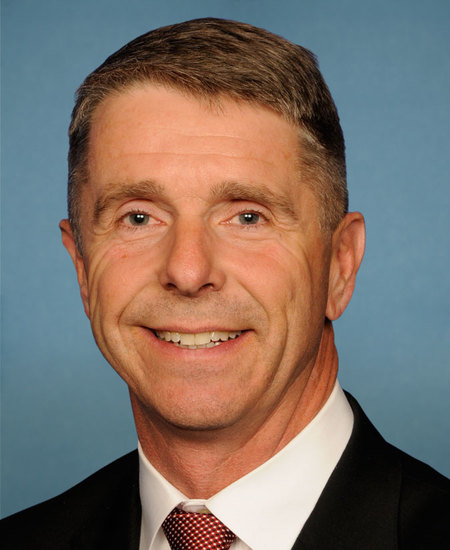
Rep. Robert J. Wittman
Sponsored bills
Maddy summaryHCONRES 133 designates November 25, 2024, as "Public Health Thank You Day" to recognize public health professionals. The resolution expresses Congress's support for their work in disease prevention, maternal care, mental health, and addressing health disparities. It has no legal effect or funding provisions - it solely serves to formally commend these professionals for their contributions. The bill directly affects public health workers nationwide, acknowledging their role in protecting community health.
Maddy summaryThis bill enhances the existing American Battlefield Protection Program by expanding eligibility for grants to include Tribes, nonprofit organizations, and educational institutions, alongside States and local governments. It clarifies that eligible sites must be identified in the 1993 Civil War battlefield report or 2007 Revolutionary War/War of 1812 report, excluding sites already within National Park boundaries. The bill also requires the Secretary to submit updated battlefield condition reports to Congress every 10 years, starting two years after enactment, tracking preservation efforts and battlefield changes. These changes streamline program administration and ensure ongoing assessment of historic battlefield sites.
Maddy summaryHR 3012 reauthorizes U.S. programs under the North Korean Human Rights Act of 2004 through 2028, extending funding and reporting requirements for existing initiatives. It directs the U.S. Agency for Global Media to continue broadcasting independent news into North Korea, supports transparent humanitarian aid delivery, and urges China to halt forcible repatriation of North Korean refugees. The bill directly affects North Korean citizens by promoting information access and refugee protection, and North Korean refugees in China by advocating for UNHCR access and refugee rights. Key provisions include extending program deadlines, reinforcing U.S. diplomatic efforts on human rights, and calling for swift confirmation of the Special Envoy on North Korean Human Rights Issues.
Maddy summaryHRES 837 is a non-binding resolution passed by the U.S. House of Representatives on November 1, 2023, reaffirming U.S. commitment to the Philippines. It specifically calls for invoking the U.S.-Philippines Mutual Defense Treaty if Philippine assets (including Coast Guard vessels) are attacked in the South China Sea, urges joint U.S.-Philippines patrols in the region, and objects to China's disputed territorial claims. The resolution does not create new laws or funding but expresses congressional support for existing defense agreements and diplomatic positions. It directly addresses U.S. foreign policy toward the Philippines and the South China Sea disputes.
Maddy summary# Summary of Veterans' Affairs Bill This comprehensive legislation (likely the 2024 version of the "Senator Elizabeth Dole 21st Century Veterans Healthcare and Benefits Improvement Act") addresses multiple aspects of veterans' benefits and services across several key areas: ## Key Provisions 1. **Healthcare Modernization** - Requires machine-readable format for disability benefit questionnaires - Mandates modernization of electronic health record systems - Improves telehealth access for homeless veterans - Establishes new standards for health information technology 2. **Disability Benefits** - Modernizes disability benefit questionnaires - Implements automatic processing for certain temporary disability ratings - Prohibits non-licensed health care professionals from performing medical disability examinations - Requires provision of agent/attorney contact information to health care professionals 3. **Homelessness Support** - Increases per diem payments for homeless veterans' services - Authorizes use of funds for food, shelter, transportation, and communication technology - Creates a strategic plan for homeless veteran services - Expands access to telehealth services for homeless veterans 4. **Native American Veteran Housing** - Expands direct housing loans for Native American veterans - Creates a Native community development financial institution relending program - Requires adequate personnel dedicated to Native American veteran housing - Expands outreach programs for Native American veterans 5. **Burial and Memorial Affairs** - Expands burial allowances for veterans who die at home while receiving hospice care - Updates definitions of surviving spouse 6. **Employment and Training** - Improves reemployment rights for veterans - Creates Warrior Training Advancement Course - Establishes pilot program for veterans in conservation and resource management positions 7. **Transparency and Accountability** - Requires 90-day notice before implementing policy changes - Improves transparency of educational institutions serving veterans - Establishes new reporting requirements for various programs The bill contains numerous technical corrections, updates to existing statutes, and new provisions designed to improve veterans' access to benefits, healthcare, housing, and employment opportunities, with particular attention to underserved veteran populations including Native American veterans, homeless veterans, and veterans with disabilities.
Maddy summaryThe Critical Minerals Security Act of 2024 requires the U.S. Secretary of the Interior to submit regular reports to Congress assessing global critical mineral and rare earth element resources. These reports must detail which resources are controlled by foreign entities of concern (like adversarial nations), owned by U.S. allies, or underutilized, including mine output, ownership structures, and reasons for lack of commercial mining. The bill also establishes a process for U.S. persons to notify the government of planned divestments in foreign mining operations and seek non-adversarial buyers, while mandating a strategy to collaborate with allied nations on advanced mining and processing technologies. It directly affects federal agencies, U.S. entities operating in foreign mineral sectors, and U.S. government oversight of critical supply chains.
Maddy summaryHRES 1577 is a resolution expressing congressional support for National Adoption Day (November 23, 2024) and National Adoption Month (November 2024). It highlights that over 108,000 children in U.S. foster care are waiting for adoption and encourages Americans to consider adoption to help provide safety, permanency, and well-being for children. The resolution does not create new laws but formally recognizes the importance of adoption and urges the public to support efforts to place children in permanent families. It directly affects public awareness and encourages citizen engagement during these designated observances.
Maddy summaryThis bill modifies how disability benefits are treated for homeless disabled veterans seeking housing assistance. It excludes certain disability payments (under Chapter 11 or 15 of Title 38, U.S. Code) from income calculations when determining eligibility for HUD-assisted housing programs, including the supported housing program under Section 8(o)(19) and housing on Department property. Specifically, it ensures these benefits are not counted toward income for housing eligibility, though they still count for "adjusted income" definitions. The bill directly affects disabled veterans applying for HUD housing assistance who receive these specific disability benefits. It makes a concrete change to income calculation rules without altering benefit amounts or creating new funding.
Maddy summaryThe GROW Act (HR 1786) requires the Department of Veterans Affairs to report annually on the Warrior Training Advancement Course (WARTAC), a program training transitioning veterans for VA jobs. These reports must detail participation rates, cost savings, and hiring outcomes for veterans completing the course. Additionally, the bill establishes a two-year pilot program under the Department of the Interior to employ veterans in conservation and resource management roles, tracking metrics like applicants hired and transitions to permanent federal positions. All findings and program results must be shared with Congress through mandatory briefings and reports.