

Maddy summaryThis bill designates a specific United States Postal Service building at 220 North Hatcher Avenue in Purcellville, Virginia, as the "Secretary of State Madeleine Albright Post Office Building." It changes the official name of this facility and updates all federal references to it to reflect the new name, honoring Madeleine Albright, former U.S. Secretary of State. The bill has no policy or funding provisions - it is a ceremonial naming resolution.
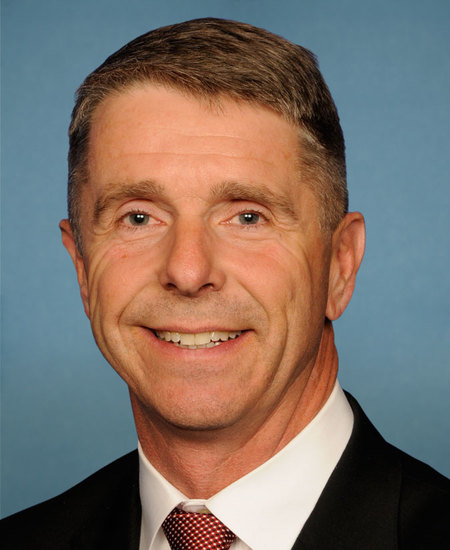
Rep. Robert J. Wittman
Sponsored bills
Maddy summaryThe Treat and Reduce Obesity Act of 2023 expands Medicare coverage for obesity treatment by allowing a wider range of healthcare providers - including nurse practitioners, dietitians, psychologists, and community-based counseling programs - to deliver intensive behavioral therapy for obesity, provided they coordinate with primary care providers. It also adds Medicare Part D coverage for medications used to treat obesity or for weight loss management in overweight individuals with related health conditions like diabetes or high blood pressure. These changes directly affect Medicare beneficiaries, particularly older adults (65+), who face higher obesity rates and associated costs, including $50 billion annually in Medicare spending for obesity-related care. The bill requires annual reports to Congress on implementation to improve coordination of obesity care across federal health programs.
Maddy summaryThe Education and Workforce Freedom Act would expand the use of 529 college savings accounts to cover more education and training costs. It allows these accounts to pay for K-12 tuition at public, private, or religious schools, homeschooling, and related expenses like curriculum materials, tutoring, and educational therapies. The bill also adds coverage for recognized job training programs and professional certifications, including test fees and course costs for credentials listed by states or the Department of Veterans Affairs. These changes would directly affect families using 529 accounts for K-12 education and individuals pursuing career-focused training through approved programs.
Maddy summaryThis bill approves new agreements that amend the Compact of Free Association between the United States and the Federated States of Micronesia, the Republic of the Marshall Islands, and the Republic of Palau. It incorporates related agreements including fiscal procedures and trust fund agreements that govern how U.S. funding is managed and distributed to these nations. The bill provides funding for 2024-2043 to support programs like healthcare, education, veterans' services, and economic development in the Freely Associated States. It establishes reporting requirements and oversight mechanisms for federal agencies implementing these agreements. The bill directly affects U.S. federal agencies, the Freely Associated States, and U.S. funding mechanisms for these Pacific Island nations.
Maddy summaryThis bill extends multiple conservation programs through 2030, primarily adjusting expiration dates from 2025 to 2030. It creates a new "Black Vulture Livestock Protection Program" allowing state Farm Bureau organizations to obtain statewide permits for controlled black vulture management to protect livestock, with requirements for permit applications, reporting, and a study on sustainable population levels. Other provisions include extending funding for the Chesapeake Bay Program ($92 million annually through 2030), the North American Wetlands Conservation Act, and the Chronic Wasting Disease Task Force. The bill also modifies administrative details for fish habitat partnerships, reporting requirements, and technical corrections to existing conservation laws.
Maddy summaryThe America's Wildlife Habitat Conservation Act creates new funding mechanisms to support wildlife habitat conservation across the United States. It establishes a $300 million annual subaccount for states, territories, and the District of Columbia to restore habitat for species listed as threatened or endangered under federal or state law, and to prevent species from needing such listings, with at least 15% of funds dedicated to endangered species recovery. The bill also creates a $20 million annual account specifically for tribal wildlife conservation programs. Funds must be used for habitat restoration, species conservation, invasive species management, and must be tracked through annual reporting requirements to demonstrate effectiveness.
Maddy summaryThe FOCA Act of 2023 requires federal agencies to stop mandating or banning contractor agreements with labor organizations (like union contracts) in construction project bids and contracts. It directly affects federal contractors, subcontractors, and agencies managing construction projects funded by the government. The bill prohibits favoring or penalizing contractors based on their labor affiliation status, aiming to promote fair competition and reduce costs. It also mandates updates to federal contracting rules within 60 days of enactment to implement these changes.
Maddy summaryHR 9269, the IVF Access and Affordability Act, creates a non-refundable federal tax credit for individuals paying out-of-pocket costs for fertility treatments like IVF. It allows a $20,000 credit per person ($40,000 for joint filers) for "assisted reproductive technology" expenses, subject to income limits ($200,000 AGI for singles, $400,000 for joint filers). The credit cannot be claimed for expenses covered by insurance or previously deducted, and unused credit can be carried forward for up to five years. This directly affects individuals or families undergoing fertility treatments who pay costs not covered by insurance and meet income thresholds.
Maddy summaryThe PROVE IT Act of 2024 directs the U.S. Energy Secretary to study and publicly report on the greenhouse gas emissions intensity of key U.S. manufactured products (like steel, aluminum, lithium batteries, and critical minerals) compared to those produced in "covered countries" (including the EU, China, and major trading partners). It requires a transparent methodology for calculating emissions data, identifies gaps in existing data, and establishes a public online database showing U.S. emissions advantages for these products. The bill also mandates an annual report on foreign countries using forced labor or human rights abuses in the production of critical minerals or rare earths. Importantly, it clarifies the study does not create new taxes, fees, or mandatory reporting requirements.
Maddy summaryThis bill requires Medicare Advantage plans to implement electronic prior authorization systems by 2027 and publish detailed data on their approval and denial rates for medical services by 2026. It directly affects Medicare Advantage plans (private insurers offering Medicare coverage) and their enrollees (seniors 65+), mandating transparency about prior authorization decisions, processing times, and appeal outcomes. Key provisions include requiring plans to report annual statistics on request approvals/denials, average processing times, and use of technology, with this data published publicly by the Centers for Medicare & Medicaid Services. The bill also sets timelines for plan responses to prior authorization requests and mandates reports to Congress on implementation and impacts.