

Residential Substance Use Disorder Treatment Act of 2021 This bill revises and reauthorizes through FY2026 grants for residential substance use disorder treatment programs at state and local correctional and detention facilities. Among the revisions, the bill replaces statutory references to substance abuse with substance use disorder , specifies that the term residential substance use disorder treatment program includes a medication-assisted treatment program, requires the chief medical officer or other staff overseeing a program to complete training on the science of addiction and the latest research and clinical guidance on treating substance use disorders in criminal justice settings, and allows people who are awaiting trial or in pretrial detention to participate in the programs.
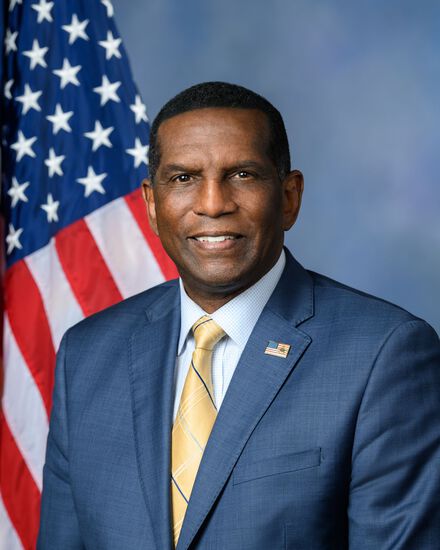
Sponsored bills
Study To Observe and Prevent (STOP) Human Trafficking Act of 2021 This bill directs the Department of Justice, in coordination with the President's Interagency Task Force to Monitor and Combat Trafficking in Persons, to study and report on the prevalence and instances of human trafficking at adult entertainment clubs in the United States.
Empowering Law Enforcement To Fight Sex Trafficking Demand Act of 2021 This bill allows grants under the Edward Byrne Memorial Justice Assistance Grant program to be used for programs to combat human trafficking.
H-2B Returning Worker Exception Act of 2021 This bill modifies the H-2B (temporary nonagricultural workers) nonimmigrant visa program, including by exempting certain workers from an annual numerical limit on such visas and requiring civil penalties for program violations. Under this bill, if a worker seeking a H-2B visa has been counted toward the 66,000 annual cap on such visas in one of the three preceding fiscal years, that worker shall not be counted against the cap again. Furthermore, the Department of Homeland Security (DHS) must impose a civil monetary penalty on an employer for (1) failing to meet requirements related to an H-2B visa petition, or (2) making a willful misrepresentation of material fact in such a petition. DHS must also ensure the establishment of an electronic platform (1) for employers to submit and request approval of an H-2B petition, and (2) to act as a single point of access for applicants and the relevant government agencies. The Department of Labor must maintain a publicly available online database of all job orders by H-2B employers. Furthermore, Labor may take certain actions to enforce program requirements, such as imposing penalties and seeking injunctions. The bill provides statutory authority for the current practice of limiting the program to workers who are nationals of countries approved by DHS. DHS may make exceptions to this limitation in individual cases if it is in the U.S. interest to do so. DHS shall select approved countries based on various factors, such as the rate of overstay by H-2B visa holders from each country.
Preventing Anti-Semitic Hate Crimes Act This bill requires a designated officer or employee of the Department of Justice (DOJ) to facilitate the expedited review of anti-Semitic hate crimes and reports of anti-Semitic hate crimes. Further, the bill requires DOJ to issue guidance for state, local, and tribal law enforcement agencies on expanding public education campaigns to raise awareness of anti-Semitic hate crimes. Finally, the bill increases the statutory maximum prison term for an individual who is convicted of a federal hate crime offense after a prior conviction for a hate crime offense under federal law or a hate crime felony under state law.
First Step Implementation Act of 2021 This bill makes various changes related to federal sentencing law and requires the Department of Justice (DOJ) to establish procedures to ensure the prompt release and accuracy of employment-related background check records. The bill allows certain reduced mandatory minimum sentences for drug offenses to be applied retroactively to offenders who committed their offenses on or before December 21, 2018; permits a court, in certain circumstances, to grant safety valve relief (i.e., impose a sentence without regard to the statutory mandatory minimum penalty for certain drug offenses) for an otherwise eligible defendant who does not meet the requirement pertaining to criminal history; permits a court to reduce a sentence imposed on a defendant convicted as an adult for an offense committed as a juvenile if the defendant has served at least 20 years of the sentence; establishes a process to seal and expunge certain records of juvenile nonviolent offenses; and requires DOJ to establish and enforce procedures to ensure that records exchanged for employment-related background checks are promptly released and accurate.
Original National Domestic Violence Awareness Month Resolution of 2022 This resolution supports the goals and ideals of National Domestic Violence Awareness Month. Further, it expresses the sense of the House of Representatives that Congress should continue to raise awareness of and support programs to end domestic violence.
Protecting Access for Hunters and Anglers Act of 2022 This bill bars the Department of the Interior and the Department of Agriculture from prohibiting or regulating the use of lead ammunition or tackle on federal land or water that is under the jurisdiction of such departments and made available for hunting or fishing. The bill makes exceptions for specified existing regulations and where the applicable department determines that a decline in wildlife population at the specific unit of federal land or water is primarily caused by the use of lead in ammunition or tackle, based on the field data from such unit, and the state approves the regulations.
Major Richard Star Act This bill provides that combat-disabled uniformed services retirees with fewer than 20 years of creditable service may concurrently receive, without reduction, veterans' disability compensation and retired pay or combat-related special compensation.
Stop the Sexualization of Children Act This bill prohibits the presentation of sexually oriented materials to children under the age of 10. The bill defines sexually oriented material as any (1) depiction or description of sexual activity; (2) lewd or lascivious depiction or description of human genitals; or (3) topic involving gender identity, gender dysphoria, transgenderism, sexual orientation, or related subjects. Specifically, the bill prohibits (1) the use of federal funds to develop, implement, facilitate, or fund any sexually oriented program, event, or literature for children under the age of 10; and (2) the use of federal facilities or properties to host or promote such programs, events, or literature. The bill grants a parent or guardian a private right of action against a government official, government agency, or private entity that violates this bill. Additionally, the bill prohibits federal agencies from disbursing federal funds to a government agency or private entity for three fiscal years if the agency or entity has received two or more injunctions for violations of the bill in a five-year period.