

Maddy summaryThe SAVE Act (HR 8281) requires U.S. citizens to provide documentary proof of citizenship when registering to vote in federal elections. It defines acceptable proof as documents like passports, REAL ID-compliant IDs, military IDs, or birth certificates, and mandates that states verify citizenship using information from government agencies like DHS and Social Security. States must establish processes for voters without required documentation to provide an attestation under penalty of perjury. The law also requires states to remove noncitizens from voter rolls when verified evidence shows they're not citizens. This bill directly affects all applicants registering to vote in federal elections and state election officials who must implement these requirements.
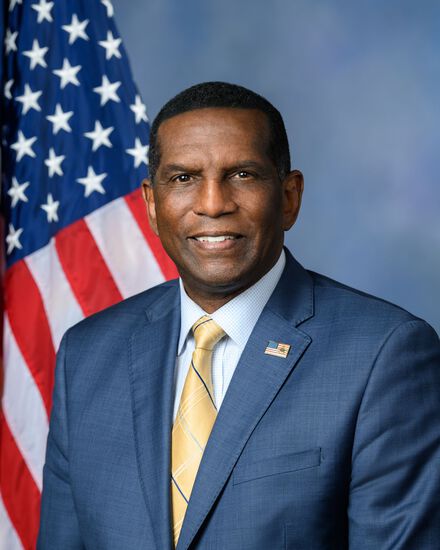
Sponsored bills
Maddy summaryHRES 1365 is a non-binding House resolution calling for the immediate termination of Kimberly Cheatle as U.S. Secret Service Director. It directly addresses the Secret Service Director and the executive branch, though it has no legal force to remove her from office. The resolution’s sole provision is a formal request for her termination, reflecting the sponsors' position on her leadership. As a symbolic gesture, it does not change her employment status or require any action from the President or Secret Service.
Maddy summaryHJRES 188 is a joint resolution seeking to disapprove a Department of the Interior rule on conservation and landscape health. The rule, published in the Federal Register on May 9, 2024 (89 Fed. Reg. 40308), would have established new federal guidelines for managing public lands. This resolution invokes the congressional disapproval process under Title 5, U.S. Code, to prevent the rule from taking effect. If enacted, it would halt the rule's implementation, directly affecting how federal land conservation policies are applied.
Maddy summaryThe TAKE IT DOWN Act (HR 8989) creates new federal criminal penalties for publishing nonconsensual intimate images or deepfakes without consent, directly affecting platforms hosting user-generated content and individuals who share such material. It defines "deepfake" as AI-generated intimate content falsely depicting someone, and prohibits publishing these without consent - especially when the victim expected privacy - imposing fines or up to 3 years in prison for offenses involving minors. The bill also requires "covered platforms" (like social media sites) to establish a 48-hour removal process for reported nonconsensual content and shields platforms from liability when removing content in good faith. The Federal Trade Commission enforces these provisions as unfair or deceptive practices.
Maddy summaryHR 4132 would require the U.S. to impose sanctions on Chinese officials responsible for forced organ harvesting from Falun Gong practitioners, including blocking their property and denying visas. It mandates a report on China's organ transplant system within one year, assessing organ sources, procurement timelines, and whether persecution of Falun Gong constitutes an atrocity. The bill directs the U.S. to avoid all cooperation with China's organ transplantation system while the Chinese Communist Party remains in power. It cites findings of systemic persecution and alleged organ harvesting as justification for these policy measures.
Maddy summaryThis bill prevents student athletes (and former athletes) from being classified as employees under federal or state law solely due to their participation in varsity intercollegiate sports programs or competitions. It directly affects college athletes whose eligibility or participation might otherwise be challenged under employment law. The key provision explicitly states that institutions, conferences, or associations cannot consider athletes as employees based on their sports involvement, regardless of existing rules or requirements. This is a definitional and legal clarification, not a new benefit or compensation measure.
Maddy summaryThis bill prohibits federal funding for elementary and secondary schools that partner with Chinese government-funded programs, including Confucius Institutes, Confucius Classrooms, or other entities receiving support from China's government (e.g., through teaching materials, personnel, or funds). It directly affects schools with these specific ties to the People's Republic of China. The prohibition takes effect one year after enactment, with the Education Secretary required to notify schools and provide compliance guidance within 90 days of enactment. The policy change blocks federal education funds for schools meeting the defined criteria, without altering existing educational content or curriculum standards.
Maddy summaryThis bill amends the Federal Employees' Compensation Act to include physician assistants and nurse practitioners as eligible providers for injured federal workers. It defines "other eligible provider" as a nurse practitioner or physician assistant within their state-authorized scope of practice. The law updates key sections to replace "physician" with "physician or other eligible provider" for treatment, certification, and claim processes. The Secretary must finalize implementing regulations within six months of enactment.
Maddy summaryHR 8889, the Sunset Chevron Act, requires the Government Accountability Office (GAO) to compile a list of federal court decisions that upheld agency rules using Chevron deference (a legal doctrine where courts defer to agency interpretations of laws) and are still in effect. The GAO must organize this list by agency and assign each rule a sunset date - 30 days after the list's publication for the most recent rule, with older rules getting sunsets 30 days apart. This bill directly affects federal agencies whose rules are included in the GAO's list, as it triggers automatic expiration of those rules after specific dates. The key mechanism is the mandatory GAO review and the automatic sunset schedule, not new regulations or policy changes. The bill does not alter Chevron deference itself but creates a timeline for existing rules upheld under it to expire.
Maddy summaryThis bill amends the Higher Education Act to require colleges to disclose how they respond to campus "civil disturbances" (defined as protests, riots, or strikes disrupting safety or learning). It mandates that institutions include this disclosure in their security policies and that accrediting agencies monitor compliance with this new requirement. The bill directly affects public and private colleges receiving federal funding, as well as their accreditors. It does not cut funding for colleges or ban protests, but instead focuses on transparency about campus security responses to disruptive events.