

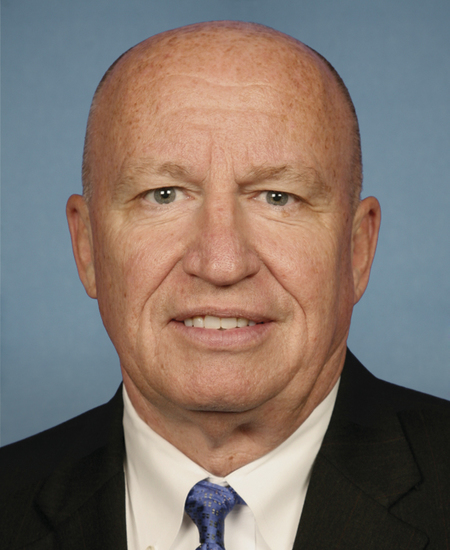
Maddy summaryHRES 754 is a non-binding resolution expressing the House of Representatives' opposition to proposed "punitive natural gas taxes" on U.S. businesses, families, and workers. It cites claims that such taxes would raise average energy bills by 17%, reduce GDP by $9 billion, and eliminate 90,000 jobs, while disproportionately harming low-income households. The resolution argues that opposing these taxes supports U.S. energy security, national security, and continued leadership in reducing emissions through domestic natural gas production. As a procedural resolution, it does not create law but formally states the House's position against this policy approach.
Sponsored bills
Lower Costs, More Cures Act of 2021 This bill establishes and modifies several programs and requirements to address prescription drug prices. The bill modifies provisions under Medicare and Medicaid relating to prescription drug coverage and price transparency. Among other changes, the bill requires the Centers for Medicare & Medicaid Services to publish certain information, as reported by pharmacy benefit managers (PBMs), relating to generic dispensing rates, drug discounts and rebates, and payments between PBMs, health plans, and pharmacies; caps annual out-of-pocket spending under the Medicare prescription drug benefit; allows prescription drug plan sponsors under the Medicare prescription drug benefit to offer additional plans in a region; requires pass-through pricing models, and prohibits spread-pricing, for payment arrangements with PBMs under Medicaid; and allows states to include in the Medicaid Drug Rebate Program covered outpatient drugs that are provided as part of physician or outpatient hospital services. The bill also generally modifies other provisions relating to the regulation and costs of generic and brand-name drugs. Among other changes, the bill prohibits the manufacturer of a brand-name, generic, or biosimilar drug from entering into certain agreements to resolve or settle a patent infringement claim in connection with the sale of a drug or biological product; permanently allows high deductible health plans to waive deductibles for insulin and associated products; and establishes the position of Chief Pharmaceutical Negotiator in the Office of the U.S. Trade Representative.
Maximum Pressure Act This bill expands sanctions and economic penalties on Iran. It also restricts the President from unilaterally lifting or waiving the sanctions or penalties and increases congressional oversight of them. Specifically, the bill requires the President to impose visa- and asset-blocking sanctions. Additionally, it modifies existing sanctions, including by (1) providing statutory authority for executive orders imposing sanctions; (2) applying sanctions to additional sectors of Iran's economy; and (3) broadening sanctionable conduct to cover, for example, assisting Iran with the acquisition of ballistic missiles and the complicity of Iranian officials in human rights violations in specified countries. The bill also requires reporting on licenses that authorize activities subject to sanctions. The bill prohibits U.S. representatives at the International Monetary Fund from voting to allow Iran's access to special drawing rights (a currency support tool) and places restrictions on financial transactions with Iran. The restrictions include requiring domestic financial institutions to implement special measures with respect to foreign financial institutions that conduct significant transactions connected to the Instrument in Support of Trade Exchanges (a European mechanism that bypasses U.S. sanctions when carrying out trade with Iran). The Department of State must maintain the Islamic Revolutionary Guard Corps' designation as a terrorist organization and must designate Ansharallah (or Houthis), which operates in Syria, as a foreign terrorist organization. The bill also requires reports on U.S. sanctions concerning Iran, the status of Iran's nuclear weapons program, and other matters.
Drug Cartel Terrorist Designation Act This bill directs the Department of State to designate the Reynosa/Los Metros faction of the Gulf Cartel and the Cartel Del Noreste faction of Los Zetas as foreign terrorist organizations and to submit a detailed report on those drug cartels and any other cartels it may identify. Based on this report, the State Department must designate as a foreign terrorist organization any such identified cartel (or faction thereof) that meets certain criteria for designation as a foreign terrorist organization.
Prohibiting IRS Financial Surveillance Act This bill prohibits the Department of the Treasury from requiring a financial institution to report the transfers into and out of a financial account. This prohibition does not apply to laws or regulations in effect on October 1, 2021.
Israel Relations Normalization Act of 2021 This bill requires the Department of State to take certain actions promoting the normalization of relations between Israel, Arab states, and other relevant countries and regions. Specifically, the State Department must develop a strategy on expanding and strengthening the Abraham Accords (the term used to refer collectively to agreements between Israel and the United Arab Emirates and between Israel and Bahrain marking the public normalization of relations between the two Arab countries and Israel). The strategy must include a description of how the U.S. government will encourage further normalization of relations with Israel. In addition, the State Department must report on options for U.S. international efforts to promote the strengthening of ties between Israel, Arab states, and other relevant countries and regions. The State Department must also report on the status of the normalization of relations with Israel, including information on (1) laws that punish individuals for people-to-people relations with Israelis (i.e., anti-normalization laws), and (2) evidence of steps taken by Arab governments toward permitting or encouraging normalized relations between their citizens or residents and Israeli citizens.
This bill requires the Internal Revenue Service (IRS) to report to Congress on projections of the estimated tax gap (i.e., the difference between tax liabilities owed to the IRS and those liabilities that the IRS actually collects). The IRS may use artificial intelligence and related data analysis tools to calculate a tax gap projection. The bill also requires the Joint Committee on Taxation to issue periodic reports to the congressional tax committees on the tax gap projection. The bill restricts IRS funding to FY2021 levels for audits and enforcement until it publishes an updated tax gap projection. Funding is also restricted for certain purposes, including (1) targeting U.S. citizens who exercise their First Amendment rights, (2) targeting a group for regulatory scrutiny based on its ideological beliefs, and (3) auditing individual taxpayers with an adjusted gross income of less than $400,000. The bill directs the IRS to establish a fellowship program to recruit private sector tax experts to join the IRS to create and participate in the audit task force. The purposes of the tax force include performing audit case selection, educating IRS employees on emerging issues, auditing selected taxpayers, addressing offshore tax evasion, and identifying, mentoring, and training IRS junior employees with respect to audits.
This bill designates the community-based outpatient clinic of the Department of Veterans Affairs in San Angelo, Texas, as the Colonel Charles and JoAnne Powell VA Clinic.
Harlem Hellfighters Congressional Gold Medal Act This bill provides for the award of a Congressional Gold Medal to the 369th Infantry Regiment, commonly known as the Harlem Hellfighters, in recognition of their bravery and outstanding service during World War I.
Puppies Assisting Wounded Servicemembers for Veterans Therapy Act or the PAWS for Veterans Therapy Act This bill implements a program and a policy related to service dog therapy for veterans. Specifically, the bill requires the Department of Veterans Affairs (VA) to implement a five-year pilot program to provide canine training to eligible veterans diagnosed with post-traumatic stress disorder as an element of a complementary and integrative health program. Eligible veterans are those who are enrolled in the VA health care system and have been recommended for participation by a qualified mental health care provider or clinical team. The VA must seek to enter agreements containing specified elements with accredited nongovernmental entities that have demonstrated ability to provide canine training. Veterans who participate in the program are authorized to adopt the dog they assisted in training if their health provider determines it is in the best interest of the veteran. The VA must establish processes to document and track the progress of participating veterans with respect to health benefits and improvements. The Government Accountability Office must brief Congress and submit a report on the program. The bill also authorizes the VA to provide service dogs to veterans with mental illnesses, regardless of whether they have a mobility impairment.