This joint resolution nullifies a Department of Labor emergency temporary standard for preventing the transmission of COVID-19 in employment settings. Under the standard issued on November 5, 2021, employers with 100 or more employees must require their onsite employees to either be fully vaccinated against COVID-19 or undergo weekly COVID-19 testing.
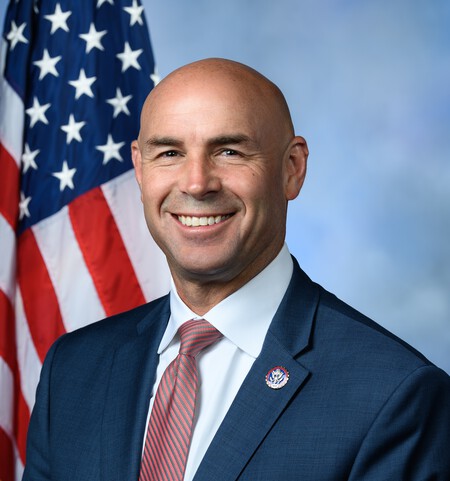
Rep. Jake Ellzey
Sponsored bills
VITAL Assessment Act This bill implements changes related to the Department of Veterans Affairs (VA) Veterans Integration to Academic Leadership (VITAL) program, which focuses on enhancing student veterans' academic success and retention by assisting with things like mental and physical health. The VA must report on the program and establish best practices, goals, and measures for the program that are uniform among the VA's medical centers. The bill also requires the VA to conduct outreach among the Armed Forces, veterans service organizations, institutions of higher learning, and noncollege degree programs regarding the VITAL program. Additionally, the VA must assess the feasibility and advisability of including the suicide rate for student veterans in the National Veteran Suicide Prevention Annual Report.
Designates the facility of the United States Postal Service located at 1304 4th Avenue in Canyon, Texas, as the "Gary James Fletcher Post Office Building."
This concurrent resolution declares that Congress should not impose any new performance fee, tax, royalty, or other charge relating to the public performance of sound recordings on a local radio station for broadcasting sound recordings over the air, or on any business for such public performance of sound recordings.
Equal Treatment of Public Servants Act of 2021 This bill phases in a new funding formula for determining benefit amounts under the windfall elimination provision (WEP). The WEP reduces Social Security retirement and disability benefits for those who receive pensions for certain non-covered employment. The new formula adjusts an individual's total lifetime earnings based on the proportion of those earnings subject to Social Security payroll taxes. It applies to individuals who (1) become eligible for Social Security benefits after 2061, and (2) have earnings from non-covered service performed in a year after 1977. Beneficiaries who become eligible for benefits between 2023 and 2061 receive the higher of their benefit calculated under the existing WEP or the new formula. In addition, certain beneficiaries currently impacted by the WEP receive an additional payment. The Social Security Administration must include non-covered earnings in Social Security account statements and must study the feasibility of partnering with certain pension systems to address data sharing issues related to non-covered pensions.
Maddy summaryHRES 754 is a non-binding resolution expressing the House of Representatives' opposition to proposed "punitive natural gas taxes" on U.S. businesses, families, and workers. It cites claims that such taxes would raise average energy bills by 17%, reduce GDP by $9 billion, and eliminate 90,000 jobs, while disproportionately harming low-income households. The resolution argues that opposing these taxes supports U.S. energy security, national security, and continued leadership in reducing emissions through domestic natural gas production. As a procedural resolution, it does not create law but formally states the House's position against this policy approach.
State, Local, Tribal, and Territorial Fiscal Recovery, Infrastructure, and Disaster Relief Flexibility Act This bill allows states, tribes, territories, and localities to use certain COVID-19 relief funds for new categories of spending, including for natural disasters and infrastructure projects. It also makes changes to expenditure deadlines and other aspects of this funding. Specifically, recipients may use funds for emergency relief from natural disasters and associated negative economic impacts of natural disasters. In addition, recipients may use a portion of their COVID-19 relief funds for designated infrastructure projects, such as nationally significant freight and highway projects. Furthermore, the bill allows recipients to expend COVID-19 relief funds on these types of infrastructure projects until September 30, 2026. Under current law, recipients must expend the funds by December 31, 2024. Other changes in the bill include (1) modifying eligibility and allocation requirements for funding set aside for counties and Indian tribes that are near public lands, (2) allowing Indian tribes an additional year to expend their COVID-19 relief funds, and (3) establishing a process for government entities to decline COVID-19 relief funds and requiring any declined funds to be used to reduce the federal deficit.
Student Veteran COVID-19 Protection Act of 2021 This bill addresses the administration of certain Department of Veterans Affairs (VA) educational assistance benefits and home loans, including by authorizing the VA to waive certain enrollment verifications, exempting foreign educational institutions from certain requirements, extending the time limitations on the use of educational assistance benefits, and adjusting certain home loan fees.
Captain James C. Edge Gold Star Spouse Equity Act This bill addresses restrictions on benefits for surviving spouses of service members. Specifically, the bill prohibits the termination of the payment of an annuity under the Survivor Benefit Plan for certain surviving spouses of service members who died while on active duty solely because the surviving spouse remarries. The Department of Defense must resume payment of an annuity to surviving spouses who remarried before the age of 55 and before the enactment of this bill. The remarriage of a surviving spouse of a veteran does not bar the provision of dependency and indemnity compensation, regardless of their age when they remarried. The Department of Veterans Affairs must resume payment of dependency and indemnity compensation to surviving spouses who remarried before the age of 57 prior to the enactment of this bill.
Lower Costs, More Cures Act of 2021 This bill establishes and modifies several programs and requirements to address prescription drug prices. The bill modifies provisions under Medicare and Medicaid relating to prescription drug coverage and price transparency. Among other changes, the bill requires the Centers for Medicare & Medicaid Services to publish certain information, as reported by pharmacy benefit managers (PBMs), relating to generic dispensing rates, drug discounts and rebates, and payments between PBMs, health plans, and pharmacies; caps annual out-of-pocket spending under the Medicare prescription drug benefit; allows prescription drug plan sponsors under the Medicare prescription drug benefit to offer additional plans in a region; requires pass-through pricing models, and prohibits spread-pricing, for payment arrangements with PBMs under Medicaid; and allows states to include in the Medicaid Drug Rebate Program covered outpatient drugs that are provided as part of physician or outpatient hospital services. The bill also generally modifies other provisions relating to the regulation and costs of generic and brand-name drugs. Among other changes, the bill prohibits the manufacturer of a brand-name, generic, or biosimilar drug from entering into certain agreements to resolve or settle a patent infringement claim in connection with the sale of a drug or biological product; permanently allows high deductible health plans to waive deductibles for insulin and associated products; and establishes the position of Chief Pharmaceutical Negotiator in the Office of the U.S. Trade Representative.