

Maddy summaryThe Military Food Security Act of 2023 amends federal law to exclude the basic allowance for housing (BAH) from the gross household income calculation for eligible military members when determining eligibility for food assistance programs. This change directly affects active-duty service members and their families who rely on programs like the Supplemental Nutrition Assistance Program (SNAP). The key provision removes BAH from income calculations, meaning housing payments will no longer reduce a military household's eligibility for food benefits. This adjustment aims to improve access to nutrition assistance for military families by ensuring their housing allowance isn't counted as income. The bill focuses solely on modifying a calculation method, with no new funding or benefits created.
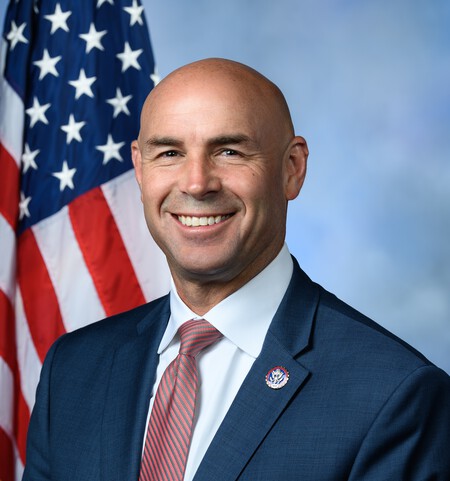
Rep. Jake Ellzey
Sponsored bills
Maddy summaryHR 1141, the Natural Gas Tax Repeal Act, repeals a specific provision (Section 136) of the Clean Air Act that established an incentive program for reducing methane emissions and waste in natural gas systems. This bill directly affects natural gas producers and operators who previously participated in or were subject to the methane emissions reduction program. The key mechanism is the removal of this incentive program, eliminating federal requirements and financial incentives related to methane waste reduction for the natural gas industry. The bill also rescinds unobligated funds allocated for this program. This is a policy change removing a regulatory incentive, not a tax repeal.
Maddy summaryHR 1703, the SECURE Flights Act, prohibits the use of specific immigration forms (like I-94 arrival records or I-200 warrants) as valid ID at airport security checkpoints. If such a document is presented, TSA must notify U.S. immigration and law enforcement agencies, and the individual may be barred from entering secure airport areas unless traveling for deportation or presenting a valid "covered ID" (e.g., passport, Global Entry card, or driver’s license). The bill also requires TSA to collect biometric data (like fingerprints or facial scans) from travelers who cannot verify U.S. citizenship and lack a covered ID, submitting this to the Homeland Security IDENT system. It directly affects travelers using non-standard immigration documents at airports, aiming to enhance security coordination between TSA and immigration authorities.
Maddy summaryHR 1551, the "Jobs and Opportunities for Medicaid Act," requires most Medicaid recipients aged 18-65 who are deemed "able-bodied adults" to work or volunteer at least 20 hours per week to maintain coverage, effective January 2024. It directly affects adults not excluded by specific categories (e.g., parents of young children, pregnant individuals, those with medical limitations, or in treatment programs). The bill amends Medicaid law to deny coverage for months when these individuals fail to meet the 20-hour weekly work or volunteer requirement. Key provisions define "able-bodied adult" and establish the specific work/volunteer threshold. This creates a new eligibility condition for Medicaid, not a funding or program expansion.
No Federal Funds for Abortion Travel Expenses Act of 2023 This bill prohibits the use of federal funds to support interstate travel to obtain an abortion.
Protecting an Alien child's Reasonable Expectation of No Trafficking Act of 2023 or the PARENT Act of 2023 This bill establishes that no later than 72 hours after determining that a child in federal custody is an unaccompanied alien minor, custody of that child may only be transferred to the child's verified parent or legal guardian or to the Department of Health and Human Services (HHS). Currently, HHS may release such children to sponsors, who are not required to be a parent or legal guardian but must pass a background check.
Maddy summaryHR 1506, the Advisory Committees Free of ESG Act of 2023, prohibits federal agencies from creating or maintaining advisory committees based on environmental, social, or governance (ESG) factors. It bans committees focused on topics like climate change, greenhouse gas emissions, race or gender-based governance structures, or ideologies such as critical race theory. The bill requires immediate termination of any existing advisory committee violating this ban, with enforcement handled by the General Services Administration Administrator, agency Inspectors General, or through citizen lawsuits. This directly affects federal advisory committees that included ESG-related topics, mandating their dissolution under the new rules.
Maddy summaryThis resolution amends House rules to prohibit members, officers, and employees from serving on the board of directors of any organization connected to the Chinese Communist Party (CCP) or designated foreign adversaries. It specifically bans board service on entities receiving funding from or affiliated with the CCP’s United Front Work Department, other CCP elements, or entities labeled "foreign adversaries" by the State Department under a specific 2023 regulation. The rule change applies to all House staff and members in their official capacities, targeting potential conflicts of interest with foreign entities. It does not affect private board roles outside of official House duties.
Think Tank Transparency Act This bill requires certain nonprofit organizations to file a disclosure report with the Department of Justice (DOJ) after (1) receiving a gift, donation, or contribution of $10,000 or more in a calendar year from foreign governments, entities, or individuals; or (2) entering into or modifying a contract or agreement with such foreign sources. These disclosure reports shall be available to the public on the DOJ website. Generally, these requirements shall apply to certain nonprofit organizations that (1) seek to influence U.S. public policy or public opinion; (2) engage in or publish substantial policy-related research or scholarship; or (3) regularly promote events featuring reporters, journalists, or government officials. Furthermore, if such a nonprofit organization presents research (e.g., briefings or testimony) that was funded by a foreign source to Members of Congress, congressional employees, or executive branch officials, that foreign source must be prominently identified on any presented written materials. The bill permits the DOJ to bring a civil action against an organization to compel compliance.
This resolution supports the designation of National FFA Week. It also (1) recognizes the important role of the National FFA Organization (Future Farmers of America) in developing the next generation of leaders who will change the world, and (2) celebrates the 90th anniversary of the iconic FFA jacket.