

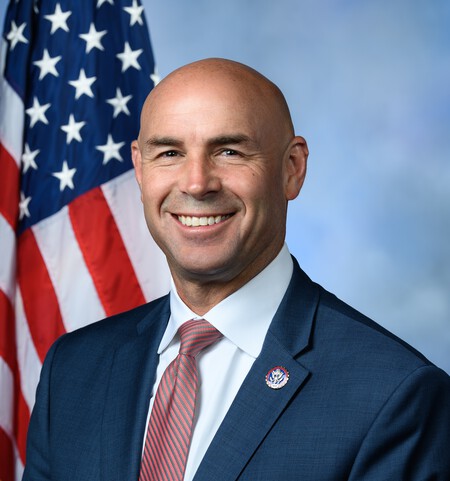
Maddy summaryHR 809 bans members of the Chinese Communist Party (CCP) and entities controlled by the CCP from purchasing any public or private real estate in the United States. The law applies to all U.S. states, territories, and possessions, including Puerto Rico and Guam. The President must take necessary actions to enforce this prohibition, directly affecting CCP-affiliated individuals and organizations seeking U.S. property investments. It creates a specific restriction on real estate transactions without altering broader foreign ownership rules.
Rep. Jake Ellzey
Sponsored bills
Illegitimate Court Counteraction Act This bill imposes sanctions against foreign persons (individuals and entities) who assist the International Criminal Court (ICC) in investigating, arresting, detaining, or prosecuting certain individuals. The bill categorizes as protected persons (1) any U.S. individual, U.S. entity, or person in the United States, unless the United States is a state party to the Rome Statute of the ICC and provides formal consent to ICC jurisdiction; and (2) any foreign person that is a citizen or lawful resident of a U.S. ally that is not a state party to the Rome Statute or has not consented to ICC jurisdiction. If the ICC attempts to investigate, arrest, detain or prosecute a protected person, the President must impose visa- and property-blocking sanctions against the foreign persons that engaged in or materially assisted in such actions, as well as against foreign persons owned by, controlled by, or acting on behalf of such foreign persons. The President must also apply visa-blocking sanctions to the immediate family members of those sanctioned. Upon enactment, the bill rescinds all funds appropriated for the ICC and prohibits the subsequent use of appropriated funds for the ICC.
Maddy summaryHR 727 amends federal law to expand the definition of "valuable consideration" in transactions involving human fetal tissue. The bill specifically adds provisions to prohibit payments, waived fees, canceled debts, or free/discounted services related to tissue transportation, processing, storage, or implantation. This directly affects medical providers, laboratories, and facilities handling fetal tissue by restricting how they can receive compensation for these services. The key change clarifies that even indirect financial benefits, like reduced charges or waived costs, would be considered prohibited "valuable consideration."
Maddy summaryHR 723, the Protect American Election Administration Act of 2025, prohibits states from accepting or using funds, property, or services from private entities for administering federal elections. This directly affects state election offices, which would no longer be allowed to take private donations for activities like voter education, outreach, or registration. The bill includes an exception allowing states to accept private donations of physical space for polling places or early voting sites. It amends the Help America Vote Act of 2002 to add this prohibition, effective for federal elections after the law's enactment.
Life at Conception Act This bill declares that the right to life guaranteed by the Constitution is vested in each human being at all stages of life, including the moment of fertilization, cloning, or other moment at which an individual comes into being. Nothing in this bill shall be construed to authorize the prosecution of any woman for the death of her unborn child.
Maddy summaryHR 21, the Born-Alive Abortion Survivors Protection Act, requires medical staff at abortion facilities to provide the same immediate care and hospital admission to any infant born alive during an abortion as they would for any newborn. It mandates reporting failures to provide this care to law enforcement and imposes penalties of up to 5 years in prison for violations, with harsher penalties for intentional killing. The bill also allows women who undergo abortions to sue for civil damages, including triple the abortion cost, and provides for attorney fees. It defines "abortion" to exclude procedures performed after viability to preserve a live birth. This law directly affects healthcare providers at abortion facilities and creates new federal legal obligations for them.
Maddy summaryHR 685, the SAVE Moms and Babies Act of 2025, prohibits the FDA from approving new abortion drugs or allowing investigational use of existing ones. It restricts existing abortion drugs to in-person administration by certified healthcare providers in clinics or hospitals (not pharmacies), limits use to pregnancies under 70 days gestation, and requires providers to certify they can handle complications like severe bleeding or ectopic pregnancies. The bill mandates reporting of adverse events (such as hospitalizations or infections) to the FDA without patient identifiers and defines "abortion drug" broadly as any drug intended to terminate pregnancy, excluding specific medical exceptions. This directly affects FDA approval processes, healthcare providers prescribing these drugs, and drug manufacturers.
Maddy summaryHR 703, the Main Street Tax Certainty Act, makes a key tax deduction permanent for small business owners. It removes the temporary sunset provision (subsection (i)) from Section 199A of the tax code, ensuring the qualified business income deduction remains available for eligible small businesses. This change directly affects pass-through business owners (like S-corps, partnerships, and sole proprietorships) who currently qualify for this deduction. The permanent change takes effect for tax years starting after December 31, 2025.
Maddy summaryHR 662 amends the tax code to change how oil and gas companies calculate taxable income related to intangible drilling and development costs. It allows companies to disregard certain depreciation and depletion expenses recorded on their financial statements when computing taxable income, effectively reducing their tax burden on these specific costs. The bill directly affects oil and gas producers who use intangible drilling costs in their operations. The changes apply to taxable years beginning after December 31, 2025. This is a tax code adjustment, not a direct policy change for energy production.
Maddy summaryThis bill prohibits federal funding from being provided to Planned Parenthood Federation of America or its related clinics. It redirects funds previously allocated to Planned Parenthood to other eligible providers like community health centers, hospitals, and clinics that offer women's health services. These services include contraception, cancer screenings, prenatal care, STI testing, and family planning - particularly in underserved areas. The bill explicitly states it does not reduce overall federal funding for women's health care or affect existing abortion-related funding restrictions.