

Fighting Foreign Influence Act This bill addresses foreign influence in federal elections. For example, the bill (1) requires tax-exempt charitable organizations to disclose in annual reports contributions and gifts exceeding $50,000 received from foreign governments and foreign political parties; and (2) prohibits any individual from registering or otherwise serving as the agent of a foreign principal if the individual at any time served as a Member of Congress, a senior political appointee, or a general or flag officer of the Armed Forces.
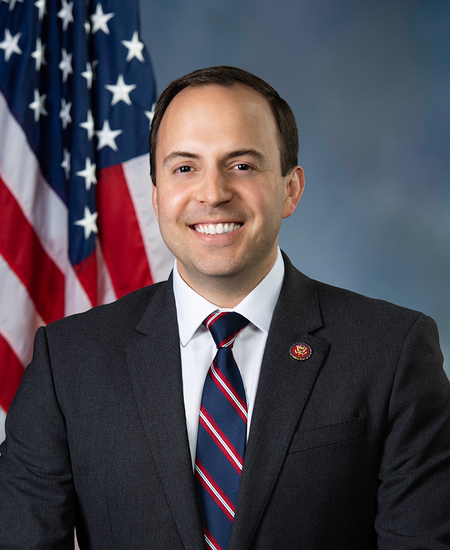
Rep. Lance Gooden
Sponsored bills
Biometric Verification for Entry and Reconfirming Identity with Forensics Act of 2022 or the B-VERIFY Act of 2022 This bill addresses various issues pertaining to immigration, such as (1) requiring any applicant for an immigration benefit, including a U.S. national applying for a noncitizen beneficiary, to provide biometric information, including DNA; (2) permanently barring a noncitizen from becoming a U.S. citizen if the noncitizen is the parent of an unaccompanied alien child who arrives at the U.S. border; and (3) prohibiting the Department of Health and Human Services from expending government funds to provide counsel to detained unaccompanied alien children in legal proceedings.
No More Phones Act This bill prohibits federal agencies from using taxpayer funding to provide cellular devices to individuals who cross the southern border without lawful authorization.
Preserving Border Integrity Act This bill imposes restrictions on non-U.S. nationals (aliens under federal law) seeking asylum in the United States. Under this bill, a non-U.S. national may not, except in certain situations, seek asylum if the individual (1) entered (or attempted to enter) the United States through the northern or southern border, and (2) did not apply for protection from persecution or torture in at least one country that the individual transited through to reach the United States.
Leak and Lose Act of 2022 This bill establishes federal criminal offenses for acts involving the concealment, removal, or destruction of an opinion or draft opinion of the Supreme Court before it is published. Specifically, the bill prohibits the willful and unlawful (1) concealment, removal, mutilation, obliteration, or destruction of an opinion or draft opinion; (2) attempt to conceal, remove, mutilate, obliterate, or destroy an opinion or draft opinion; and (3) taking or carrying away of an opinion or draft opinion with the intent to conceal, remove, mutilate, obliterate, or destroy. An individual who violates the prohibition is subject to a $5,000 fine and, if applicable, the permanent forfeiture of his or her admission to federal courts for the practice of law.
Inmate Financial Accountability Task Force Act This bill establishes a joint task force to (1) develop a strategic plan to improve the criminal and civil debt collection process and establish an effective coordination mechanism among each entity involved in the process, and (2) develop a strategic plan to improve oversight of Bureau of Prisons inmate trust fund accounts for detecting and deterring illicit financial activity and money laundering.
Protecting Innocence in Education Act This bill prohibits federally mandated sex education in elementary schools. Specifically, the bill prohibits the Department of Education (ED) from (1) requiring states, local educational agencies, or elementary schools to implement federal policies relating to sex education in elementary schools; or (2) punishing these entities (e.g., withholding federal funds or levying fines) for failing to implement or carry out these federal policies. Additionally, the bill prohibits the Task Force on Sexual Violence in Education from (1) developing recommendations for these entities with respect to sex education in elementary schools; or (2) assessing ED's ability to levy intermediate fines for noncompliance with Title IX of the Education Amendments of 1972, which prohibits discrimination on the basis of sex in federally funded education programs or activities.
Employee Rights Act This bill makes various changes with respect to the collective bargaining process and labor relations. For example, the bill permits an employer to refuse to collectively bargain with a union within 90 days prior to the expiration of a collective bargaining agreement if the employer receives evidence that the majority of the employees in the bargaining unit do not support the union. The bill requires support from a majority of the employees in the bargaining unit (not just a majority of the employees voting) when electing union representation. The bill also requires unions to provide bargaining unit employees with the right to vote by secret ballot, including when voting whether to engage in a strike or refusal to work. Further, union dues, fees, assessments, and other contributions may be used for only collective bargaining or contract administrative functions. Additionally, the bill establishes a process for nullifying executive orders that the Office of Management and Budget determines are likely to result in an employer ordering a plant closure or mass layoff.
Open App Markets Act This bill establishes rules related to the operation of an app store by a covered company (i.e., the owner or controller of an app store with more than 50 million U.S. users). An app is a software application or electronic service that may be run or directed by a user on a computer or mobile device. An app store is a publicly available website, software application, or other electronic service that distributes apps from third-party developers to users. The bill prohibits a covered company from (1) requiring developers to use an in-app payment system owned or controlled by the company as a condition of distribution or accessibility, (2) requiring that pricing or conditions of sale be equal to or more favorable on its app store than another app store, or (3) taking punitive action against a developer for using or offering different pricing terms or conditions of sale through another in-app payment system or on another app store. A covered company may not interfere with legitimate business communications between developers and users, use non-public business information from a third-party app to compete with the app, or unreasonably prefer or rank its own apps (or those of its business partners) over other apps. The bill provides for enforcement of its provisions by the Federal Trade Commission and the Department of Justice, as well as through suits brought by developers that are injured by reason of anything prohibited by this bill.
Protecting Federal Funds from Human Trafficking and Smuggling Act of 2022 This bill prohibits a nonprofit entity from receiving federal funds (and denies a tax exemption) unless the entity certifies compliance with certain federal laws (e.g., laws with respect to human trafficking and smuggling). It also establishes reporting requirements, including that the Government Accountability Office must annually report to Congress on those nonprofit entities that do not certify their compliance with these laws.