

Maddy summaryHR 8011, the Iranian Terror Prevention Act, requires the U.S. Secretary of State to designate 12 Iranian-affiliated military groups and any entity controlled by Iran's Revolutionary Guard Corps as Foreign Terrorist Organizations within 90 days. It mandates the President to decide within 60 days whether to impose sanctions under existing law (Executive Order 13224) on these groups, which would block their U.S. assets and restrict transactions. The bill also requires the Secretary of State to submit regular reports to Congress on new entities meeting designation criteria and the President to explain any decisions not to impose sanctions. This law directly affects the listed Iranian military groups and any new entities linked to Iran's Revolutionary Guard Corps.
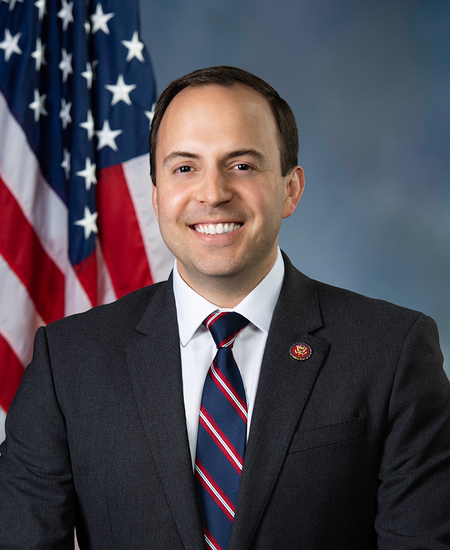
Rep. Lance Gooden
Sponsored bills
Maddy summaryHJRES 128 is a congressional resolution seeking to block an Environmental Protection Agency (EPA) rule that set emissions standards for oil and natural gas facilities. If passed, it would use the Congressional Review Act to formally disapprove the EPA's "Climate Review" rule, which established new requirements for emissions from new, modified, and existing oil and gas sources. The rule directly affects oil and gas companies operating in the U.S., as it would have imposed new regulatory standards on their emissions. This resolution does not create new law but aims to halt the EPA's existing rule from taking effect.
Maddy summaryThis bill amends U.S. Code to lower the minimum student enrollment required for high schools to establish or maintain a Junior Reserve Officers' Training Corps (JROTC) program, reducing the threshold from 100 to 50 students. It directly affects high schools seeking to start or sustain JROTC units, particularly those with smaller student populations. The key provision changes the existing requirement under Title 10, U.S. Code, making it easier for schools to qualify for JROTC participation. This is a straightforward policy adjustment to existing law, with no additional funding or program changes specified.
Maddy summaryHRES 1127 is a symbolic House resolution commemorating the 45th anniversary of the Taiwan Relations Act (TRA) and reaffirming U.S. policy toward Taiwan. It does not create new law but formally reiterates the U.S. commitment to Taiwan under the TRA framework, including regular defense transfers to support Taiwan's self-defense and advocacy for Taiwan's meaningful participation in international organizations. The resolution highlights longstanding U.S.-Taiwan cooperation on trade, security, education, and global challenges like public health and cybersecurity. It specifically calls on the Secretary of State to advance Taiwan's international engagement and supports existing programs like the Taiwan Fellowship Program and the American Institute in Taiwan. As a procedural resolution, it expresses congressional support for current policy without altering legal obligations.
Maddy summaryH.J.Res. 116 seeks to block a Department of Labor rule finalized on January 10, 2024, which aimed to clarify how businesses classify workers as employees or independent contractors under the Fair Labor Standards Act (FLSA). If passed, this resolution would prevent the rule from taking effect, directly affecting businesses that use independent contractors and their workers, who rely on FLSA protections for minimum wage and overtime pay. The bill uses a specific congressional process (under Chapter 8 of Title 5, U.S. Code) to disapprove the rule, rather than creating new policy. This action would maintain the existing classification standards until a new rule is established.
Maddy summaryHR 7873, the Firearm Due Process Protection Act, directly affects individuals denied firearm purchases through the National Instant Criminal Background Check System (NICS). The bill requires courts to hold hearings on challenges to NICS denials within 30 days and shifts the burden to the government to prove eligibility by "clear and convincing evidence." It also mandates annual FBI reports to Congress detailing the number of challenges processed, reversals of denials, and processing times. These provisions aim to expedite due process for people seeking to correct inaccurate NICS records affecting their firearm rights.
Maddy summaryHR 661, "Sarah’s Law," requires U.S. immigration authorities to detain certain immigrants charged with crimes causing death or serious injury. It applies to immigrants who entered without proper inspection, held revoked temporary visas, or fall under specific deportation categories, and who face charges for violent crimes. The bill mandates that immigration officials notify victims or their families (like parents or spouses) about the immigrant’s identity, immigration status, custody details, and removal efforts. This law does not change existing victim rights but adds specific notification requirements for these cases.
Maddy summaryThis bill establishes new eligibility rules for women's and girls' amateur sports by defining "female" and "male" based on biological sex at birth. It prohibits individuals designated as male under these definitions from participating in athletic competitions designated for females, women, or girls. The law amends existing U.S. Code provisions to add this requirement, directly affecting athletes and organizations managing female-designated teams. The key change is a clear ban on male-identified participants in female sports, replacing previous eligibility standards with biological sex criteria.
Maddy summaryHR 6831, the VERDAD Reauthorization Act, extends existing U.S. sanctions and restrictions on Venezuela until December 31, 2025. It modifies four separate laws (the Russian-Venezuelan Threat Mitigation Act, Venezuelan Arms Restriction Act, Venezuela Emergency Relief Act, and Venezuela Defense of Human Rights Act) by updating their expiration dates from 2023 to 2025. The bill does not create new policies but ensures current measures remain in effect. This directly affects U.S. foreign policy enforcement toward Venezuela, maintaining economic restrictions and arms limitations. The key change is simply extending the sunset dates for these existing provisions.
Maddy summaryThis bill establishes a new process for investigating whistleblower retaliation claims within the FBI. It designates the Inspector General of the Department of Justice to receive and investigate allegations of retaliation against FBI employees who disclose information protected under whistleblower laws. The bill sets specific timelines for investigations, requires the Inspector General to notify complainants of investigation status, and allows for corrective actions like reinstatement, back pay, and other remedies if retaliation is found. It also creates procedures for disciplinary action against FBI employees who engage in retaliation and requires annual reports to Congress detailing investigation outcomes. The bill directly affects FBI employees who make protected disclosures and those who retaliate against them.