

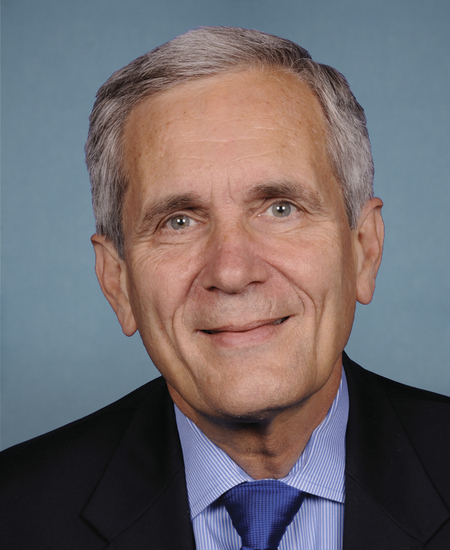
No Capital Gains Allowance for American Adversaries Act This bill treats gains and dividends derived from transactions involving countries of concern as ordinary income. The bill defines countries of concern to include China (including Hong Kong and Macao and excluding Taiwan), Russia, Belarus, Iran, and North Korea.
Rep. Lloyd Doggett
Sponsored bills
Maddy summaryThis resolution (HRES 149) is a symbolic congressional statement condemning Russia's actions in Ukraine, specifically the forcible transfer and abduction of Ukrainian children. It directly addresses the Russian government, citing evidence including Ukrainian reports of over 2,300 children kidnapped and Russia's policy granting citizenship to children born in occupied territories after February 24, 2022. The resolution formally declares these actions violate the Genocide Convention (Article II(e)) and claims Russia is attempting to erase Ukrainian identity by targeting children. As a non-binding resolution, it holds no legal force but expresses the House's official stance against these practices.
Maddy summaryHCONRES 99 is a symbolic congressional resolution honoring Wadee Alfayoumi, a 6-year-old Palestinian-American boy murdered in a hate crime on October 14, 2023, after being stabbed 26 times by a perpetrator who made anti-Muslim and anti-Palestinian remarks. The resolution recognizes Congress's condemnation of hate crimes, Islamophobia, and anti-Palestinian discrimination, while affirming the United States' "zero tolerance" for such violence. As a procedural resolution (not a law), it does not create new policies but formally honors Wadee and his family, emphasizing the need to reject dehumanizing rhetoric targeting religious or ethnic groups.
Maddy summaryThis bill prohibits the interstate transport, sale, breeding, or possession of captive American mink raised for fur production (including parts or offspring), directly affecting mink fur farmers and the fur industry. It includes a limited exception for entities covered under the Lacey Act and establishes a buy-out program where the government may purchase mink farms. The buy-out amount is based on the farmer's average mink count over three years and the farm's infrastructure value. Funding for the buy-out depends on available appropriations. The bill does not apply to mink not raised for fur or to certain wildlife management activities.
Maddy summaryHRES 1074 is a symbolic House resolution reaffirming congressional support for a two-state solution to the Israel-Palestine conflict. It explicitly states the House supports Israel's right to exist as a Jewish, democratic state and recognizes Palestinians' right to sovereignty through a separate state. The resolution identifies a two-state solution as the best path to lasting peace and condemns efforts opposing this approach. As a non-binding resolution, it does not create new law or policy but formally expresses the House's position on this issue. It was introduced by multiple House members on March 12, 2024.
Maddy summaryHR 7629, the Protect Our Letter Carriers Act of 2024, allocates $1.4 billion annually (2025-2029) to the U.S. Postal Service for high-security collection boxes and replacing physical universal mailbox keys with electronic versions, directly affecting USPS operations and letter carriers. It requires the Attorney General to appoint specialized prosecutors in each district to coordinate investigations and prosecutions of postal-related crimes, such as assaults on carriers or mail theft. The bill also mandates the U.S. Sentencing Commission to adjust guidelines so that assaults or robberies against postal employees are treated with the same severity as assaults against law enforcement officers. These provisions aim to enhance safety through infrastructure upgrades, improved prosecution, and stricter sentencing for crimes targeting postal workers.
Maddy summaryThe American High-Speed Rail Act authorizes $35 billion annually for high-speed rail corridor development (with $3 billion for corridor planning), requiring at least 20% of project costs to come from non-Federal sources. It defines "high-speed rail" as services reaching 186+ mph and "higher-speed rail" as 110-186 mph, with no more than 20% of funds allocated to higher-speed rail projects. Key provisions include allowing advance acquisition of rail corridors before environmental reviews, creating tax exclusions for rail carriers selling property to high-speed rail projects, and requiring consideration of equity, sustainability, and economic development impacts in planning. The bill affects federal agencies, state and local governments, rail carriers, and communities along proposed rail corridors.
Maddy summaryHCONRES 95 is a symbolic resolution recognizing March 10, 2024, as "Abortion Provider Appreciation Day." It expresses congressional support for abortion providers and staff who deliver care amid heightened restrictions following the Dobbs decision. The resolution honors their work, acknowledges the threats they face, and condemns the impact of abortion bans on access and provider safety. It does not create new laws or alter existing policies, serving only as a non-binding statement of support.
Maddy summaryHRES 1068 is a symbolic House resolution condemning all forms of rape and sexual violence against women globally, both during conflicts and in peacetime. It specifically denounces the weaponization of sexual violence in recent conflicts (including Hamas attacks on Israel, Sudan, Ukraine, and others) and highlights ongoing issues in the U.S. and worldwide. The resolution calls for international action to hold perpetrators accountable and prioritize eliminating gender-based violence in conflict settings. As a non-binding statement, it does not create new laws or allocate funding but formally expresses congressional disapproval of sexual violence.
Maddy summaryThis bill requires states to immediately stop Medicaid recovery claims against beneficiaries' estates. Specifically, it mandates that states withdraw all existing liens within 90 days of enactment and notify affected individuals or their estates about the withdrawal. The law also prohibits states from initiating, maintaining, or collecting any future Medicaid recovery claims for benefits correctly paid. It directly affects Medicaid recipients and their heirs who were previously subject to state recovery efforts. The key mechanism is the 90-day deadline for states to remove existing liens and cease all new recovery actions.