

Maddy summaryHR 8843, the American Music Tourism Act of 2024, amends the Visit America Act to direct the Assistant Secretary of Commerce for Travel and Tourism to identify and promote U.S. locations and events significant to music tourism for both domestic and international travelers. It requires the Assistant Secretary to specifically promote travel to music-related attractions (like museums, studios, and venues) and music festivals/concerts. The bill also defines "music tourism" as traveling to visit music sites or attend live music events. Finally, it mandates an annual report to Congress on progress toward these tourism goals, starting one year after the bill's enactment.
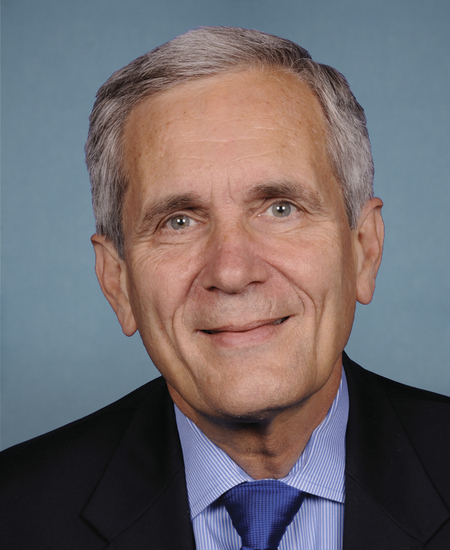
Rep. Lloyd Doggett
Sponsored bills
Maddy summaryThis bill would allow Americans to safely import prescription drugs from Canada, the UK, EU, and Switzerland under specific safety and quality standards. It creates a certification process for foreign pharmacies and distributors, requires imported drugs to match FDA-approved versions in active ingredients and strength, and mandates safety testing through approved laboratories. The law permits individuals to import up to a 90-day supply of qualifying drugs with a valid prescription, while requiring importers to report drug prices and manufacturing details to the FDA. It also prevents drug manufacturers from charging higher prices to foreign sellers who import drugs into the U.S.
Maddy summaryThis bill creates a federal framework for "extreme risk protection orders" (ERPOs) that temporarily remove firearms from individuals who pose a risk of harming themselves or others. Family members or law enforcement officers can petition a federal court for a temporary order (up to 14 days) based on probable cause, followed by a hearing within 72 hours to determine if a longer-term order (up to 180 days) is warranted. The bill requires clear and convincing evidence of risk at the hearing and mandates respondents to surrender firearms to law enforcement within 48 hours. It also includes provisions for reporting, training law enforcement on ERPOs, and a federal grant program to support state ERPO implementation, without preempting state laws.
Maddy summaryHRES 901 is a U.S. House resolution expressing support for democracy and human rights in Pakistan. It calls on the U.S. President and Secretary of State to collaborate with Pakistan to uphold democratic processes, human rights, and the rule of law. The resolution urges Pakistan to protect freedoms of speech, assembly, and press, and to avoid arbitrary detention or suppression of political participation. It also condemns efforts to undermine Pakistan's electoral or judicial systems, including harassment of citizens during protests or interference with elections.
Maddy summaryThe Pell Grant Preservation and Expansion Act of 2024 would double Federal Pell Grants, increasing the maximum award to $10,000 for the 2025-2026 academic year with annual inflation adjustments, and make Pell Grants a fully mandatory program rather than requiring annual appropriations. It would expand eligibility for students with negative student aid indexes (those with the lowest expected family contributions), provide Pell Grant eligibility for "Dreamer" students protected under DACA, and restore eligibility for students who previously lost it due to academic progress issues. The bill would also increase the total semesters of Pell Grant eligibility from 12 to 18. These changes would directly affect millions of undergraduate students, particularly students of color who currently rely on Pell Grants, with 3 in 5 African American students and half of Latino students depending on these grants. The bill would take effect for the 2025-2026 academic year.
Maddy summaryHR 8732, the Domestic Workers Bill of Rights Act, would establish new labor protections for domestic workers including nannies, housekeepers, and caregivers who work in private homes. The bill requires written agreements between employers and domestic employees, provides earned sick days, ensures fair scheduling practices, and prohibits unfair wage deductions for cash shortages or communications. It also creates a Domestic Employee Standards Board to recommend workplace standards and establishes a National Domestic Employee Hotline for assistance. The bill specifically targets domestic workers who have historically been excluded from labor protections under the Fair Labor Standards Act and Civil Rights Act, benefiting an estimated 2.2 million domestic workers in the U.S. who are disproportionately women of color and immigrants.
Maddy summaryThis bill would allow Czech citizens to apply for E-1 business visas to work in the United States for trade and business, but only if the Czech Republic grants similar visa access to U.S. citizens. It directly affects Czech nationals seeking to conduct business in the U.S. and U.S. citizens traveling to the Czech Republic for business. The bill conditionally adds the Czech Republic to the list of countries eligible for E-1 visas, requiring reciprocity in visa treatment between the two nations. This change would expand E-1 visa eligibility for Czech citizens if the Czech government meets the reciprocity condition.
Maddy summaryHRES 1260 is a non-binding resolution expressing the U.S. House of Representatives' support for designating May 2024 as "Progressive Supranuclear Palsy Awareness Month." It recognizes progressive supranuclear palsy (PSP) as a rare neurodegenerative disease affecting approximately 30,000 Americans, with no known cure and symptoms including cognitive decline, balance issues, and speech difficulties. The resolution specifically supports raising public awareness, encourages research for better treatments and a cure, and commends efforts by patients, families, and organizations working to improve PSP care. As a symbolic gesture, it does not create new laws or allocate funding but aims to increase visibility for this under-recognized condition.
Maddy summaryThe George Floyd Justice in Policing Act of 2024 establishes a National Police Misconduct Registry to track complaints and disciplinary actions against officers, requiring all federal, state, and local law enforcement agencies to report use-of-force incidents with racial, gender, and age data. It bans chokeholds and carotid holds in police encounters, prohibits no-knock warrants in drug cases, and reforms qualified immunity to make it harder for officers to avoid accountability for misconduct. The bill mandates body cameras for federal officers, requires independent investigations of officer-involved shootings, and creates new data collection systems to monitor racial profiling and use-of-force patterns. It also includes provisions for civilian oversight boards, improved officer training on de-escalation and implicit bias, and restrictions on military equipment transfers to local police departments. This law affects all law enforcement agencies receiving federal funding under programs like Byrne and COPS grants.
Maddy summaryThe Alzheimer’s Accountability and Investment Act (HR 620) requires the National Institutes of Health (NIH) Director to annually submit a budget estimate for Alzheimer’s-related initiatives - including personnel needs - directly to the President for review and then to Congress. This budget must be prepared after public comment and submitted without changes by the Secretary of Health and Human Services or the Advisory Council. The bill directly affects the NIH’s budget reporting process for Alzheimer’s research and programs, mandating transparency in how funds are allocated. It does not change funding levels but establishes a specific annual reporting mechanism to improve accountability.