

Maddy summaryHRES 1548 is a non-binding resolution supporting the designation of October 2024 as "National Learning Disabilities Awareness Month." It highlights that specific learning disabilities affect 34% of students receiving special education services and notes significant academic challenges, with over 95% of affected 4th and 8th graders not proficient in reading or math in 2022. The resolution calls on schools to continue providing appropriate support for students with learning disabilities but does not create new laws or funding. It aims to raise public awareness about learning disabilities, not to change educational policies.
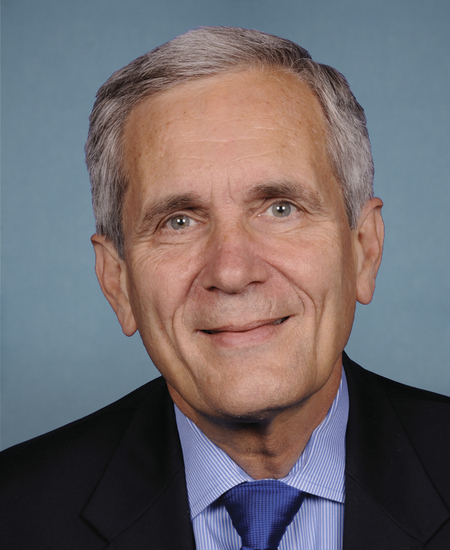
Rep. Lloyd Doggett
Sponsored bills
Maddy summaryThe VA Employee Fairness Act of 2024 modifies collective bargaining rules for employees of the Veterans Health Administration (VHA). It removes existing subsections (b), (c), and (d) from the law governing VHA employee bargaining and renumbers the remaining provision. This change streamlines the collective bargaining framework but does not alter the Secretary of Veterans Affairs' existing authorities over incentive pay and expedited hiring. The bill directly affects VHA employees by changing how their collective bargaining rights are structured under federal law. The law remains neutral, focusing solely on procedural adjustments to the existing bargaining framework.
Maddy summaryHRES 1530 is a non-binding House resolution recognizing former President Jimmy Carter's 100th birthday. It honors his life, public service, and key achievements, including his presidency (noting the Panama Canal treaties, Camp David Accords, and founding the Departments of Education and Energy), post-presidency work with the Carter Center, and decades of humanitarian efforts. The resolution does not create new laws or affect any policies; it is purely commemorative. It formally acknowledges his contributions to Georgia, the U.S., and global peace efforts, including his 2002 Nobel Peace Prize. This symbolic gesture has no direct impact on citizens or government operations.
Maddy summaryHR 7032, the Congressional Budget Office Data Sharing Act, amends the 1974 Congressional Budget Act to give the Congressional Budget Office (CBO) clearer authority to quickly obtain data from executive branch agencies. The bill removes barriers to CBO requests by allowing data sharing "with or without written agreement," while requiring the CBO to maintain required confidentiality levels. It also prevents future laws from limiting this authority unless specifically referenced. The law directly affects the CBO and federal agencies that provide budget-related data, aiming to improve the CBO's ability to analyze government spending.
Maddy summaryHCONRES 131 is a symbolic resolution recognizing the wage gap between Latina women and White, non-Hispanic men in the U.S. workforce. It highlights that Latina women working full-time earn 58 cents for every dollar earned by White, non-Hispanic men, with an average lifetime earnings loss of over $1.2 million. The resolution designates October 3, 2024, as "Latina Equal Pay Day" to draw attention to this disparity, citing Bureau of Census data showing the gap has persisted for decades. It does not create new laws or policies but formally acknowledges the economic impact on Latina women and their families.
Maddy summaryHR 1719, the Honoring Our Fallen Heroes Act of 2023, establishes a presumption that certain cancers diagnosed in public safety officers (like police and firefighters) are work-related if linked to their duties. It defines 22 specific cancers (including lung, mesothelioma, and WTC-related cancers) as "exposure-related," allowing officers or their families to receive benefits without proving direct work connection, provided they were diagnosed within 15 years of leaving active service. The bill also creates a process for adding new cancers to the list based on scientific evidence, requiring the Bureau to review petitions and make decisions within 180 days. This applies to deaths or disabilities occurring on or after January 1, 2023, directly affecting officers who developed covered cancers during service.
Maddy summaryHCONRES 130 is a symbolic concurrent resolution commending state and local governments that treat reproductive rights as human rights following the *Dobbs* decision. It recognizes efforts by cities like Austin, Texas, and Montgomery County, Maryland, to expand abortion access and condemn criminalization of pregnancy outcomes. The resolution affirms that reproductive rights are human rights, urges states to repeal restrictive laws, and references U.S. obligations under international human rights treaties. As a non-binding resolution, it does not create new laws or alter existing policies.
Maddy summaryHRES 1499 is a symbolic resolution expressing concern about rising book bans in U.S. schools and libraries, citing PEN America data showing over 10,000 individual book bans in public schools between July 2023 and June 2024 - more than double the previous year. It highlights how bans disproportionately target books featuring LGBTQ+ themes, racial history, and marginalized voices (like *The Handmaid’s Tale*, *Maus*, and *Fry Bread*), while emphasizing students’ First Amendment rights to access diverse materials. The resolution calls on school districts and libraries to follow established best practices for handling book challenges and to protect students’ right to read widely, including works reflecting diverse perspectives. As a non-binding resolution, it does not create new law but urges local education entities to uphold free expression.
Maddy summary# Summary of Health Equity and Accountability Act of 2024 This comprehensive legislation addresses multiple aspects of health care access, workforce development, and immigration policy with a strong focus on health equity. ## Key Themes 1. **Workforce Diversity**: Significant emphasis on increasing racial, ethnic, and socioeconomic diversity in the health care workforce 2. **Language Access**: Mandates for language access services for individuals with limited English proficiency 3. **Underserved Communities**: Targeted investments in medically underserved areas and communities 4. **Immigration Policy**: Modifications to programs that bring health care professionals to the U.S. ## Major Provisions ### Workforce Development - **$1 billion** for nursing education enhancement and modernization grants in underserved areas - **$552 million** for health professions workforce development in 2032 (increasing annually) - **$392 million** for health professions education programs in 2025 - New grants for schools of medicine and osteopathic medicine in underserved areas - Expansion of the Conrad State 30 program for foreign physicians to address physician shortages ### Language Access - Requires health care providers to provide language access services to individuals with limited English proficiency - Mandates translation services and interpretation services for all health care settings ### Diversity Initiatives - **David Satcher Public Health and Health Services Corps** to increase awareness of health career opportunities - **Louis Stokes Public Health Scholars Program** for underrepresented students - **Patsy Mink Health and Gender Research Fellowship Program** - **Paul David Wellstone International Health Fellowship Program** - **Edward R. Roybal Health Scholar Program** ### Immigration Policy - **Conrad State 30 program extension** through 2027 - **Physician retention** provisions to help foreign physicians stay in medically underserved areas - **Dual intent for physicians** seeking graduate medical training - **Clarifications to national interest waiver** requirements - **Automatic extension** of physician nonimmigrant status during residency transitions ### Funding - **Health Professions Workforce Fund** established with multi-year funding increasing from $392 million in 2025 to $552 million in 2032 - Specific allocations for nursing workforce development and health professions education This legislation represents a comprehensive approach to addressing health care disparities through workforce development, improved access, and policy changes to support a more diverse and equitable health care system.
Maddy summaryHRES 1479 is a symbolic resolution expressing the U.S. House of Representatives' support for "National Hydrocephalus Awareness Month" (September) and "World Hydrocephalus Day" (September 20). It does not create new laws or alter funding but formally endorses awareness efforts for hydrocephalus, a condition affecting approximately 1 million people in the U.S. The resolution highlights the condition's impact - including high medical costs, shunt-related complications, and challenges in pediatric-to-adult care - while calling for continued research support. It directly affects awareness campaigns led by organizations like the Hydrocephalus Association and Pediatric Hydrocephalus Foundation.