

Maddy summaryThis bill creates a new Medicare payment model for emergency medical services (EMS) that allows coverage when ambulance providers deliver critical care on-site without transporting patients to a hospital. It directly affects Medicare beneficiaries receiving such on-site emergency care and ambulance providers who would previously not be reimbursed for non-transport services. The key provision requires Medicare to pay for these services at rates matching what would have been paid for transport, based on state protocols and emergency call responses, for a 5-year trial period. A report due 4 years after implementation will evaluate impacts on patient outcomes, system efficiency, and regional access.
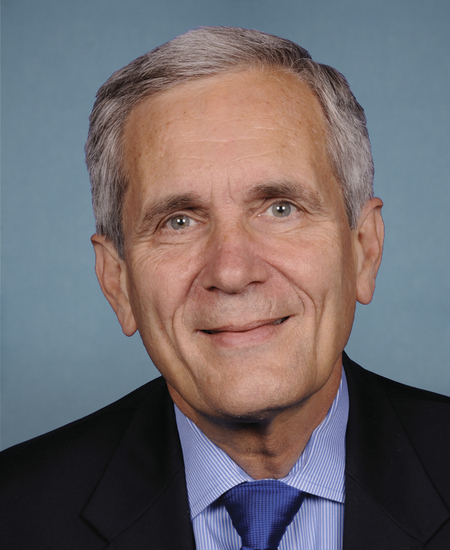
Rep. Lloyd Doggett
Sponsored bills
Maddy summaryHR 8796, the "Stop Comstock Act," removes outdated restrictions from federal law that previously banned the distribution of materials related to contraception and abortion as "obscene" or "indecent." The bill amends Title 18 and the Tariff Act by deleting references to "indecent," "immoral," "unlawful abortion," and "procuring abortion" from provisions governing obscene materials. It clarifies that the law only prohibits "obscene materials" in commerce, eliminating broad restrictions on reproductive health information. This directly affects internet platforms, healthcare providers, and individuals sharing reproductive health resources by removing legal barriers to their distribution.
Maddy summaryHR 8586, the TOOMAJ Act, mandates U.S. sanctions against Iranian judges and prosecutors in the Islamic Revolutionary Courts who oversee cases involving political prisoners. It requires the President to annually determine and impose sanctions - using existing authorities like Executive Order 13818 - on officials involved in inhumane treatment, torture, or unfair trials of protesters and dissidents. The bill targets those handling cases stemming from Iran's crackdown on the Woman Life Freedom movement, following documented abuses like coerced confessions and executions. It aims to hold accountable judicial figures facilitating human rights violations, as detailed in the UN Fact-Finding Mission's 2024 report.
Maddy summaryThe MEGOBARI Act directs the U.S. government to investigate and address democratic backsliding in Georgia. It requires reports within 90 days on Georgian corruption tied to Russian interests, sanctions evasion, and Russian intelligence assets, followed by potential sanctions against Georgian officials deemed responsible for undermining democracy or advancing Russian-style laws. The bill also establishes a U.S. democracy monitoring task force in Georgia and links additional U.S. aid - including trade negotiations, visa liberalization, economic packages, and defense support - to Georgia's progress toward fair elections and a free political environment. These provisions directly affect Georgia's government officials (who could face sanctions) and Georgia's eligibility for U.S. assistance. The bill does not impose new sanctions but mandates U.S. agencies to identify and sanction specific Georgian individuals under existing legal authorities.
Maddy summaryHR 7641, the Justice for Patients Act, prohibits health insurance plans and issuers from requiring patients to use pre-dispute arbitration or blocking class-action lawsuits for coverage-related claims. It directly affects all patients with group or individual health insurance plans and the insurance companies offering those plans. The bill bans two specific contract terms: mandatory arbitration clauses for health coverage disputes and limitations on class actions for plan administration issues. If enacted, these provisions would be unenforceable under federal law, ensuring patients retain their right to pursue legal action in court.
Maddy summaryThis bill amends Medicare eligibility rules to explicitly include occupational therapy as a qualifying service for home health care. It changes the Social Security Act to state that beneficiaries need "occupational, or speech therapy" (instead of only "speech therapy") to qualify for home health services. This change directly affects Medicare beneficiaries requiring occupational therapy at home, expanding access to this specific care. The policy takes effect for services provided on or after January 1, 2025.
Maddy summaryHR 7119, the Fairness in Nursing Home Arbitration Act, prohibits nursing homes and providers of home health or community-based care from requiring residents or patients to sign arbitration agreements before any dispute arises. It directly affects residents of skilled nursing facilities (covered under Medicare) and individuals receiving home health or nursing care (covered under Medicaid), preventing facilities from enforcing such agreements for current or former patients. The key provision bans the use of pre-dispute arbitration agreements entirely, making them invalid and unenforceable, and ensures courts - not arbitrators - decide disputes related to these agreements. The bill applies to all service providers, including their employees and affiliates, and takes effect upon enactment.
Maddy summaryThe Nutrition CARE Act of 2024 expands Medicare Part B coverage to include medical nutrition therapy services for beneficiaries diagnosed with eating disorders. It directly affects Medicare beneficiaries with eating disorders - particularly an estimated 420,500-560,700 Black, Indigenous, and People of Color seniors - by requiring coverage for 13 hours of initial care (including assessment) and 4 hours annually for ongoing management. The bill amends Medicare law to specify that these services must be provided by registered dietitians or nutrition professionals following referrals from physicians or psychologists. Coverage applies to all eating disorders as defined by the DSM-5, addressing a gap where Medicare previously excluded this critical treatment component. This policy change aims to improve access to evidence-based care for a condition linked to high mortality and significant healthcare costs.
Maddy summaryThe FOREST Act of 2023 prohibits U.S. imports of products made from commodities (palm oil, soybeans, cocoa, cattle, and rubber) produced on land where illegal deforestation occurred after the law's enactment. Importers must file declarations demonstrating they've assessed supply chain risks of illegal deforestation, with stricter requirements for products from countries identified in action plans. The law establishes a process to identify countries without adequate deforestation protections and requires them to develop action plans with specific benchmarks for compliance. It creates a fund using import penalty revenue to provide foreign assistance to help countries eliminate illegal deforestation and includes procurement preferences for federal contracts with suppliers demonstrating deforestation-free supply chains.
Maddy summaryHR 6417 amends the existing "Ending Importation of Russian Oil Act" to ban imports of energy products (classified under Harmonized Tariff Schedule chapter 27) produced at any refinery using crude oil originating in Russia. This directly affects U.S. importers and companies bringing in such refined petroleum products. The key provision prohibits these imports regardless of where the refinery is located, targeting oil that has been "laundered" through foreign processing. The bill updates the existing law by adding this origin-based import ban as a new section.