

This resolution expresses U.S. support for Israel and its efforts to defend its right to existence. The resolution also declares that the United States and international community must prevent Iran from acquiring or building nuclear weapons.
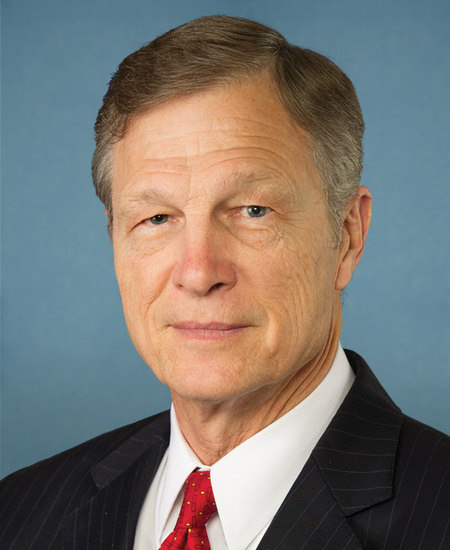
Rep. Brian Babin
Sponsored bills
Maddy summaryThis bill directs the President to determine within 90 days whether to apply sanctions under existing law against the Iran Airports Company, a state-owned entity that facilitates Mahan Air's operations. Mahan Air, already sanctioned by the Treasury for supporting Iran's Revolutionary Guards and regional destabilization, uses Iran Airports Company's infrastructure for flights. The bill does not create new sanctions but requires a formal presidential assessment of whether the airport company should face penalties under Executive Order 13224, which targets entities aiding terrorism. It directly affects Iran Airports Company as the specific entity under review.
Maddy summaryThe Employee Rights Act (HR 2700) amends key labor laws to strengthen employee rights in collective bargaining and privacy. It requires employers to use secret ballot elections for selecting bargaining representatives and to provide labor organizations with voter lists containing employee names and one form of contact information (chosen by the employee) within two business days of an election. The bill prohibits employers from using employee personal information for non-organizing purposes and mandates written authorization for using union dues on non-bargaining activities, with authorizations expiring after one year. Additionally, it clarifies joint employment standards to prevent misclassification and adds tribal sovereignty protections to labor law definitions.
Maddy summaryHR 2928, the Responsible Borrower Protection Act of 2023, blocks the Federal Housing Finance Agency (FHFA) and mortgage enterprises (Fannie Mae and Freddie Mac) from implementing specific changes to mortgage credit fees announced in January 2023. The bill directly affects mortgage borrowers and lenders by reversing a pricing framework update that would have altered fees for single-family mortgages. It prohibits the FHFA from enforcing the January 2023 pricing changes detailed in FHFA's announcement and related lender letters. The bill clarifies that enterprises may still use risk-based pricing for mortgage fees, but the specific fee adjustments from the 2023 framework are canceled. This is a direct policy change to mortgage fee structures, not a broader reform.
Maddy summaryHRES 90 is a resolution demanding the Chinese government immediately release Mark Swidan, a U.S. citizen from Texas who has been detained since 2012 on drug trafficking charges. The resolution cites the UN Human Rights Council Working Group finding his detention arbitrary, with no evidence of drug offenses, passport records showing he wasn’t in China during the alleged crimes, and China denying his family contact and medical care. It specifically condemns China for blocking U.S. diplomatic access and calls on the U.S. government to prioritize Swidan’s release through diplomatic channels. The resolution focuses on the case’s documented legal and humanitarian issues, not broader policy implications.
Transparency of Migration Act This bill requires the Department of Homeland Security and the Department of Health and Human Services (HHS) to make publicly available online certain information about individuals unlawfully present in the United States who are (1) apprehended by U.S. Customs and Border Protection and sent to a federal detention center or released into the United States, or (2) processed through an HHS facility. This information must be updated weekly and must include daily numbers, the country of origin of such individuals, and other details.
Maddy summaryHR 2837, the Border Patrol Pay Parity Act, mandates a pay increase for U.S. Border Patrol agents. It requires the Office of Personnel Management to raise the minimum pay for agents at the standard GS-12 pay grade by at least 14% by January 1, 2024, with potential increases for other grades as determined by the Secretary of Homeland Security. The bill specifically prohibits agency heads from using existing pay discretion to reduce these required increases. This legislation directly affects Border Patrol agents by establishing a minimum pay hike for their standard grade, aiming to align their compensation with other comparable federal positions.
Maddy summaryHR 2826, the Save Local Business Act, clarifies when multiple businesses can be held jointly responsible for labor laws. It amends the National Labor Relations Act and Fair Labor Standards Act to state that a business is only a joint employer if it directly controls key employment terms like hiring, pay, schedules, or discipline for another business's workers. This directly affects franchisors, contractors, and similar business models that might previously have been deemed joint employers under broader interpretations. The bill aims to limit joint employer liability to cases where one business has clear, day-to-day control over essential worker conditions.
Go Woke, Go Broke Act This bill abolishes the Advisory Committee on Racial Equity in the Department of the Treasury. The bill also prohibits Treasury from reestablishing this advisory committee or establishing any substantially similar advisory committee.
Stop the Invasion Act This bill requires the President to bar the entry of certain non-U.S. nationals (aliens under federal law) into the United States if U.S. Customs and Border Protection (CBP) encounters a certain number of inadmissible non-U.S. nationals. Specifically, this bar shall apply if CBP detains or finds on average more than 30,000 such inadmissible individuals each month over the most recent 12-month period. The bar shall cease when the average drops below 30,000 encounters. Such encounters shall include non-U.S. nationals who seek entry into the United States when the President has suspended entry to prevent the spread of a communicable disease. While this bar is in effect, the President must prohibit the entry of non-U.S. nationals who are inadmissible for specified reasons related to illegal entry, violation of immigration law, or lack of documentation.