

Rural Hospital Technical Assistance Program Act This bill provides statutory authority for the Rural Hospital Technical Assistance Program within the Department of Agriculture (USDA). Under the bill, USDA must establish and maintain (directly or by grant, contract, or cooperative agreement) a program to help eligible hospital facilities in rural areas with a population of 50,000 inhabitants or less. The program must provide tailored technical assistance and training to hospital facilities to identify development needs for maintaining essential health care services and support action plans for financial, operational, and quality improvement projects to meet these needs. Development needs include (1) constructing, expanding, and modernizing health care facilities; (2) increasing telehealth capabilities; and (3) acquiring or upgrading health care information systems (e.g., electronic health records). The program must also provide technical assistance and training to help hospital facilities to better manage their financial and business strategies and identify, and apply for assistance from, USDA loan and grant programs. In selecting eligible hospital facilities to participate in the program, USDA must give priority to borrowers and grantees of certain USDA rural assistance programs. USDA must also submit an annual report to Congress on the progress and results of the program.
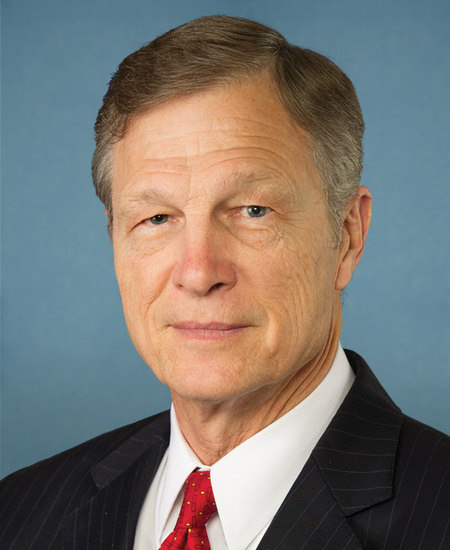
Rep. Brian Babin
Sponsored bills
Maddy summaryHR 4547, the Laws Ensuring Safe Shrimp Act (LESS Act), creates a dedicated fund using 70% of U.S. import duties on shrimp and shrimp products (e.g., frozen shrimp, shrimp-based dishes) to improve safety and labor compliance. The fund allocates 50% to the FDA for inspecting high-risk shrimp for antibiotic contamination and verifying imports aren’t sourced from forced labor or illegal fisheries, and 50% to the USDA to boost domestic shrimp consumption. It directly affects shrimp importers (who pay the duties), federal agencies (FDA, USDA, CBP), and domestic shrimp producers (who benefit from consumption programs). The bill ensures funding supplements existing programs and remains available until spent, focusing on concrete safety and labor checks rather than speculative outcomes.
Maddy summaryHR 5239, the Gulf of Mexico Commerce Protection Act, prohibits the National Oceanic and Atmospheric Administration (NOAA) from creating a vessel slowdown zone in the Gulf of Mexico until the Commerce Secretary completes and reports on a study. The study must prove that any proposed whale protection measures (specifically for Rice’s whales) would not harm supply chains or maritime commerce. The bill requires the Commerce Secretary to develop and report findings within 60 days to specific congressional committees, and explicitly bans nighttime transit bans or fixed slowdown zones in the required mitigation protocols. This bill directly affects NOAA’s regulatory authority and the Commerce Department’s study process, delaying potential environmental rules pending congressional review.
Maddy summaryHR 5161 amends the Elementary and Secondary Education Act to prohibit the use of federal education funds for hunting or archery programs in schools. The bill specifically revises Section 8526 to remove language allowing such funding and adds clarity to fund restrictions. This change directly affects public schools receiving federal education funding by preventing them from using those funds for hunting or archery activities. The policy change is procedural, modifying existing fund usage rules rather than creating new programs or benefits.
Maddy summaryHR 5144, the GOT Act, prohibits all federal employees, elected officials, and judges from maintaining official government accounts on TikTok or any account operated by TikTok's parent company, ByteDance. It directly affects every member of the executive, legislative, and judicial branches of the U.S. government who uses TikTok for work-related purposes. The bill bans creating, establishing, or keeping such accounts on TikTok or equivalent platforms owned by ByteDance. This is a direct policy change to prevent federal personnel from using the platform for official business, citing national security concerns.
Maddy summaryThis bill amends federal funding rules for Title X family planning services. It prohibits the Secretary of Health and Human Services from requiring any State, clinic, or organization receiving Title X funds to provide abortion counseling or referrals as a condition of receiving that funding. The law directly affects all Title X grantees - clinics and providers that receive federal funds for preventive reproductive health services. The key provision ensures that funding eligibility cannot be tied to abortion-related services or referrals.
This resolution honors and recognizes the patriotism and contributions made by generations of veterans service organizations, veteran advocacy groups, and volunteers and commends the members of such organizations for their dedicated service to members of the Armed Forces, veterans, their families, and their communities. The resolution also encourages the people of the United States to promote awareness of the contributions and dedication of members of veterans service, organizations, veteran advocacy groups, and volunteers to members of the Armed Forces, veterans, and their families. Additionally, the resolution calls on citizens to follow the example of such groups and volunteer support and services to those who have served the country.
Maddy summaryHR 5130, the "Finish It Act," requires the Department of Defense to use stored border wall construction materials (valued at approximately $300 million) for building permanent barriers along the U.S.-Mexico border within 30 days of the bill's enactment. It mandates that states receiving materials certify they will use them exclusively for border barriers, with penalties for unused materials (requiring repayment of the original cost) and imposes a 1% budget cut for every two days of delay in implementation. The bill also demands a detailed report from the Department of Defense within 90 days, including internal communications about storage costs and contracts with private landowners. This legislation directly affects the Department of Defense and border states, focusing on redirecting existing resources rather than creating new funding or construction.
Maddy summaryThis is a ceremonial resolution (HRES 622), not a substantive bill. It expresses the U.S. House of Representatives' gratitude and congratulations to the U.S. Coast Guard for its maritime border security efforts in fiscal year 2022. The resolution cites specific achievements like interdicting over 330,000 pounds of narcotics, 12,500 illegal immigrants, and 6,300 vessel boardings. It has no policy impact or legal effect - it solely serves to honor the Coast Guard's service.
Maddy summaryHR 5071, the Space Force Legacy Guardian Recognition Act, creates a process for the Air Force Secretary to designate former Air Force members who supported space operations as "Legacy Guardians" in the Space Force. It applies to individuals who served in space-related roles and separated from the Air Force, allowing them to receive a certificate or insignia acknowledging their service. The bill establishes eligibility criteria (including service dates and constructive credit) and an application process for the individual or their survivor. This recognition is purely honorary and does not grant any additional benefits beyond those specified in the bill.