

Maddy summaryH.J. Res. 193 proposes a constitutional amendment to eliminate legal immunity for federal officials, including the President, from criminal prosecution for actions taken while performing official duties. It also prohibits the President from granting a pardon to themselves. The amendment would apply to all federal officers (such as the President, Vice President, and members of Congress) except for Congress members acting in their legislative role as defined in the Constitution. If ratified by 38 states, this change would become part of the U.S. Constitution, requiring no further congressional action.
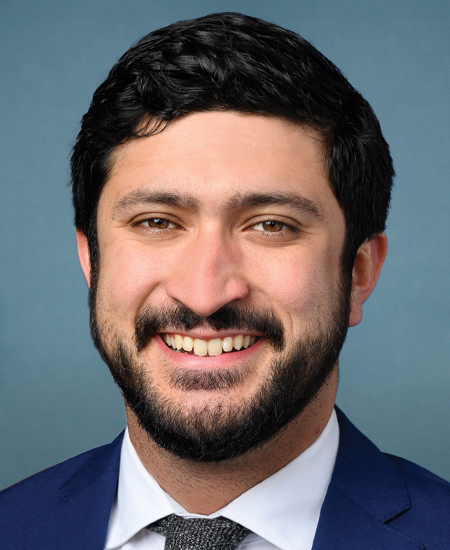
Rep. Greg Casar
Sponsored bills
Maddy summaryHRES 1353 is a resolution introduced by House members to impeach Supreme Court Associate Justice Clarence Thomas. The resolution outlines three articles of impeachment alleging Thomas failed to disclose gifts and financial transactions with donor Harlan Crow over 15 years, refused to recuse from cases involving his spouse's financial interests, and participated in cases concerning the 2020 election results despite his spouse's involvement in efforts to overturn them. These allegations claim Thomas violated federal ethics laws requiring judicial disclosure and recusal to maintain impartiality. The resolution would be referred to the Senate for trial if passed by the House, but it is not a law that would directly affect anyone beyond the impeachment process.
Maddy summaryThis resolution (HRES 1354) is a formal House of Representatives impeachment action against Supreme Court Justice Samuel Alito, introduced by multiple Democratic representatives on July 10, 2024. It alleges two violations: (1) Alito failed to recuse himself from three election-related cases (Trump v. United States, Fischer v. United States, and Trump v. Anderson) despite flying flags associated with the 2020 election denial movement outside his homes, which the resolution claims demonstrated bias; and (2) Alito allegedly failed to disclose luxury travel gifts from donors, violating financial disclosure laws. The resolution argues these actions breached his judicial oaths and federal recusal statutes (28 U.S.C. § 455) and financial disclosure requirements (5 U.S.C. §§ 13103-13104). As a procedural resolution, it initiates impeachment proceedings but does not change law or policy; the Senate would need to hold a trial for removal.
Maddy summaryHR 8988, the "Get Foreign Money Out of U.S. Elections Act," expands federal law to prohibit foreign-controlled businesses from influencing U.S. elections. It bans contributions or spending by any for-profit business entity where foreign nationals own 50% or more of voting shares, or where foreign entities collectively own 5% or more (or exert control over election activities). Businesses must certify compliance before making election-related spending, including contributions to political committees, and recipients cannot reuse uncertified funds for further election activities. This bill directly affects foreign-owned corporations, partnerships, and similar entities seeking to participate in U.S. elections.
Maddy summaryThe SHIELD Act (HR 8980) establishes a federal grant program to improve access to legal representation for people facing deportation. It authorizes $100 million annually for fiscal years 2025-2026 to fund workforce development and legal services infrastructure through competitive grants to states, local governments, and community organizations. The program will support recruitment, training, and retention of legal professionals to provide high-quality, culturally competent representation to immigrants in deportation proceedings. Grantees must report on services provided, outcomes achieved, and unmet needs to ensure accountability and measure the program's impact on addressing the current shortage of legal representation in immigration court.
Maddy summaryHR 8825, the Right to Vote Act, establishes a fundamental right for all citizens of legal voting age to vote in federal elections. It directly affects voters across all states and territories by prohibiting government actions that make voting harder (like restrictive ID laws or reduced polling places) unless those actions are the least restrictive way to serve a significant government interest. The bill creates two legal standards: "retrogression" (diminishing voting access) and "substantial impairment" (making voting significantly harder), allowing voters to sue in federal court to challenge such restrictions. Courts must expedite these cases, and the law applies to all federal elections occurring on or after September 1, 2024.
Maddy summaryHR 8911, the Worker Rights and Support Act, requires most employers to provide specific breaks to employees under the Fair Labor Standards Act. It mandates 30-minute meal breaks after 6 hours of work (unpaid unless work continues), 10-minute rest breaks every 4 hours (paid), and medical breaks (up to 20 minutes per need, paid) for documented health conditions. The bill ensures breaks are paid if employees aren't fully relieved of work duties or can't leave the premises. It does not override collective bargaining agreements or stricter state laws, and adds enforcement penalties for violations of these break requirements.
Maddy summaryHRES 901 is a U.S. House resolution expressing support for democracy and human rights in Pakistan. It calls on the U.S. President and Secretary of State to collaborate with Pakistan to uphold democratic processes, human rights, and the rule of law. The resolution urges Pakistan to protect freedoms of speech, assembly, and press, and to avoid arbitrary detention or suppression of political participation. It also condemns efforts to undermine Pakistan's electoral or judicial systems, including harassment of citizens during protests or interference with elections.
Maddy summaryHR 8830, the High Court Gift Ban Act, sets strict limits on gifts federal judges may accept. It prohibits judges from receiving gifts valued over $50 from a single source in a year, unless the total from that source stays under $100 annually. Key exceptions include gifts paid for by the judge, gifts from relatives, honorary degrees from educational institutions, and public opportunities available to all federal employees. The bill also outlines enforcement mechanisms, requiring the Judicial Conference to refer violations to the Attorney General for civil or criminal penalties. This directly affects all federal judges, including Supreme Court justices and lower court judges, by restricting gifts from sources that may have business before them.
Maddy summaryThis bill amends the Occupational Safety and Health Act to explicitly include public employees - such as those working for federal, state, or local government agencies - under OSHA's coverage. It changes the definition of "employee" to specify that public sector workers are protected, removing previous exclusions. The law takes effect 90 days after enactment for most workplaces, but gives states and local governments without OSHA-approved plans up to 36 months to comply. This directly affects public service workers in government roles by bringing their workplace safety protections under the same federal OSHA framework as private-sector employees.