This resolution recognizes the annual celebration of Dia de los Muertos. The resolution urges the United States and the Department of Homeland Security to promote policies that uphold the human dignity of each migrant person and put an end to migrant deaths along the U.S.-Mexico border. Finally, this resolution calls on the United States and the Department of Health and Human Services to promote policies focused on COVID-19 protections and ensure that all communities have equal access to these to put an end to COVID-19 related deaths.
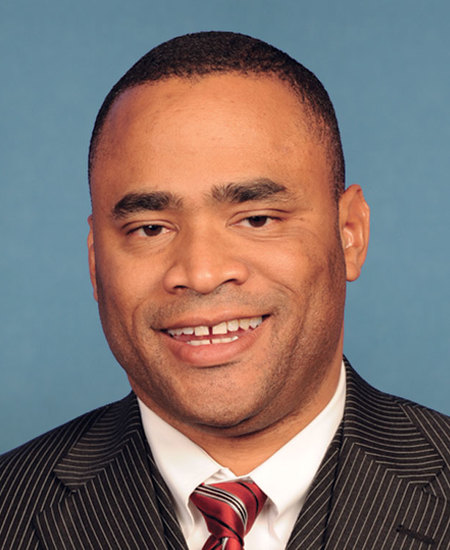
Rep. Marc A. Veasey
Sponsored bills
This resolution expresses support for the designation of National Voting Rights Month, encourages people to uphold the right to vote, encourages Congress to pass certain voting rights legislation, recommends the development of a curriculum in public schools and universities regarding voting, encourages the U.S. Postal Service to issue a special John R. Lewis stamp during the month of September, and invites Congress to allocate funds for public service announcements regarding elections.
This resolution supports the members of the 87th Texas legislature who fought against the passage of a recent piece of legislation that included provisions related to voter access.
This resolution recognizes Immigrant Heritage Month in honor of the contributions immigrants and their children have made to the United States. It also welcomes immigrants presently in the United States and individuals seeking to immigrate to the United States to contribute to the health, safety, diversity, and prosperity of the United States.
This resolution supports the members of the 87th Texas legislature who fought against the passage of a recent piece of legislation that included provisions related to voter access.
Governing Unaccredited Representatives Defrauding VA Benefits Act or the GUARD VA Benefits Act This bill imposes criminal penalties and/or fines on individuals for directly or indirectly soliciting, contracting for, charging, or receiving any unauthorized fee or compensation with respect to the preparation, presentation, or prosecution of any claim for Department of Veterans Affairs benefits. The attempted commission of such offenses is also punishable by fine or imprisonment.
Protecting Families from Fertility Fraud Act of 2022 This bill establishes a new federal criminal offense for knowingly misrepresenting the nature or source of DNA used in assisted reproductive technology or assisted insemination. The term assisted reproductive technology includes any treatment or procedure that involves the handling of human oocytes or embryos, such as in vitro fertilization, gamete intrafallopian transfer, and zygote intrafallopian transfer. The term assisted insemination includes any procedure that involves the handling of sperm including intrauterine insemination. A violation is subject to a fine, a prison term of up to 10 years, or both. Additionally, the bill makes the violation a predicate offense (i.e., an underlying offense) for prosecutions under the federal racketeering statute.
This bill requires states to prioritize additional groups (i.e., victims of firearm violence or the family members of victims of homicide) for state victim assistance formula grants.
Strengthen and Tackle Opportunities to Prevent Violence Act of 2022 or the STOP Violence Act of 2022 This bill allows funds under the Antiterrorism and Emergency Assistance Program to be used for efforts to prepare against mass violence and protect public assembly facilities.
Digital Civil and Human Rights Act of 2022 This bill establishes prohibitions on the use of automated systems in a discriminatory manner. Specifically, the bill prohibits (1) a federal agency, U.S. court, or state, local, or tribal government from using any automated decision system that has a disparate impact on the basis of race, national origin, color, religion, disability, or sex; or (2) the use of automated systems with bias by the Department of Defense. Each federal agency must maintain on its public website a bias data sheet for each automated decision system used by such agency with the potential for a disparate impact on such bases. The bill prohibits a respondent, in connection with the selection or referral of applicants or candidates for employment or promotion, from using any automated decision system that has a disparate impact on the basis of race, color, religion, sex, or national origin. The bill prohibits places of public accommodation from using in their operations that affect commerce any decision system that has a disparate impact on the basis of race, color, religion, sex, or national origin. The bill requires (1) the Office of the Director of National Intelligence to submit to Congress a report on the use within the intelligence community of automated decision systems with an adverse distinction based on race, religion, sex, health, age, or any other similar criteria; and (2) the National Institute of Standards and Technology to develop, publish, and maintain standards for reporting bias in an automated decision system.