

Maddy summaryThis bill helps new car dealers affected by pandemic-era supply chain disruptions by changing tax rules for inventory sales. It allows dealers using LIFO accounting to treat certain sales of unsold vehicles (liquidations) between March 2020 and December 2021 as "qualified" for tax purposes. Dealers can defer recognizing income from these sales and have until 2026 to replace the sold vehicles before potential tax adjustments apply. The provision specifically targets dealers who couldn't replenish inventory during the supply chain crisis.
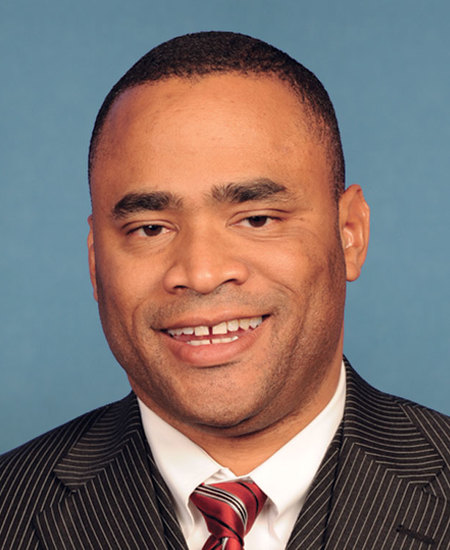
Rep. Marc A. Veasey
Sponsored bills
Maddy summaryThis bill amends the Elementary and Secondary Education Act to require that Black history be included in all federally supported American history and civics education programs. It directly affects K-12 public schools receiving federal education funding by mandating that curriculum frameworks, teacher training, and national assessments explicitly incorporate Black history as part of American history. The key mechanism is adding "which shall include Black history" to existing provisions across multiple sections of the law, including classroom instruction, teacher academies, and national assessments. This change ensures Black history is integrated into established educational standards rather than creating new programs.
Maddy summaryHR 709, the Muhammad Ali Congressional Gold Medal Act, authorizes Congress to award Muhammad Ali a gold medal in recognition of his life and achievements. The bill directs the Secretary of the Treasury to strike a gold medal for presentation by congressional leaders, which will then be given to Ali's widow, Lonnie Ali. Duplicate bronze medals may be sold to cover production costs, with proceeds deposited into the U.S. Mint fund. This is a commemorative measure, not a policy change affecting laws or programs.
Maddy summaryHR 660, "Ethan's Law," requires gun owners in homes where minors (under 18) or individuals prohibited from owning firearms under federal/state law reside to store firearms securely. It makes unsecured storage unlawful if a minor or prohibited person could access the firearm, with fines of $500 per violation and enhanced penalties (up to 5 years in prison) if injury or death occurs. The bill also establishes a federal grant program to help states implement similar secure storage laws and provides funding incentives for states that already have such laws in place.
Maddy summaryThis bill prohibits the possession, sale, or transfer of most large-capacity ammunition magazines (holding more than 15 rounds) for the general public, while exempting law enforcement officers (including campus security officers), retired officers, and certain licensed entities like nuclear facility security. It requires new magazines manufactured after enactment to have serial numbers and manufacturing dates, and allows federal grant funds to support buy-back programs for these devices. Existing owners of such magazines lawfully possessed before the law's enactment are exempt from the prohibition. The law applies to devices not already covered under current exemptions for law enforcement, nuclear security, and retired officers.
Maddy summaryThe HEAL Act (HR 603) requires the U.S. Holocaust Memorial Museum Director to study how public elementary and secondary schools teach about the Holocaust and related antisemitism. The study will examine curriculum requirements, teaching methods (like project-based learning), instructional materials, and assessment approaches across states and school districts. It specifically analyzes whether Holocaust education is mandatory, optional, or integrated across subjects, and how schools address antisemitism and genocide prevention. The resulting report, due within 180 days of the study or three years after enactment, will inform Congress but does not change current school policies. This is a data-gathering measure, not a policy mandate.
Maddy summaryHR 506, the HARM Act, requires the U.S. Secretary of State to designate the Wagner Group as a foreign terrorist organization under immigration law within 90 days of the bill's enactment. This designation would directly affect the Wagner Group and its affiliated entities, subjecting them to sanctions under U.S. law. The bill mandates that the designation apply to any successor or affiliated groups engaged in activities against U.S. interests, including operations in Ukraine, Africa, and the Middle East. It also requires the Secretary of State to submit an annual report on the Wagner Group's international activities to specific congressional committees. The bill focuses on the legal process for designation, not on outcomes or advocacy.
Maddy summaryHR 451, the Protecting Families from Fertility Fraud Act of 2023, creates a federal crime for knowingly misrepresenting the source or nature of DNA used in fertility treatments like IVF or sperm insemination. It directly affects fertility clinics, patients, and individuals who commit such fraud by making it punishable by fines or up to 10 years in prison. The law applies when the fraud involves interstate commerce (e.g., payments, communications, or materials crossing state lines) or occurs within U.S. territories. It also extends the statute of limitations for prosecution to 10 years after DNA identifies the perpetrator. This bill targets specific deceptive practices in assisted reproductive technology, not broader fertility care.
Maddy summaryThis bill renames a U.S. Postal Service facility at 620 East Pecan Boulevard in McAllen, Texas, as the "Agent Raul H. Gonzalez Jr. Memorial Post Office." It updates all federal references to the location to reflect this new name. The bill has no policy impact - it is purely a ceremonial designation honoring an individual. No other provisions or affected groups are involved.
Maddy summaryHR 396, the Closing the Bump Stock Loophole Act of 2023, defines "bump stock" as any device or modification that increases the firing rate of a semi-automatic weapon to mimic a machine gun. The bill amends federal tax and firearms laws to classify bump stocks as prohibited devices under the National Firearms Act, requiring existing owners to register them within one year of enactment. It directly affects individuals who currently own bump stocks by mandating registration to avoid future possession prohibitions. The law takes effect immediately for new sales but provides a one-year grace period for existing owners to comply with registration requirements.