

Chyna Gibson Stop the Transgender Murder Epidemic Act of 2023 or the Chyna Gibson STME Act of 2023 This bill establishes a commission to address various issues facing gender-nonconforming, gender-expansive, and transgender women of color. The commission must be comprised of 13 members who are qualified based on their education, training, activism, or experience, particularly in the field of transgender studies and human rights. The commission may hold hearings and must report its findings and recommendations to Congress no later than 18 months after its first meeting.
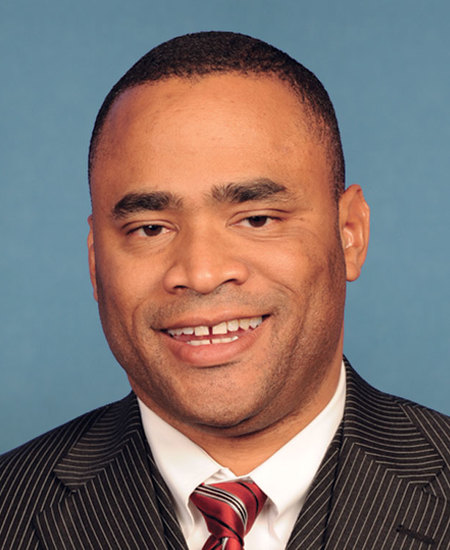
Rep. Marc A. Veasey
Sponsored bills
Maddy summaryThis bill prohibits the commercial import, sale, or distribution of kangaroos and kangaroo products (like leather goods made from their hides) within the United States. It directly affects businesses involved in importing or selling these items, including retailers, importers, and manufacturers. The key provision bans bringing kangaroos into the U.S. for sale, selling kangaroo products, or advertising such items in interstate commerce. Violations carry fines up to $10,000 or up to one year in prison per offense, and the Commerce Secretary must issue implementing regulations.
Maddy summaryThis resolution (HRES 618) is a ceremonial recognition of hip-hop's 50th anniversary, marking August 11, 1973, as the date when DJ Kool Herc's Back to School Jam in the Bronx is credited with originating the culture. It acknowledges hip-hop's foundational role in American art, music, fashion, and its $1 billion+ annual economic impact, while highlighting its roots in Black creativity and evolution across regions. The resolution encourages House members to organize commemorative activities and urges local governments to partner with hip-hop entities to celebrate its cultural significance. As a symbolic gesture, it has no legal effect or direct impact on individuals or policy.
Maddy summaryThis bill establishes new federal requirements for employers to prevent heat-related illness and injury among workers. It mandates that employers provide safe work environments by implementing specific measures, including access to cool water, scheduled rest breaks in shaded areas, employer-paid cooling equipment, and training for employees and supervisors on recognizing heat illness symptoms. The Secretary of Labor must create these standards within one year, requiring employers in high-heat occupations (like construction, agriculture, and outdoor labor) to adopt engineering controls, administrative schedules, and health protocols. Key provisions include ensuring hydration, rest, and language-accessible training, while preserving existing safety protections and allowing for updates as scientific evidence evolves.
Maddy summaryThis bill expands employee ownership in S corporations by extending tax deferral for selling company stock to employee ownership plans (ESOPs), creating a Treasury Department office to provide education and technical assistance for ESOPs, and amending small business rules to maintain eligibility for government programs after ESOP ownership exceeds 49%. It establishes a new Labor Department "Advocate for Employee Ownership" to coordinate federal efforts, educate stakeholders, and recommend policy improvements. The bill directly affects S corporations using ESOPs, their employees who become owners, and small businesses that might lose government program access due to ESOP acquisitions. Key provisions include tax incentive extensions, new support offices, and updated small business classification rules.
Maddy summaryHR 1776, the End Tuberculosis Now Act of 2023, would amend U.S. foreign assistance law to strengthen global tuberculosis (TB) programs. The bill requires U.S. assistance to align with the World Health Organization's End TB Strategy, aiming to reduce TB deaths by 95% and incidence by 90% by 2035. It mandates annual reporting on TB diagnosis and treatment progress, prioritizes research for new diagnostics and treatments, and emphasizes integrating TB services into primary health care. The legislation affects U.S. government agencies, global health partners, and countries with high TB burdens, particularly focusing on low- and middle-income nations.
Maddy summaryThis bill directs the U.S. Treasury to mint commemorative coins marking the Marine Corps' 250th anniversary in 2025. It authorizes three coin types: $5 gold coins (max 50,000), $1 silver coins (max 400,000), and half-dollar coins (max 750,000), with surcharges of $35, $10, and $5 respectively. The surcharge proceeds will fund the Marine Corps Heritage Center's educational programs, with no net cost to taxpayers as the Treasury must recover all minting costs through the surcharges. The coins can only be issued during 2025, and the Treasury must ensure all costs are covered before distributing funds to the Heritage Foundation.
Maddy summaryHR 984, the Commitment to Veteran Support and Outreach Act, authorizes $50 million annually (2024-2028) for grants to states and tribes to improve outreach to veterans and their families. The bill provides funding to hire more county/Tribal veterans service officers, expand existing outreach programs, and ensure equitable access to benefits for vulnerable groups like American Indian veterans, elderly veterans, and women veterans. States and tribes must submit detailed plans, track how quickly veterans receive benefits, and report annually on progress toward outcome measures set by the Veterans Affairs Secretary. Grants must supplement, not replace, existing state/local funding and prioritize areas with critical officer shortages or high veteran suicide rates.
Maddy summaryHR 4865, the IDB Transparency Act, requires the U.S. Treasury Secretary to submit a detailed report within 180 days of enactment on China's influence at the Inter-American Development Bank (IDB). The report must include all projects funded by China or Chinese companies since 2009, assess risks like corruption or human rights issues, and analyze how China uses the IDB to advance its diplomatic and economic interests. It also mandates that the U.S. Executive Director at the IDB actively reduce China's influence by reviewing high-risk projects, voting against certain projects, and opposing China's increased shareholding. The U.S. must submit updated reports every two years for a decade, with summaries made public 60-90 days after submission.
Maddy summaryHR 4852, the "IDs for an Inclusive Democracy Act," requires the Social Security Administration to create and issue free federal identification cards within three years. These cards would be accepted like state driver's licenses for most purposes, including voting and accessing services, and must include a gender option for "X" (unspecified/other identity) alongside male and female. The bill mandates the U.S. Postal Service to handle applications through existing passport-like processes, with free photography and mail-in options, and establishes a Task Force to develop security features and accessibility guidelines. It also sets special validity rules: cards for minors expire at age 18, while those for seniors 65+ remain valid indefinitely after their 10-year term.