

Maddy summaryThe Keep Kids Covered Act extends continuous health coverage under Medicaid and CHIP for children. It requires states to maintain coverage for children under age 6 for six years (previously one year) and for children under age 19 for two years (previously one year), without requiring reapplication. Former foster youth will now remain covered until age 26. States must also annually update contact information for enrolled children and inform them about their coverage status and remaining eligibility period.
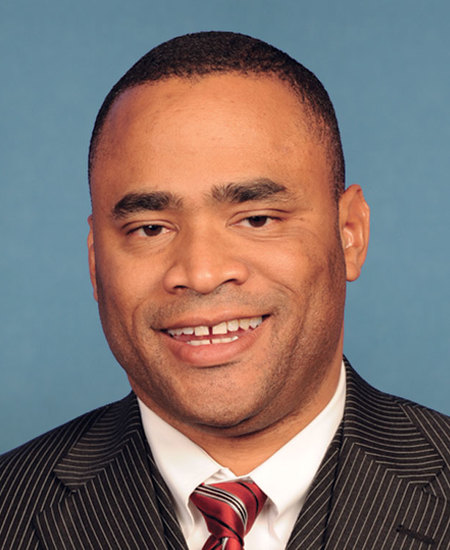
Rep. Marc A. Veasey
Sponsored bills
Maddy summaryThe Facial Recognition Act of 2025 regulates law enforcement use of facial recognition technology by requiring court orders for most searches of reference photo databases, with limited exceptions for emergencies or specific situations like identifying victims or those in AMBER alerts. The bill mandates annual accuracy and bias testing of facial recognition systems by the National Institute of Standards and Technology, requires removal of photos from arrest databases for certain individuals (like minors or those not charged), and establishes detailed reporting requirements for all facial recognition use. It prohibits using facial recognition for immigration enforcement or to track people's constitutional rights, and creates civil remedies for violations. The bill applies to federal, state, and local law enforcement agencies, with potential funding reductions for states that fail to comply with its requirements.
Maddy summaryH.J. Res. 108 proposes a constitutional amendment to remove legal immunity for federal officials, including the President, from criminal prosecution for actions taken while performing official duties. It would prohibit the President from granting pardons to themselves and eliminate the defense that "official authority" excuses violations of federal or state law (with limited exceptions for certain congressional actions). If ratified, this amendment would require Congress to pass implementing laws to enforce these changes. The proposal is currently in the House Judiciary Committee and requires approval by three-fourths of state legislatures to become part of the Constitution.
Maddy summaryHR 4606, the Ally’s Act, requires private health insurance plans (including employer-sponsored plans and individual coverage) to cover hearing implants and related services. It directly affects people with hearing loss who need cochlear implants, bone conduction devices, or external sound processors, as determined by a physician or audiologist. The bill mandates coverage for devices, maintenance, repairs, upgrades every 5 years, hearing assessments, surgery, and rehabilitation - without separate cost-sharing or stricter limits than other medical services. Insurers cannot deny coverage if a provider deems the service medically necessary. The law applies to all applicable health plans and takes effect for plan years beginning January 1, 2026.
Maddy summaryHR 4621, the 320th Barrage Balloon Battalion Gold Medal Act, authorizes a single gold medal to honor the 320th Barrage Balloon Battalion - a segregated African-American unit that served during the D-Day invasion in World War II. The medal, struck by the U.S. Mint, will be presented by Congress and displayed at the Smithsonian Institution, with bronze duplicates available for sale to cover costs. The bill recognizes the unit’s role in deploying barrage balloons to protect Allied troops from air attacks on Omaha Beach and their overall contributions to the D-Day success. It does not create new laws or affect any policies, as it is purely a commemorative gesture for historical recognition.
Maddy summaryThis bill prohibits life, disability, and long-term care insurers from denying coverage, canceling policies, or increasing premiums based solely on a person's status as a living organ donor. It directly protects living organ donors by preventing insurance discrimination unrelated to actual health risks. The bill also requires the Health and Human Services Secretary to update public educational materials about organ donation benefits, risks, and insurance impacts within six months of enactment. These materials will include information on the new insurance protections established by the bill. The law relies on state insurance regulators for enforcement of the insurance provisions.
Maddy summaryThis bill establishes two grant programs to support construction and manufacturing apprenticeship colleges. It provides up to $500,000 per college for community outreach (e.g., connecting with high schools, rural businesses, and workforce boards) and student support services (e.g., academic advising, mental health resources, childcare). The grants target increasing enrollment and completion rates for underrepresented groups, including rural students, first-generation college students, and minorities. Funding of $5 million annually (2026-2030) requires colleges to report on program outcomes like retention rates and diversity metrics. The law directly affects apprenticeship colleges offering work-based training in construction and manufacturing fields.
Maddy summaryThis bill amends the Family and Medical Leave Act (FMLA) and federal employee leave rules to clarify that recovery from organ donation surgery qualifies as a "serious health condition." It directly affects private-sector workers covered by the FMLA and federal civil service employees. The key change adds "including recovery from surgery related to organ donation" to the definitions of serious health conditions in both the FMLA and federal leave statutes. This ensures eligible employees can use their existing family and medical leave benefits to recover after donating an organ, without requiring new leave entitlements.
Maddy summaryThis bill requires Medicaid programs to cover specific treatments for individuals with breast or cervical cancer. It adds a new provision to Medicaid rules that explicitly includes these patients in mandatory coverage, ensuring states must provide necessary care. The bill also mandates that Medicaid cover breast reconstruction surgery following a medically necessary mastectomy. These changes directly affect Medicaid beneficiaries diagnosed with breast or cervical cancer who need these specific treatments. The policy update removes gaps in existing coverage for these critical cancer care services.
Maddy summaryHR 4545, the Medicare Breast Reconstruction Access and Information Act, requires healthcare providers to inform Medicare patients about coverage for breast reconstruction surgery before performing a mastectomy. The bill amends the Social Security Act to mandate that suppliers providing a mastectomy must explain that reconstruction is covered under Medicare's national coverage determination 140.2 and document this discussion in the patient's medical record. This applies specifically to Medicare beneficiaries undergoing medically necessary mastectomies. The law ensures patients receive clear information about existing coverage options prior to surgery, without changing Medicare's benefit structure.