

Maddy summaryHCONRES 130 is a symbolic concurrent resolution commending state and local governments that treat reproductive rights as human rights following the *Dobbs* decision. It recognizes efforts by cities like Austin, Texas, and Montgomery County, Maryland, to expand abortion access and condemn criminalization of pregnancy outcomes. The resolution affirms that reproductive rights are human rights, urges states to repeal restrictive laws, and references U.S. obligations under international human rights treaties. As a non-binding resolution, it does not create new laws or alter existing policies.
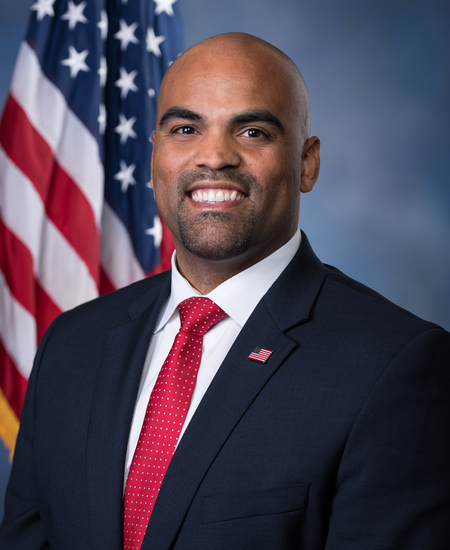
Rep. Colin Z. Allred
Sponsored bills
Maddy summaryHRES 1499 is a symbolic resolution expressing concern about rising book bans in U.S. schools and libraries, citing PEN America data showing over 10,000 individual book bans in public schools between July 2023 and June 2024 - more than double the previous year. It highlights how bans disproportionately target books featuring LGBTQ+ themes, racial history, and marginalized voices (like *The Handmaid’s Tale*, *Maus*, and *Fry Bread*), while emphasizing students’ First Amendment rights to access diverse materials. The resolution calls on school districts and libraries to follow established best practices for handling book challenges and to protect students’ right to read widely, including works reflecting diverse perspectives. As a non-binding resolution, it does not create new law but urges local education entities to uphold free expression.
Maddy summaryThis symbolic resolution (HRES 1435) expresses U.S. House concern about proposed constitutional reforms in Mexico, particularly those affecting the judiciary. It highlights that Mexico’s reforms would require federal judges (including Supreme Court justices) to be directly elected, eliminate independent judicial oversight, and reduce qualification standards. The resolution states these changes could undermine Mexico’s democratic institutions, separation of powers, and judicial independence - potentially harming U.S.-Mexico trade (over $750 billion in 2023) and security cooperation on issues like fentanyl trafficking. The House calls the reforms a risk to shared commitments under the USMCA and urges Mexico to preserve its rule of law framework.
Maddy summaryHRES 1348 is a non-binding resolution urging Nigeria to immediately release Tigran Gambaryan, a U.S. citizen and former IRS agent detained since February 2024. The resolution cites his unlawful detention after legal deadlines expired, deteriorating health (including malaria), and poor conditions at Kuje Prison, where he was transferred despite a court order for hospital care. It calls for Nigeria to grant him medical access, consular support, and due process, while urging the U.S. government to use all resources to secure his release. The resolution highlights concerns that his detention appears linked to pressure on his employer, Binance, rather than legitimate legal grounds.
Maddy summaryThe Houthi Human Rights Accountability Act requires the U.S. State Department to issue three key reports within 180 days: one on Houthi indoctrination efforts in Yemen, another on obstacles to humanitarian aid in Houthi-controlled areas, and a third on Houthi human rights abuses (including child soldier recruitment and gender-based violence) since 2015. It also mandates annual assessments to determine if Houthi members who restrict aid or commit human rights violations should face sanctions under existing U.S. laws. The bill directly targets Houthi leadership (referred to as "Ansarallah") in Yemen by subjecting them to potential U.S. sanctions and accountability measures. The Act expires five years after enactment, with all reports covering specific timeframes (e.g., humanitarian aid reports cover 2020-2023).
Maddy summaryThe DISPOSE Act authorizes the U.S. government to partner with Colombia, Mexico, and Peru to safely destroy chemicals used in illegal drug production. It requires the State Department, in coordination with Justice and Defense, to create a detailed implementation plan within 90 days - including timelines, budgets, and measurable goals - and provide annual progress reports to Congress on chemical destruction efforts. The initiative aims to prevent these chemicals from re-entering drug manufacturing, free storage space for future seizures, and reduce environmental harm from hazardous waste.
Maddy summaryHR 9082, the Summit of the Americas Act, authorizes the U.S. government to regularly host the Summit of the Americas every four years (or more frequently with funding) to strengthen cooperation with Western Hemisphere nations and partner groups. It specifically directs the Secretary of State to coordinate a separate "Cities Summit of the Americas" as part of each main summit, focusing on subnational city and regional leaders. The bill creates a new State Department implementation unit to track U.S. and partner commitments from these summits, requiring quarterly public updates and annual congressional reports for five years. This act directly affects the State Department's operations and U.S. diplomatic engagement with Western Hemisphere partners.
Maddy summaryThis bill clarifies Medicare rules to allow doctors to provide certain critical medications directly in their offices without extra administrative hurdles. It specifically amends a Medicare provision (Section 1877(b)(2) of the Social Security Act) to remove a requirement that drugs furnished in-office must follow specific administrative rules, effective May 11, 2023. The bill also directs the removal of conflicting Medicare guidance published in 2021 and 2023, which had previously restricted this practice. This change directly affects Medicare beneficiaries (seniors) and doctors' offices that supply covered medications during patient visits. It streamlines access to necessary drugs by eliminating an unnecessary barrier to in-office medication administration under Medicare.
Maddy summaryHR 3433, the "Give Kids a Chance Act of 2024," requires pharmaceutical companies developing certain cancer drugs to conduct pediatric studies if the drugs target molecular pathways relevant to childhood cancers. It directly affects drug manufacturers submitting new applications for cancer treatments, particularly those combining previously approved adult cancer drugs or containing a single new active ingredient. The bill amends FDA regulations to mandate these pediatric investigations only when specific conditions are met, such as when a drug's molecular target is relevant to pediatric cancer growth. The FDA must issue implementing guidance within 12 months, and reports to Congress will track implementation and effectiveness starting 2 years after enactment.
Maddy summaryThis bill prohibits hospitals and transplant centers from denying organ transplants or related services to people with disabilities solely because of their disability. It requires covered entities to make reasonable modifications to policies (like considering a patient's support network for post-transplant care) and provide auxiliary aids (such as communication services or accessible health information). The law specifically prevents discrimination based on disability during evaluation, listing, and treatment, while clarifying that medical decisions must be based on individualized assessments - not disability alone. It applies to all organ transplant processes and allows individuals to file complaints with the Department of Health and Human Services or sue for violations.