

Asunción Valdivia Heat Illness and Fatality Prevention Act of 2022 This bill directs the Occupational Safety and Health Administration to promulgate a standard that requires employers to implement certain measures for protecting workers from heat stress and related illnesses or injuries. Heat stress refers to the load of heat that a person experiences due to sources of heat or heat retention (including metabolic heat, environmental factors, and clothing or personal protective equipment) or the presence of heat in a work setting. Further, if an employer cannot reduce exposure to heat stress below hazardous levels through engineering controls (e.g., heat shields and insulation) or personal protective equipment (e.g., heat reflective clothing), the employer must implement a program that mitigates such exposure through access to appropriate hydration and cool-down spaces, acclimatization policies, and periodic paid rest breaks. Additionally, the bill establishes requirements concerning judicial review, implementation, enforcement, recordkeeping, and whistle-blower protections related to the standard. The bill also requires the Department of Labor to include questions about heat-related illness and injury in the National Agricultural Workers Survey (an employment-based, random-sample survey of U.S. crop workers that collects demographic, employment, and health information).
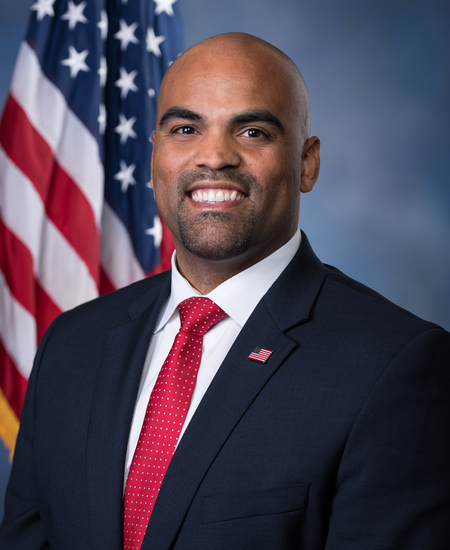
Rep. Colin Z. Allred
Sponsored bills
This concurrent resolution expresses opposition to the application of criminal laws to pregnancy outcomes and affirms that people deserve access to high-quality health care without fear of reprisal or punishment.
Maddy summaryHJRES 53 proposes a constitutional amendment to ban slavery and involuntary servitude as a criminal punishment. Currently, the 13th Amendment to the U.S. Constitution permits such punishments for crimes, creating a legal loophole. If ratified by 3/4 of state legislatures, this amendment would eliminate that exception nationwide, making it unconstitutional to impose forced labor or slavery as part of criminal sentences. The change would directly affect all states' criminal justice systems, particularly prison labor practices, by prohibiting these punishments for any offense.
This resolution expresses support for implementing a Transgender Bill of Rights that guarantees certain rights for transgender and nonbinary people with respect to public services and accommodations, employment, housing, health care, and other specified areas.
This resolution supports access to contraception and related reproductive health services, including by affirming the substantive due process rights that protect such access.
This resolution supports the members of the 87th Texas legislature who fought against the passage of a recent piece of legislation that included provisions related to voter access.
Governing Unaccredited Representatives Defrauding VA Benefits Act or the GUARD VA Benefits Act This bill imposes criminal penalties and/or fines on individuals for directly or indirectly soliciting, contracting for, charging, or receiving any unauthorized fee or compensation with respect to the preparation, presentation, or prosecution of any claim for Department of Veterans Affairs benefits. The attempted commission of such offenses is also punishable by fine or imprisonment.
Jumpstart Our Legal Immigration System Act or the Jumpstart Act This bill makes unused employment-based and family-based immigrant visas from FY1992 through FY2021 available in subsequent fiscal years. It also makes diversity immigrant visas available to individuals who were selected for such a visa between FY2017-FY2021 but were unable to receive the visa due to certain (1) executive actions, or (2) limitations related to COVID-19. The bill also establishes supplemental fees for certain immigration-related applications.
Open App Markets Act This bill establishes rules related to the operation of an app store by a covered company (i.e., the owner or controller of an app store with more than 50 million U.S. users). An app is a software application or electronic service that may be run or directed by a user on a computer or mobile device. An app store is a publicly available website, software application, or other electronic service that distributes apps from third-party developers to users. The bill prohibits a covered company from (1) requiring developers to use an in-app payment system owned or controlled by the company as a condition of distribution or accessibility, (2) requiring that pricing or conditions of sale be equal to or more favorable on its app store than another app store, or (3) taking punitive action against a developer for using or offering different pricing terms or conditions of sale through another in-app payment system or on another app store. A covered company may not interfere with legitimate business communications between developers and users, use non-public business information from a third-party app to compete with the app, or unreasonably prefer or rank its own apps (or those of its business partners) over other apps. The bill provides for enforcement of its provisions by the Federal Trade Commission and the Department of Justice, as well as through suits brought by developers that are injured by reason of anything prohibited by this bill.
Stopping Harmful Image Exploitation and Limiting Distribution Act of 2022 or the SHIELD Act of 2022 This bill establishes a new criminal offense related to the distribution of intimate visual depictions. Specifically, it makes it a crime to knowingly distribute (or intentionally threaten to distribute) an intimate visual depiction of an individual (1) with knowledge of or reckless disregard for the individual's lack of consent and reasonable expectation of privacy, and (2) without a reasonable belief that distributing the depiction touches a matter of public concern. A violator is subject to criminal penalties—a fine, a prison term of up to two years for each individual victim depicted, or both.