

Maddy summaryThis bill requires the U.S. Postal Service to provide written proposals to supervisors' organizations 60 days before pay/benefit decisions expire or after new collective bargaining agreements are reached. It directly affects postal supervisors and managers covered by collective bargaining agreements regarding their pay policies, schedules, and fringe benefits. The key mechanism establishes clear timelines for negotiations and mandates that any dispute resolution panel must issue a binding final decision within 15 days of receiving input from both parties. This aims to streamline the process for resolving pay and benefits disputes between the Postal Service and supervisory staff organizations.
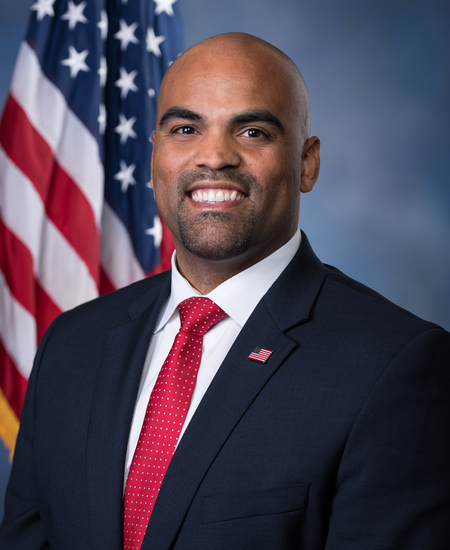
Rep. Colin Z. Allred
Sponsored bills
Maddy summaryThe HEAL Act (HR 603) requires the U.S. Holocaust Memorial Museum Director to study how public elementary and secondary schools teach about the Holocaust and related antisemitism. The study will examine curriculum requirements, teaching methods (like project-based learning), instructional materials, and assessment approaches across states and school districts. It specifically analyzes whether Holocaust education is mandatory, optional, or integrated across subjects, and how schools address antisemitism and genocide prevention. The resulting report, due within 180 days of the study or three years after enactment, will inform Congress but does not change current school policies. This is a data-gathering measure, not a policy mandate.
This resolution reaffirms the commitment of the United States to the independence, territorial integrity, and sovereignty of Uzbekistan. It also recognizes Uzbekistan's progress in recent years on important political, economic, democratic, and social reforms.
Maddy summaryThis bill adjusts federal employee pay rates for 2024. It increases basic pay for all federal workers under statutory pay systems and prevailing rate systems by 4.7%, and raises locality pay adjustments by 4.0%. These changes directly affect all federal employees covered by the specified pay systems, including those in wage areas and under sections 5348/5349 of Title 5. The bill implements these raises without altering existing pay system structures or requirements.
Identifying Mass Shooters Act This bill requires the National Institute of Justice (NIJ) to report to Congress on the content patterns used by mass shooters through online platforms and social media channels. Additionally, the bill directs the NIJ to solicit applications for research grants on any items for further study that are identified in the report. Finally, the bill requires the NIJ to submit findings and federal legislative recommendations to Congress.
Maddy summaryHRES 59 is a non-binding resolution recognizing January 2023 as "National Mentoring Month." It formally acknowledges the value of mentoring relationships for youth development, highlighting how mentors support academic achievement, career exploration, and mental well-being. The resolution encourages expanding quality mentoring programs nationwide but does not create new laws or allocate funding. It directly affects all young people in the U.S. by raising public awareness of mentoring's benefits and urging collaboration among communities, schools, and organizations to address the "mentoring gap" where one in three youth lacks a supportive adult outside their home.
Maddy summaryHR 475 creates a federal grant program to help state, tribal, and local governments protect witnesses in serious criminal cases. It authorizes $30 million annually (2024-2028) for competitive grants to fund witness protection programs targeting cases involving homicide, serious violent felonies, drug offenses, gangs, or organized crime. Grants are awarded based on criteria like witness intimidation rates, unprosecuted cases due to intimidation, and local crime statistics. Recipients must report on their programs, leading to the development and nationwide sharing of best practices for witness safety, relocation, and financial/housing assistance.
Maddy summaryHR 451, the Protecting Families from Fertility Fraud Act of 2023, creates a federal crime for knowingly misrepresenting the source or nature of DNA used in fertility treatments like IVF or sperm insemination. It directly affects fertility clinics, patients, and individuals who commit such fraud by making it punishable by fines or up to 10 years in prison. The law applies when the fraud involves interstate commerce (e.g., payments, communications, or materials crossing state lines) or occurs within U.S. territories. It also extends the statute of limitations for prosecution to 10 years after DNA identifies the perpetrator. This bill targets specific deceptive practices in assisted reproductive technology, not broader fertility care.
Maddy summaryHRES 49 is a symbolic House resolution recognizing the cultural and historical significance of Lunar New Year in 2023. It formally acknowledges Lunar New Year's origins in China over 4,000 years ago, its celebration across East and Southeast Asia (including the Year of the Rabbit in Chinese tradition and Year of the Cat in Vietnamese tradition), and its observance by millions of Asian Americans and others in the U.S. The resolution expresses respect for Asian Americans and all global communities celebrating this holiday and extends well-wishes for a prosperous new year. As a ceremonial resolution, it has no legal effect or policy changes - it solely serves to affirm cultural recognition.
Maddy summaryThis bill renames a U.S. Postal Service facility at 620 East Pecan Boulevard in McAllen, Texas, as the "Agent Raul H. Gonzalez Jr. Memorial Post Office." It updates all federal references to the location to reflect this new name. The bill has no policy impact - it is purely a ceremonial designation honoring an individual. No other provisions or affected groups are involved.