

Maddy summaryThis resolution (HRES 359) is a symbolic House measure expressing support for designating May 2023 as "National Physical Fitness and Sports Month." It does not create new laws or programs but encourages public awareness about the importance of physical activity and healthy lifestyles. The resolution cites obesity statistics and emphasizes benefits like reduced risk of chronic diseases, supporting existing efforts to educate the public on nutrition and exercise. It directly affects no specific group but aims to promote broader public health messaging.
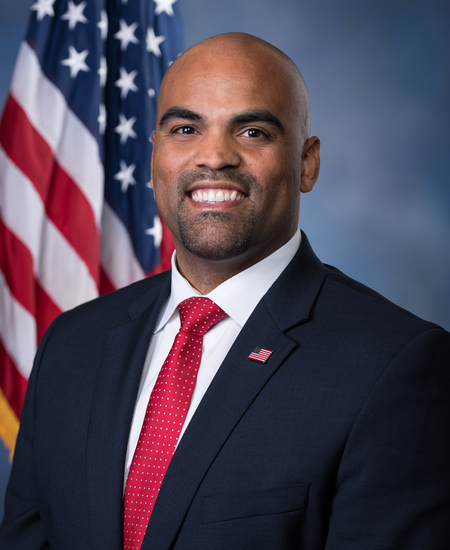
Rep. Colin Z. Allred
Sponsored bills
Maddy summaryThis bill creates federal grants for school districts to provide emergency opioid overdose treatment (like naloxone) in public and private elementary and secondary schools. It requires schools to have trained staff (such as nurses or designated personnel), maintain accessible supplies of the medication, and confirm their state has liability protections for staff using it during an emergency. The law directly affects K-12 schools by mandating specific emergency protocols for opioid overdoses. It does not change state laws but requires schools to verify existing state protections before receiving funds.
Maddy summaryHR 3008, the Drug Shortage Prevention Act of 2023, requires manufacturers of critical essential medicines (like life-saving or emergency drugs) to notify the FDA earlier about potential supply disruptions. Specifically, manufacturers must report permanent production stops, interruptions, or unexpected demand spikes (not seasonal) at least six months in advance for production issues, or within 48 hours for sustained demand increases. The notification must include reasons, ingredient sources, alternative suppliers, and expected duration. The FDA will then share this information with healthcare providers and patient groups to help manage shortages. This law applies to drugs critical for life-sustaining care, excluding certain radio pharmaceuticals.
Maddy summaryHR 2965, the Autism Family Caregivers Act of 2023, establishes a federal pilot program to provide free or low-cost evidence-based skills training for family caregivers of children (ages 0-9) with autism spectrum disorder or other developmental delays. It authorizes $10 million annually to fund grants for eligible organizations (like nonprofits, health centers, and community groups) to teach caregivers practical strategies for communication, social engagement, daily living skills, and managing challenging behaviors. The program requires local stakeholder committees - including caregivers, healthcare providers, and community representatives - to ensure cultural relevance, and mandates annual evaluations to assess impacts on children's well-being and caregiver support.
Maddy summaryThe SAFE Banking Act of 2023 would protect banks and financial institutions that provide services to state-legal marijuana businesses and hemp-related businesses by preventing federal regulators from taking adverse actions against them solely for serving these businesses. It clarifies that income from state-legal marijuana businesses can be considered for mortgage applications, and requires regulators to update guidance on suspicious activity reports related to these businesses. The bill does not require financial institutions to serve these businesses, but ensures they won't face penalties for doing so. It extends similar protections to hemp-related businesses, which have faced banking challenges despite being federally legal under the 2018 Farm Bill.
This resolution affirms the importance of free expression and freedom of the press around the world and condemns threats to these freedoms. The resolution calls on the President and the Department of State to (1) urge foreign governments to bring to justice those who threaten or attack journalists, and (2) leverage foreign assistance to help expand access to independent media in countries where authoritarian regimes control the internet.
Maddy summaryThis bill prohibits forced arbitration for race discrimination claims under federal, tribal, state, or local law. It makes pre-existing arbitration agreements unenforceable for disputes involving discrimination based on race, color, or national origin, allowing affected individuals to pursue cases in court instead. The law directly impacts employees, job applicants, and others facing alleged race discrimination who would otherwise be barred from court by mandatory arbitration clauses. It requires courts - not arbitrators - to decide if the law applies to a dispute, ensuring legal clarity for affected parties.
Tax-Free Pell Grant Act This bill excludes from gross income, for income tax purposes, any amount received as a federal Pell Grant. It also expands the definition of qualified tuition and related expenses under the American Opportunity and Lifetime Learning tax credit to include computer or peripheral equipment (up to a maximum of $1,000), child and dependent care expenses, and course materials.
Maddy summaryThe Postal Police Reform Act of 2023 updates federal law to explicitly include "Postal Service police officers" alongside Postal Inspectors as authorized personnel for enforcing regulations on U.S. Postal Service property. It clarifies that the Postmaster General can establish and post rules for protecting postal property, with violations punishable by fines or up to 30 days in jail. This change directly affects USPS police officers (by formalizing their role), the Postmaster General (by expanding regulatory authority), and anyone on postal property who must follow posted rules. The bill makes existing enforcement procedures more explicit without altering penalties or creating new requirements.
Maddy summaryThis bill amends the Family and Medical Leave Act (FMLA) to add a new category of protected leave for employees (or family members) affected by domestic violence, dating violence, sexual assault, sex trafficking, or stalking. It entitles eligible employees to up to 12 weeks of unpaid leave for specific needs like medical care, legal services, counseling, securing safe housing, or assisting family members with these issues. The leave can be taken intermittently or on a reduced schedule, and employees may substitute accrued paid leave (vacation, sick days) for part of the unpaid FMLA leave period. Employers may require certification or accept a sworn statement if certification is pending, but the bill does not mandate paid leave.