Maddy summaryThis resolution (HRES 436) symbolically designates the week of May 22-26, 2023, as "Educator Mental Health Awareness Week" to highlight mental health challenges faced by teachers and school staff. It directly addresses educators, citing pandemic-era data showing high rates of depression, anxiety, and stress among teachers compared to the general population. The resolution expresses support for recognizing educator well-being as critical to student success but does not create new policies, funding, or enforceable requirements. As a non-binding resolution, it serves solely as a symbolic gesture to promote awareness.
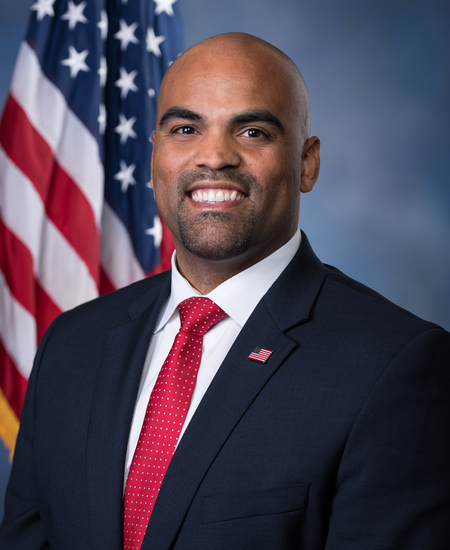
Rep. Colin Z. Allred
Sponsored bills
This resolution encourages the U.S. Holocaust Memorial Museum to continue its work in educating the public about the dangers of antisemitism and the origins of the Holocaust, congratulates those responsible for the creation of the museum, condemns antisemitism, supports educational and community-based programs that counter antisemitism and hate, and supports the designation of a U.S. Holocaust Memorial Museum Day.
Maddy summaryHR 3592, the Donut Dollies Congressional Gold Medal Act, would award a Congressional Gold Medal to the 627 women who served as "Donut Dollies" in the Red Cross Supplemental Recreation Activities Overseas (SRAO) program during the Vietnam War (1962-1973). The bill directs the Treasury to design and strike the medal, which would be presented by congressional leaders and then given to the Smithsonian Institution for public display and research. It also authorizes the sale of bronze duplicates at cost to cover production expenses. This commemorative measure recognizes the service of these women, who provided recreational support to U.S. troops across 28 locations in Vietnam while facing war-zone dangers.
Tribal Gaming Regulatory Compliance Act This bill allows the Ysleta del Sur Pueblo and Alabama-Coushatta tribes to conduct gaming activities on their land in Texas if certain conditions are met. Currently, the Ysleta del Sur Pueblo and Alabama-Coushatta Indian Tribes of Texas Restoration Act prohibits the tribes from conducting gaming activities on their land if those activities are prohibited by Texas law. The bill repeals those provisions and instead applies the Indian Gaming Regulatory Act (IGRA) to gaming activities on Indian lands of the tribes.
This resolution expresses support for the designation of DIPG Awareness Day. DIPG is diffuse intrinsic pontine glioma, a terminal childhood brain cancer.
Maddy summaryHR 3548, the Pursuing Equity in Mental Health Act, aims to reduce mental health disparities for racial and ethnic minority groups by directing federal funding and policy changes. It increases annual grants for primary/behavioral health services to $60 million in 2023 and $80 million yearly through 2029, prioritizing entities serving minority communities. The bill requires the NIH to study mental health disparities within 9 months and mandates new training for mental health professionals (including social work and psychiatry) on culturally appropriate care. Additionally, it funds a $15 million annual outreach strategy to combat stigma and improve access to care, requiring materials tailored to cultural and language needs of minority groups.
Maddy summaryThis bill requires sponsors of NIH-funded or NIH-approved clinical trials (for drugs, devices, biological products, or behavioral interventions) to set specific, measurable goals for recruiting participants reflecting race, ethnicity, age, and sex - either based on disease prevalence or the U.S. population. Key mechanisms include mandating detailed plans for achieving these goals, annual reporting of demographic data (without personally identifiable information), and strategies to reduce participation barriers like virtual visits or flexible scheduling. It also requires training for researchers on diversity and health inequities, and establishes a remediation process if goals aren’t met. The law aims to improve representation in clinical trials to ensure medical research better serves all patient groups.
Maddy summaryHR 3523, the Perinatal Workforce Act, provides $15 million annually from 2024 to 2028 to expand and diversify maternity care providers. It directs HHS to issue guidance for states on recruiting diverse providers (including midwives, nurses, and community health workers) and requires grant recipients to prioritize students from racial/ethnic minority groups, implement bias training, and target health professional shortage areas. The bill also mandates annual reporting on workforce diversity and outcomes, and requires a GAO report assessing barriers to equitable access in maternal healthcare. This legislation directly affects hospitals, nursing schools, midwifery programs, and insurers by funding targeted workforce development to address racial disparities in maternal care.
Maddy summaryHR 3420, the My Body, My Data Act of 2023, restricts how companies can handle reproductive and sexual health data - such as pregnancy details, contraceptive use, or abortion-related information - by requiring them to collect only what’s necessary for requested services and limiting employee access. It gives individuals the right to access, correct, or delete their data, see which third parties received it, and get clear privacy policies explaining data practices. The Federal Trade Commission enforces the law, with penalties for violations including $100-$1,000 per violation per day, and bans retaliation for exercising these rights. The law applies to companies (like health apps or insurers) but excludes HIPAA-covered healthcare providers and entities subject to existing federal health privacy rules.
Support, Treatment, and Overdose Prevention of Fentanyl Overdoses Act of 2023 or the STOP Fentanyl Overdoses Act of 2023 This bill addresses data collection, treatment, harm reduction, and other issues related to substance misuse and addiction. It particularly focuses on opioids, fentanyl, and related substances. Specifically, the bill expands surveillance of fentanyl and related substances. This includes requiring a study on how to track overdoses by type of drug (including fentanyl) and awarding grants to states for collecting data about fentanyl-involved overdoses. The bill also provides for (1) training on detecting and handling fentanyl for law enforcement, and (2) grants for forensic laboratories to facilitate surveillance of controlled substances seized by law enforcement. Additionally, the bill establishes and modifies requirements to increase access to treatment and prevention services. For example, the Bureau of Prisons must make certain services, including medication-assisted treatments, available to individuals in its custody. The bill also establishes grants and requires other efforts to expand access to medications that temporarily reverse opioid overdoses (e.g., naloxone) and related harm reduction activities. Furthermore, the bill extends, subject to some conditions, liability protections for those who administer aid in an emergency (commonly known as Good Samaritan laws) to individuals who administer opioid overdose reversal drugs and to individuals who seek medical attention for themselves or on behalf of another for a drug overdose. The bill also requires multiple reports, including a report by the Department of State on foreign sources of certain drugs.