

Maddy summaryThe Computer Science for All Act of 2023 would provide $250 million in federal grants to states, school districts, and eligible tribal schools to expand computer science education. The bill requires grant recipients to ensure all high school students have access to computer science within five years and to create a progression of computer science education from pre-kindergarten through middle school. It specifically targets reducing disparities by requiring schools to address gaps for underrepresented groups including minorities, girls, and students from low-income families. Grants would fund teacher training, learning materials, and programs supporting students traditionally underrepresented in tech fields, with schools required to track and report student demographics to monitor progress.
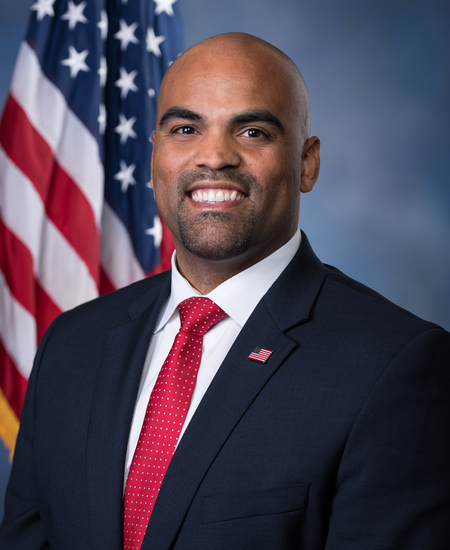
Rep. Colin Z. Allred
Sponsored bills
Maddy summaryHR 4166, the Support UNFPA Funding Act, authorizes annual U.S. funding for the United Nations Population Fund (UNFPA) over five years. It directly supports UNFPA’s global programs serving women and girls in over 150 countries, particularly focusing on reducing preventable maternal deaths, expanding access to contraception, ending gender-based violence, and addressing harmful practices like female genital mutilation and child marriage. The bill specifically directs funding toward UNFPA’s core work in developing nations, humanitarian crises (such as in Ukraine and Yemen), and rebuilding health systems post-pandemic, without altering UNFPA’s existing operations or policies.
Maddy summaryThe American Dream and Promise Act of 2023 would create two pathways to permanent residency for certain immigrants. The "Dream Act" portion would provide conditional permanent resident status to individuals who entered the U.S. as children, have lived continuously in the U.S. since January 1, 2021, and meet educational requirements (such as completing high school, earning a degree, or enrolling in education programs). The "American Promise Act" portion would provide permanent residency to individuals eligible for Temporary Protected Status (TPS) or Deferred Enforced Departure (DED) as of specific dates (January 1, 2017, or January 20, 2021). The bill includes provisions for background checks, fee exemptions for low-income applicants, and processes for removing conditional status after meeting specific criteria like completing higher education or earning income.
Maddy summaryHJRES 72 proposes a constitutional amendment to remove the exception in the Thirteenth Amendment that allows slavery and involuntary servitude as punishment for a crime. If ratified, this amendment would ban the use of forced labor in prisons as a criminal penalty, directly affecting how the U.S. criminal justice system handles sentencing. The resolution clarifies it does not interfere with voluntary work programs in correctional facilities, existing employment protections for incarcerated people, or community service alternatives. This change aims to eliminate a historical loophole that has disproportionately impacted Black Americans since the 1860s.
Maddy summaryThis non-binding resolution expresses the House's support for 10 specific rights of youth in foster care, directly affecting young people aged 18-21 navigating the system. It affirms their right to remain in original schools, access health services (including mental health), live free from abuse, maintain sibling contact, and receive adequate food and housing. The resolution does not create new legal obligations but calls for child welfare agencies to uphold these standards, based on documented challenges like high school graduation gaps and trauma exposure.
Maddy summaryHRES 505 is a non-binding resolution recognizing June 19, 2023, as the annual observance of Juneteenth Independence Day. It acknowledges the historical significance of June 19, 1865, when Union troops announced the end of slavery in Texas, marking the first widespread celebration of freedom for formerly enslaved people in the U.S. The resolution encourages all Americans to observe the day through ceremonies and educational activities to honor this milestone in U.S. history. It does not create new policy or benefits but formally supports public recognition of Juneteenth as part of the nation's heritage.
Maddy summaryHR 4122, the Henrietta Lacks Congressional Gold Medal Act, authorizes a posthumous Congressional Gold Medal to honor Henrietta Lacks for her contribution to medical science through the HeLa cell line. The bill directs the Treasury to strike the medal recognizing how her cells enabled major medical advances, including the polio vaccine and cancer treatments, without altering any laws or policies. The medal will be displayed at the Smithsonian Institution to commemorate her legacy in scientific research and bioethics. This is a purely commemorative measure with no direct effect on current legislation or affected individuals.
Maddy summaryThis bill increases per diem payments for homeless veterans receiving VA services. It raises the daily payment rate from $115 to $200 for certain housing-related services, including emergency responses. The change directly affects homeless veterans who qualify for these VA-funded housing supports. The key provision adjusts the payment rate in Section 2012(a)(2)(B) of the U.S. Code to provide higher funding for services assisting homeless veterans.
Maddy summaryThis House resolution (HRES 377) calls for the immediate release of Evan Gershkovich, a U.S. citizen and Wall Street Journal reporter wrongfully detained by Russia since March 2023. It urges the U.S. government to press Russia for his release, demands consular access for him, and condemns Russia's detention of journalists. The resolution specifically references Gershkovich’s arrest on espionage charges without public evidence, aligning with Secretary Blinken’s designation of his detention as wrongful. It also extends similar calls for the release of other detained Americans, including Paul Whelan.
Maddy summaryHR 4021, the Fair and Open Skies Act, amends U.S. aviation law to require that the Department of Transportation consider labor standards when reviewing international air transport agreements. Specifically, it adds "preventing the undermining of labor standards" as a mandatory factor in the public interest test for approving such agreements under 49 U.S.C. § 40101. This change directly affects international airlines seeking to operate flights to or from the U.S. and the DOT, which must now evaluate whether proposed agreements could weaken U.S. labor protections. The bill updates existing provisions by replacing outdated language about "agreements with the United States Government" and explicitly including labor standards in the evaluation criteria.