

Maddy summaryHR 6374, the Veterans Health Care Stamp Act, directs the U.S. Postal Service to issue a special postage stamp annually for Veterans Day. All revenue from the sale of this stamp will be transferred directly to the Department of Veterans Affairs to fund veterans' medical care. The stamp will be designed by the Postal Service without numerical limits and must be available by Veterans Day each year. This bill creates a dedicated, public contribution mechanism for veterans' healthcare funding.
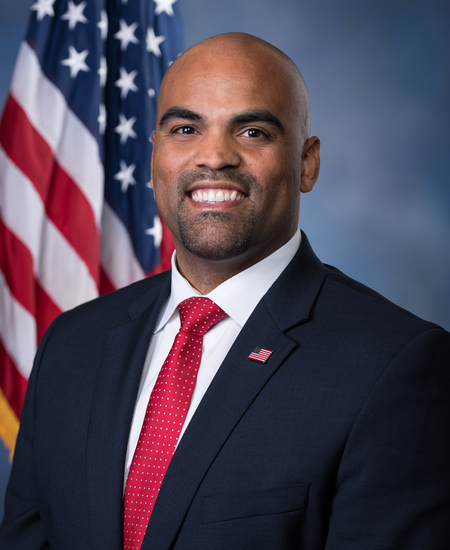
Rep. Colin Z. Allred
Sponsored bills
Maddy summaryThis resolution symbolically designates November 8, 2023, as "National First-Generation College Celebration Day" to honor first-generation college students (those whose parents didn't earn bachelor's degrees). It urges all U.S. residents to recognize these students' contributions to the workforce and celebrate the 1965 Higher Education Act, which established key support programs like TRIO and Pell Grants. The resolution has no legal force or funding provisions - it solely expresses support through symbolic recognition. It directly affects educational communities, institutions, and the public by encouraging annual observance of this day.
Maddy summaryHR 6301, the Cancer Drug Parity Act of 2023, requires group health plans to ensure that out-of-pocket costs for oral anticancer drugs (taken by patients at home) are no higher than for intravenous or injected anticancer drugs. It applies to patients prescribed oral anticancer medications approved by the FDA and deemed medically necessary or clinically appropriate by their physician. The law prohibits insurers from increasing patient costs for oral drugs through benefit changes, such as higher copays or stricter coverage limits, and allows prior authorization for all chemotherapy. The law takes effect for 2024 plan years, and the GAO will study its impact on patient costs within two years.
Maddy summaryHR 6240 adds Zapata County to an existing commercial transportation zone in Texas that includes Cameron, Hidalgo, Starr, and Willacy Counties. This change affects commercial motor vehicle operators and safety regulations for traffic moving within this expanded zone. The bill requires Texas to submit a traffic monitoring and safety enforcement plan to the Transportation Secretary within three months of enactment, with the zone modification taking effect six months after the bill becomes law. The change specifically applies to transportation of property under federal law (49 U.S.C. § 13506(b)).
Maddy summaryThis bill codifies the Young African Leaders Initiative (YALI) as a formal U.S. government program. It authorizes annual fellowships for African leaders aged 25-35 to participate in U.S.-based leadership training (including the Mandela Washington Fellowship) and establishes at least four regional leadership centers across sub-Saharan Africa for ongoing professional development in business, civic engagement, and public administration. The program requires annual congressional reports on progress and impacts, with implementation ending after five years. Directly affecting young African leaders (ages 18-35 for regional centers) in business, civic leadership, and governance, it provides structured training, networking, and technical assistance to strengthen U.S.-Africa partnerships.
Maddy summaryHR 5976, the Youth Mental Health Research Act, establishes a new NIH research initiative led by the National Institute of Mental Health. The bill directs collaboration between three NIH institutes to coordinate research on youth mental health, focusing specifically on building community resilience for at-risk youth and improving how mental health services reach young people in schools, communities, and other settings where they live and work. It authorizes $100 million annually for fiscal years 2024 through 2028 to fund this research. The bill does not create direct services but aims to generate evidence to inform future mental health support strategies for young people.
Maddy summaryThis bill excludes veterans' disability and dependency payments from income calculations for HUD housing assistance programs. It directly affects veterans and their families receiving disability compensation under Title 38, U.S. Code, by ensuring these benefits don't reduce their eligibility or housing assistance amounts. Specifically, it prevents HUD from counting these payments when determining eligibility, benefit amounts, or rent calculations for assisted housing. The policy change applies solely to HUD-administered housing programs, not other federal benefits.
Maddy summaryHRES 831 is a symbolic congressional resolution supporting October as "National Domestic Violence Awareness Month." It does not create new laws or allocate funding, but formally expresses the House of Representatives' support for the goals of raising awareness about domestic violence. The resolution urges Congress to continue highlighting domestic violence's impact and backing programs that prevent and address it. It directly affects public awareness efforts and serves as a non-binding statement of congressional support for victims and advocacy organizations.
Maddy summaryThis bill amends the tax code to allow taxpayers to deduct over-the-counter naloxone purchases as medical expenses, similar to insulin. It directly affects individuals who buy naloxone without a prescription for personal or family use. The key provision adds "naloxone" to the list of deductible medical items under Section 213(b) of the Internal Revenue Code. The change applies to taxable years beginning after the bill's enactment date.
Maddy summaryHR 5983, the Clean Water Act of 2023, redefines "protected water resources" under federal law to explicitly include all interstate and intrastate waters (such as intermittent and ephemeral streams), wetlands, and their tributaries. This directly affects federal agencies like the EPA, states managing water quality, and developers or landowners needing permits for activities near these waters. The bill eliminates the Supreme Court’s narrow "navigable waters" definition from Sackett v. EPA (2023), restoring protections for tens of millions of acres of wetlands and millions of miles of small streams. Key mechanisms require the EPA to annually review and adjust exclusions from protections based on scientific evidence, ensuring water bodies critical to drinking water, flood control, and ecosystems remain safeguarded.