

Maddy summaryThis bill reauthorizes and extends federal funding for research and support services related to preterm birth through 2028, replacing the previous 2019-2023 funding period. Key provisions include adding chronic condition screening and treatment to maternal health education services, mandating an interagency working group on prematurity within 18 months, and requiring a National Academies study on preterm birth costs, risk factors, and program gaps. The study must assess neonatal care expenses, societal impacts, and effective prevention strategies, with a final report due within 24 months. These changes directly affect preterm infants, their families, healthcare providers, and federal agencies managing maternal health programs.
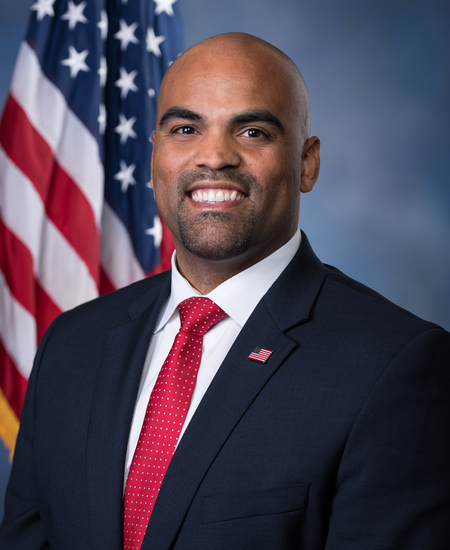
Rep. Colin Z. Allred
Sponsored bills
Maddy summaryHR 6600, "Tyler’s Law," requires the Secretary of Health and Human Services to study how often hospital emergency departments test for fentanyl during overdose cases, along with the costs, benefits, risks, and patient privacy impacts. The study must be completed within one year of the bill’s enactment, followed by guidance issued within six months on whether fentanyl testing should become routine. This guidance will address how hospitals can inform clinicians about testing protocols and how fentanyl testing might affect future overdose risks and patient health outcomes. The bill directly affects hospitals and emergency departments treating overdose patients, focusing on improving data-driven practices for fentanyl detection.
Maddy summaryThis bill amends the Equal Credit Opportunity Act to require lenders to collect and report data on loans to LGBTQI-owned businesses. It specifically adds "LGBTQI-owned" to existing categories for data collection, includes sexual orientation, gender identity, and intersex status as protected characteristics in lending data, and defines an "LGBTQI-owned business" as one where over 50% of ownership/control and net profit/loss accrues to self-identifying LGBTQI individuals. The policy change directly affects financial institutions that report lending data to the government, mandating they track and disclose these new categories. This provides concrete data on lending practices for LGBTQI business owners, who face documented barriers in accessing credit.
Maddy summaryThe Elizabeth Dole Home Care Act of 2023 increases the expenditure cap for home- and community-based care for veterans from 65% to 100% of costs, with exceptions for certain cases based on clinical need and geographic factors. It establishes new programs including Veteran-Directed Care, which allows veterans to select and manage their own in-home care services, and Home-Based Primary Care, which provides in-home health care overseen by VA providers. The bill requires improved coordination with existing programs like the Program of All-Inclusive Care for the Elderly (PACE) and mandates a centralized website with information about available services. It specifically targets veterans who would otherwise require nursing home care or face increased risk of hospitalization, and includes provisions to address home health aide shortages through pilot programs.
Maddy summaryHR 6592, the Fight Book Bans Act, provides federal grants to reimburse public school districts for legal costs when they choose to keep instructional or library materials after parental objections. It directly affects school districts (covered local educational agencies) that select materials for students and handle challenges to their removal. The bill authorizes up to $100,000 per case in grants to cover attorney fees and court costs, provided the district didn’t remove the materials and wasn’t reimbursed by the state. Funding of $15 million is authorized for fiscal years 2024-2028. The grants are strictly for legal challenges to decisions not to remove materials, not for the content of the materials themselves.
Maddy summaryHR 5785 modifies the Edith Nourse Rogers STEM Scholarship for veterans and military dependents pursuing STEM degrees. It updates eligibility by adding "or graduate" to degree requirements, reduces maximum benefit periods from 60 to 45 months for undergraduate and 90 to 67.5 months for graduate study, and adds new priority criteria for beneficiaries who've used the most entitlement months or are studying STEM fields. The bill also requires veterans to exhaust all other educational benefits before using this scholarship. These changes directly affect individuals seeking STEM education benefits under the program.
Maddy summaryHRES 907 is a non-binding House resolution condemning rising antisemitism in the U.S., citing increased hate crimes (25% rise in 2022 per FBI data) and campus incidents (41% increase from 2021-2022 per ADL). It calls on all Americans, including campus leaders and government agencies, to combat antisemitism and urges implementation of the U.S. National Strategy to Counter Antisemitism. The resolution specifically requests increased funding for the Nonprofit Security Grant Program to strengthen safety protections for Jewish communities. It directly affects Jewish Americans, campus communities, and government agencies responsible for hate crime prevention and community safety.
Maddy summaryThe Immigration Visa Efficiency and Security Act of 2023 caps family-based immigrant visas for any single country at 15% (2% for dependent areas) of total visas annually, addressing longstanding visa backlogs for certain nations. It establishes new requirements for H-1B employers, including posting job openings on a Department of Labor website, meeting specific wage requirements (minimum $90,000 or prevailing wage), and preventing discrimination against workers. The bill also creates enhanced procedures for investigating H-1B violations, increases penalties for noncompliance, prohibits certain visas for nationals of "foreign adversary countries," and establishes a new pathway for employment-based immigrants to adjust their status with specific job requirements during the process.
Maddy summaryHR 6510, the Hydrogen Safety and Environmental Responsibility Act, requires the Transportation Secretary to study whether pipelines made with composite materials can safely transport hydrogen or hydrogen blended with natural gas. Within 18 months of enactment, the Secretary must complete this study, considering available materials, existing tests, and industry standards, while holding public meetings and accepting 60 days of public comments. The study must be finalized before the Secretary issues a rulemaking proposal to allow composite pipelines for hydrogen transport, with the rulemaking process beginning 18 months after the final public meeting. This bill directly affects pipeline manufacturers, hydrogen industry operators, and environmental stakeholders by establishing a formal review process for new pipeline materials.
Maddy summaryHRES 874 is a symbolic resolution expressing the House's support for designating November as "Prematurity Awareness Month." It does not create new laws or alter funding but urges the public, organizations, and communities to observe the month through events, promote awareness, and support preterm birth prevention programs. The resolution highlights statistics on preterm births (383,000 babies born preterm in 2021) and health disparities, but its sole action is endorsing the awareness designation. As a non-binding resolution, it has no direct impact on policy or affected individuals beyond raising public visibility.