Maddy summaryHR 2483, the School Security Enhancement Act, amends the Elementary and Secondary Education Act to allow local schools to use existing federal funds for specific security improvements. It permits spending on measures like metal detectors, crisis notification systems, bullet-resistant doors, and access control technology, provided they have evidence-based effectiveness. The bill explicitly prohibits using these funds for firearms or firearm training (Section d(1)), while clarifying it doesn’t override other laws permitting firearms (Section d(2)). This directly affects schools receiving ESEA funds by expanding eligible security investments under Section 4104.
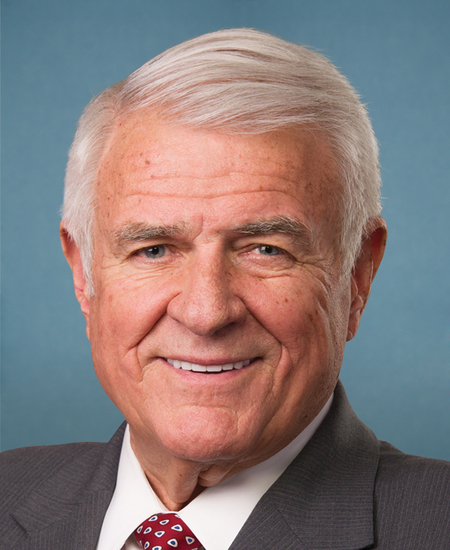
Rep. John R. Carter
Sponsored bills
Protection of Children Act of 2023 This bill modifies the treatment of unaccompanied alien children and tightens eligibility requirements for Special Immigrant Juvenile visas (immigrant visas for non-U.S. nationals under 21 years of age in the United States who have been abused or abandoned by a parent). Current law authorizes the Department of Homeland Security (DHS) to remove an unaccompanied alien child to their country of nationality or last habitual residence if that country is next to the United States. This section (1) eliminates the requirement that the country is next to the United States; and (2) requires the child's removal, whereas currently removal is authorized. This section also establishes and modifies deadlines for the handling of unaccompanied alien children. For example, if the child is a victim of severe human trafficking, the child must have a hearing before an immigration judge within 14 days of screening as part of removal proceedings. Furthermore, before DHS places an unaccompanied alien child with an individual, the Department of Health and Human Services must provide DHS with certain information about the individual, including social security number and immigration status. DHS must initiate removal proceedings if the individual is unlawfully present. This bill establishes that an individual does not qualify for a Special Immigrant Juvenile visa if reunification is possible with any parent or legal guardian. Currently, an individual may qualify if the individual cannot reunite with one or both parents due to abuse, neglect, or abandonment (i.e., an individual may qualify even if reunification with one parent is possible).

Maddy summaryHR 2427, the Hmong Congressional Gold Medal Act, authorizes Congress to award a gold medal to honor Hmong veterans who served with U.S. forces during the Vietnam War. The bill directs the Treasury Secretary to strike the medal and present it to the Smithsonian Institution for display, recognizing their combat service, heavy casualties, and displacement after the war. Duplicate bronze medals may be sold to cover costs. This procedural bill commemorates the Hmong people's military contributions and their refugee resettlement in the U.S., affecting the Hmong community as a whole.
This resolution commemorates the 190 th anniversary of diplomatic relations between the United States and Thailand. It also looks forward to enhancing the ties of friendship between the peoples of Thailand and the United States.
Maddy summaryHR 1139, the GUARD VA Benefits Act, amends federal law to strengthen penalties for individuals or organizations charging veterans unauthorized fees when helping with VA benefit claims. It directly affects veterans seeking assistance with VA claims and the representatives (like advocates or attorneys) who might charge them fees. The bill adds a new provision making it a violation to solicit, charge, or receive any fee for preparing, presenting, or prosecuting VA claims, punishable by fines under Title 18. This change specifically targets unauthorized fee-charging while excluding fees covered under existing exceptions in sections 5904 or 1984 of the law.
Maddy summaryHR 1818, the Aviation Workforce Development Act, expands tax-advantaged savings plans (529 plans) to cover costs for specific aviation training programs. It allows funds from these plans to pay for tuition, fees, and required materials at FAA-certified aviation maintenance technician schools (Part 147) or commercial pilot training programs (Part 61 or 141). This directly affects students pursuing careers as aircraft maintenance technicians or commercial pilots by making these training costs more affordable through existing tax-advantaged savings. The bill amends the tax code to include these programs under "qualified higher education expenses" for 529 plan distributions.
Maddy summaryHR 1819, the Foreign Influence Transparency Act, modifies U.S. laws to increase transparency around foreign influence. It tightens exemptions under the Foreign Agents Registration Act by requiring that activities not promote a foreign government's political agenda, and lowers the disclosure threshold for foreign gifts and agreements at colleges from $250,000 to $50,000. The bill mandates that institutions of higher education publicly disclose the full text of all agreements with foreign entities - including Confucius Institutes funded by China - and provide these to the Department of Education and relevant congressional committees. Non-compliant schools lose eligibility to enroll foreign students under the Student and Exchange Visitor Program.
Purple Heart Freedom to Work Act This bill increases the monthly income limit that is used to determine whether certain Purple Heart recipients are eligible for Social Security Disability Insurance (SSDI) benefits. Specifically, when making such determinations with respect to Purple Heart recipients who are entitled to SSDI benefits based on combat-related injuries, the Social Security Administration must use the limit that applies to individuals who are blind rather than the lower limit that applies to other SSDI recipients. In addition, the bill phases out SSDI benefits for these Purple Heart recipients, with benefits reduced by $1 for every $4 of earnings in excess of the limit.
Let Experienced Pilots Fly Act of 2023 This bill raises the mandatory retirement age for pilots engaged in commercial aviation operations from 65 to 67 years of age, unless the operation takes place in (1) the territorial airspace of a foreign county where such operations are prohibited by the foreign country, or (2) international airspace where such operations are not in compliance with the Annexes to the Convention on International Civil Aviation. The Federal Aviation Administration must also submit a report to Congress on further increasing the age limitation for pilots engaged in commercial aviation operations.
Maddy summaryThe BNA Fairness Act (HR 1732) changes federal tax rules to exclude the basic needs allowance from taxable income for active-duty military members. This specifically affects service members who receive the basic needs allowance under 37 U.S.C. §402b, making this benefit fully tax-free. The bill amends the Internal Revenue Code to add the allowance as a qualified military benefit under Section 134(b). The change applies to tax years beginning after the bill's enactment date, providing immediate tax relief for affected service members.