

Maddy summaryThe ACE Act expands tax-advantaged education savings by allowing 529 plan funds to cover homeschooling costs and additional K-12 expenses like tutoring, therapies, and curriculum materials. It doubles the annual distribution limit from $10,000 to $20,000 for these expenses and adds a $20,000 annual gift tax exclusion for contributions to 529 plans. The bill also restricts tax-exempt bonds for school construction to states meeting specific school choice program metrics, requiring at least 40% of students to be eligible for programs like vouchers or education savings accounts. These changes directly affect families using homeschooling or private education, states with school choice programs, and contributors to 529 plans.
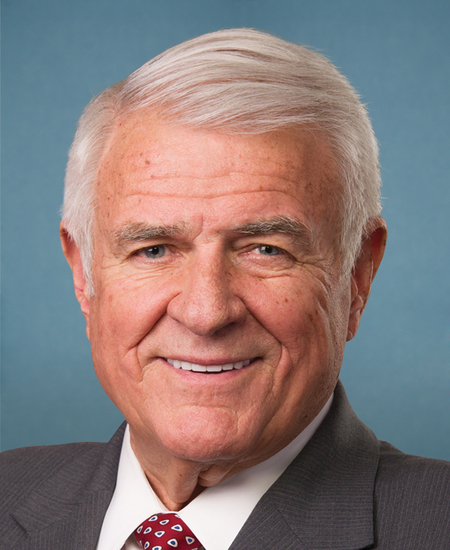
Rep. John R. Carter
Sponsored bills
Maddy summaryHR 6734 prohibits the use of federal funds to finalize, implement, or enforce the Bureau of Alcohol, Tobacco, Firearms, and Explosives' (ATF) proposed rule (2022R-17) defining "engaged in the business as a dealer in firearms." This bill directly affects the ATF by blocking funding for this specific regulatory rule, which was proposed in August 2023. The legislation does not create new requirements but prevents federal resources from being used to advance this particular ATF regulation.
Maddy summaryHR 6477 amends immigration law to tighten border inspection procedures and reform parole eligibility. It restricts parole for applicants deemed inadmissible under specific sections, mandates return to contiguous countries (like Mexico) for certain land-border arrivals pending processing, and limits parole to narrowly defined urgent humanitarian cases (e.g., critical medical needs, funerals) or significant public benefits (e.g., law enforcement cooperation). The bill also requires states to sue the federal government if detention/return rules are violated and mandates annual reporting on parole use. These changes directly affect applicants arriving at land borders, particularly those seeking parole for medical, family, or law enforcement reasons.
Maddy summaryHRES 683 is a non-binding resolution expressing the House's support for diplomatic efforts to encourage Mexico to fulfill annual water delivery commitments under the 1944 U.S.-Mexico treaty. The treaty requires Mexico to deliver an average of 350,000 acre-feet of water annually (over a 5-year cycle) to the U.S., but Mexico has historically delayed deliveries until the cycle ends. The resolution specifically acknowledges water shortages faced by South Texas farmers and urges Mexico to meet its annual obligations, while supporting negotiations for more reliable water agreements. It does not create new legal requirements but formally encourages diplomatic action to address the delivery delays.
Maddy summaryHR 6406, the "Last Servicemember Standing Medal Act," creates a new military service medal to honor specific service members. It authorizes the Secretary of Defense to award the medal to active-duty members who were the last surviving member of their unit after combat during a war or overseas operation, demonstrated extraordinary heroism in defense of the U.S., and received recommendations from their commanding officer and at least two peers. The medal is limited to one award per person, and if a recipient dies, the medal may be issued to their next-of-kin. The bill amends Title 10 of the U.S. Code to establish this recognition, with implementation to be expedited by Congress.
Maddy summaryThis bill appropriates $14.3 billion in supplemental security funding to Israel following the October 7, 2023 attacks. The funding includes $4 billion for Iron Dome and David's Sling defense systems, $1.35 billion for the Iron Beam defense system development, and $3.5 billion for foreign military financing. The bill requires regular reporting to Congress on security assistance provided to Israel and designates all funds as "emergency requirements" under federal budget law. It also modifies existing laws to facilitate the transfer of defense articles and services to Israel, aiming to strengthen Israel's defense capabilities against rocket threats.
This resolution honors the service, sacrifice, and contributions of Texas veterans and their families. The resolution also expresses that the House of Representatives commits to working with the Department of Veterans Affairs to ensure that veterans are provided timely care and applicable benefits and compensation as a result of their service.
Maddy summaryThis resolution designates the week beginning November 13, 2023, as "National Apprenticeship Week" through symbolic congressional support. It does not create new laws or programs but formally recognizes the value of registered apprenticeships in providing paid on-the-job training, industry credentials, and career pathways. The resolution highlights apprenticeships' role in developing skilled workers, supporting high-wage sectors like healthcare and green energy, and promoting diversity in training opportunities. It aims to increase public awareness of apprenticeships as an effective "earn-and-learn" model for workers and employers.
Maddy summaryHR 6383 prohibits the Department of Homeland Security (DHS) from using federal funds to implement or enforce a "remain in Texas policy." This policy would require migrants released by DHS or HHS to stay in Texas after entering the U.S. The bill's key mechanism is a funding ban, blocking DHS from enforcing such requirements without congressional approval. It directly affects migrants subject to release by DHS/HHS and DHS operations. The policy change is purely procedural, restricting how federal funds can be used for migration management in Texas.
Maddy summaryThis resolution (HRES 807) proposes formally censuring Representative Rashida Tlaib (D-MI) based on claims of antisemitic statements, support for groups linked to terrorism, and leading a protest at the U.S. Capitol on October 18, 2023. It cites specific instances, including her 2019 Holocaust comments, retweeting a "From the river to the sea" slogan associated with Hamas, and October 2023 remarks calling for dismantling Israel's policies. The resolution does not create new law but seeks a symbolic House disciplinary action: a public reading of the censure and requiring Tlaib to appear in the House chamber. As a procedural resolution, it focuses on condemning the alleged conduct rather than enacting policy changes.