

Maddy summaryHR 8061, the Crime Victims Fund Stabilization Act of 2024, ensures stable funding for the Crime Victims Fund by directing certain False Claims Act collections into it from 2024 through 2029. Specifically, it adds a provision requiring that amounts collected under the False Claims Act (excluding whistleblower rewards and government reimbursement for damages) be deposited into the fund during this period. This directly affects crime victims who rely on the fund for services like counseling and emergency aid, as it prevents potential shortfalls in funding. The bill makes a concrete policy change by redirecting specific federal civil penalties into the fund, rather than altering the fund's existing purposes or eligibility rules.
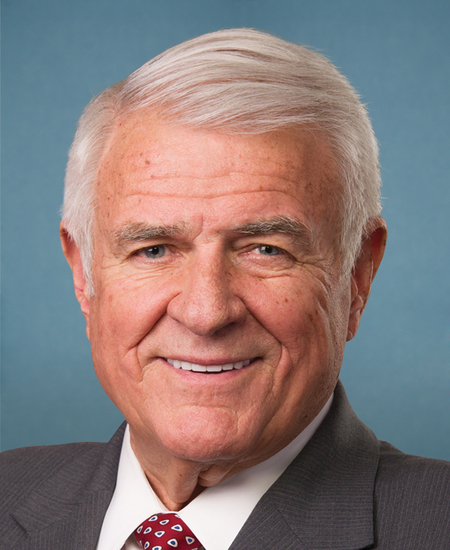
Rep. John R. Carter
Sponsored bills
Maddy summaryHR 8041, the Driving Forward Act, extends a temporary exemption from pre-trip safety checks for school bus drivers operating within states until November 2027. This directly affects school bus drivers and state transportation agencies responsible for implementing the exemption. The bill requires the Transportation Secretary to seek public input on making the exemption permanent after 120 days and allows states to use existing highway funds to cover associated costs. It makes no changes to driver qualification standards but delays a requirement that would have otherwise taken effect.
Maddy summaryHRES 1148 is a resolution passed by the U.S. House of Representatives that condemns the Iranian government for supporting terrorism, regional proxy conflicts, and internal suppression of dissent - including its crackdown on protests following Mahsa Amini's death in 2022. It specifically calls for maintaining sanctions against Iran, supporting the Iranian Resistance's Ten-Point Plan (which advocates for a democratic, secular, nonnuclear Iran), and protecting Iranian political refugees in Albania. The resolution also affirms the Iranian people's right to self-determination under international law and urges the U.S. to recognize their struggle for freedom. As a non-binding resolution, it does not create new laws but formally expresses congressional stance.
Maddy summaryThis resolution condemns Mexican President López Obrador's March 24, 2024, comments on "60 Minutes" where he linked U.S. immigration policy to demands for $20 billion in aid, lifted sanctions, and amnesty. It calls on Mexico to secure its southern border, restart the Migrant Protection Protocols (MPP), and establish a Safe Third Country Agreement with the U.S. The resolution does not create new laws but expresses the House's position on Mexico's role in addressing migration. It directly addresses the Mexican government as the entity urged to take specific actions.
Maddy summaryThis bill reauthorizes a federal grant program to improve swimming pool and spa safety, targeting states, Indian Tribes, and qualifying nonprofits (501(c)(3) organizations with pool safety experience). It requires applicants to already have state or tribal laws meeting minimum safety standards for pools built after a certain date. Grant funds must be used for at least 25% on hiring/inspecting drain covers and enforcement, with the remainder for public education on drowning prevention - prioritizing underserved, rural, or minority communities with higher drowning rates. The program is funded at $5 million annually from 2024-2028, with recipients required to submit annual reports on grant use and effectiveness.
Maddy summaryHR 661, "Sarah’s Law," requires U.S. immigration authorities to detain certain immigrants charged with crimes causing death or serious injury. It applies to immigrants who entered without proper inspection, held revoked temporary visas, or fall under specific deportation categories, and who face charges for violent crimes. The bill mandates that immigration officials notify victims or their families (like parents or spouses) about the immigrant’s identity, immigration status, custody details, and removal efforts. This law does not change existing victim rights but adds specific notification requirements for these cases.
Maddy summaryThis bill requires federal agencies to publicly report annually on how they use "official time" - when government employees spend work hours on union activities. Agencies must detail the cost, purpose, and employee-specific usage (including position, pay, and hours spent) for each employee granted official time under existing law. The report also covers agency property used by unions at no cost or discounted rates, the monetary value of such use, and any reimbursements collected. These reports must be submitted to Congress and posted online by June 30 each year, starting after the bill's enactment. The bill directly affects federal agencies and their labor organizations by increasing transparency around taxpayer-funded union activities.
Maddy summaryThis concurrent resolution expresses Congress's support for U.S. military actions to protect maritime security in the Red Sea and Gulf of Aden. It urges the President to take necessary steps to restore deterrence against Houthi attacks, consult Congress before authorizing military responses, and provide timely reports on incidents involving U.S. forces. The resolution also supports designating the Iran-backed Houthi group as a terrorist organization and emphasizes protecting freedom of navigation through international cooperation. It directly affects U.S. military operations and diplomatic coordination in the region, aiming to safeguard global trade routes that handle nearly 15% of the world's maritime traffic.
Maddy summaryThe Consolidated Appropriations Act, 2024 provides funding for the federal government's operations across multiple departments, including the Department of Defense, the Department of Veterans Affairs, and agencies related to agriculture, commerce, energy, and transportation. The bill allocates specific sums for military construction projects, veterans' benefits and healthcare services, and various civilian agency programs for the fiscal year ending September 30, 2024. Key provisions include detailed restrictions on how funds can be used, such as requirements for congressional notification before major construction changes or fund transfers, and mandates for reporting on specific initiatives like the deployment of new electronic health records for veterans. This legislation directly affects federal employees, military personnel, veterans, and the general public by determining the level of government services and infrastructure support available during the fiscal year.
Maddy summaryHRES 1064 is a resolution passed by the U.S. House of Representatives recognizing that Texas operates its own electricity grid through the Electric Reliability Council of Texas (ERCOT), which serves over 26 million Texans and manages 52,700 miles of transmission lines. The resolution explicitly condemns any congressional or federal government action attempting to "federalize" Texas' electricity markets, which operate under the Texas Public Utility Commission and state legislature. It emphasizes that ERCOT is not subject to federal jurisdiction and rejects efforts to force connections to neighboring grids, as seen in previous legislative proposals. This resolution does not change laws but formally states the House's position supporting Texas' control over its energy system.