This resolution supports the members of the 87th Texas legislature who fought against the passage of a recent piece of legislation that included provisions related to voter access.
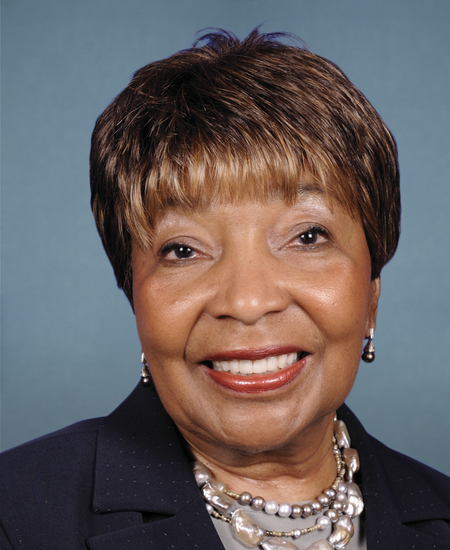
Rep. Eddie Bernice Johnson
Sponsored bills
This resolution supports the members of the 87th Texas legislature who fought against the passage of a recent piece of legislation that included provisions related to voter access.
This resolution expresses support for (1) equal rights and protections for all people, regardless of actual or perceived sexual orientation or gender identity; and (2) the designation of LGBTQ Equality Day on June 26 to commemorate Supreme Court decisions handed down on that day in 2003, 2013, and 2015. The resolution also acknowledges the need for further legislation to ensure that people in the United States are free from all forms of discrimination on the basis of actual or perceived sexual orientation or gender identity.
Backlog Justice Act of 2022 This bill requires certain actions to address the backlog of untested sexual assault kits. For example, the bill (1) directs the Bureau of Justice Assistance to establish a publicly accessible online database regarding untested kits, and (2) requires the Department of Justice to provide an increased amount of certain grant funding for states that have in place electronic evidence tracking systems for these kits.
Latonya Reeves Freedom Act of 2022 This bill prohibits government entities and insurance providers from denying community-based services to individuals with disabilities that require long-term service or support that would enable such individuals to live in the community and lead an independent life. Specifically, these entities may not discriminate against such individuals in the provision of community-based services by such actions as imposing prohibited eligibility criteria, cost caps, or waiting lists or failing to provide a specific community-based service. Additionally, community-based services must be offered to individuals with such disabilities prior to institutionalization. Institutionalized individuals must be notified regularly of community-based alternatives. The bill requires the Department of Justice to issue regulations requiring government entities and insurance providers to offer community-based long-term services to individuals with such disabilities who would otherwise qualify for institutional placement. Government entities must ensure sufficient availability of affordable, accessible, and integrated housing that is not a disability-specific residential setting or a setting where services are tied to tenancy. Regulations shall also (1) require government entities and insurance providers to perform self-evaluation on current services, policies, and practices and concerning compliance with requirements of this bill; and (2) require government entities to submit a transition plan. The bill provides funds for FY2022 for the Department of Health and Human Services to provide technical assistance with respect to transition plans. The bill allows civil actions by individuals subjected to, or about to be subjected to, a violation of its requirements.
Bringing an End to Harassment by Enhancing Accountability and Rejecting Discrimination in the Workplace Act or the BE HEARD in the Workplace Act This bill expands protections against discrimination and harassment in the workplace and raises the minimum wage for tipped employees. Specifically, the bill (1) makes it an unlawful employment practice to discriminate against an individual in the workplace based on sexual orientation, gender identity, pregnancy, childbirth, a medical condition related to pregnancy or childbirth, or a sex stereotype; and (2) provides a statutory definition for what constitutes workplace harassment. Further, these protections apply to all workplaces, regardless of size, and to all workers, including independent contractors, interns, volunteers, and trainees. The bill prohibits employers from entering into contracts or agreements with workers that contain certain nondisparagement or nondisclosure clauses and prohibits certain predispute arbitration agreements and postdispute agreements. It also establishes grant programs to (1) prevent and respond to workplace discrimination and harassment, (2) provide legal assistance for low-income workers, and (3) establish a system of legal advocacy in states to protect the rights of workers. The bill further provides employees the right to retain their tips and it increases, in specified annual increments, the minimum wage for tipped employees to match the federal minimum wage for nontipped employees. Additionally, the bill requires the Equal Employment Opportunity Commission to provide specified training and resource materials, establish and convene a harassment prevention task force, and establish an Office of Education and Outreach with regard to prohibited discrimination and harassment in employment. The bill also requires specified studies, reports, and research on prohibited workplace harassment.

Keep STEM Talent Act of 2021 This bill exempts certain aliens with advanced degrees in a science, technology, engineering, or mathematics (STEM) field from direct limitations on the number of immigrant visas granted per year. Specifically, the alien must (1) have earned a master's level or higher degree in certain STEM fields while in the United States attending an accredited higher education institution, (2) be employed (or have a job offer) in a field related to the degree and earn at least the median wage for that occupation, and (3) meet certain labor certification requirements. The bill also allows an alien seeking a nonimmigrant F-1 (student) visa to obtain an advanced STEM degree to have dual intent. Specifically, such an alien may obtain the nonimmigrant visa or change nonimmigrant status even if the alien intends to seek lawful permanent resident status. (Generally, an alien may be denied a nonimmigrant visa if the alien actually intends to seek immigrant status, unless dual intent is allowed for that type of visa.)
Preventing Vigilante Stalking that Stops Women's Access to Healthcare and Abortion Rights Act of 2021 This bill increases the maximum prison term for a stalking offense, if the offense is committed with the intent to obtain health care information of an individual or to prevent the health care decisions of an individual.
Welcoming Evacuees Coming from Overseas to Mitigate Effects of Displacement Act of 2021 or the WELCOMED Act of 2021 This bill makes certain individuals from Afghanistan eligible for any benefit that is available to a refugee, such as resettlement assistance. Specifically, this bill shall apply to a national of Afghanistan (or an individual with no nationality who last habitually resided in Afghanistan) who is temporarily paroled into the United States for urgent humanitarian reasons or significant public benefit during the four-year period beginning on July 1, 2021.
Afghan and Iraqi Allies Resettlement Improvement Act This bill addresses the settlement of Afghan and Iraqi special immigrant visa (SIV) holders. (Generally, SIV holders are individuals who received visas due to their work with the U.S. Armed Forces in Iraq or Afghanistan.) The Department of Health and Human Services must survey long-term outcomes, such as employment, housing, and educational attainment, of SIV holders as part of its annual survey of refugees. The Department of State must implement additional ways to deliver information in certain languages (i.e., Dari, Pashto, or Urdu) to prospective SIV holders about resettlement in the United States to assist with their adjustment process. The State Department and the Department of Defense must jointly establish a temporary program to offer SIV holders employment as translators, interpreters, and cultural awareness instructors.