

This resolution recognizes the cultural and historical significance of the Lunar New Year. The resolution expresses, in observance of this Lunar New Year, the Year of the Ox, the deepest respect of the House of Representatives for Asian Americans and all individuals throughout the world who celebrate this significant occasion. The resolution wishes Asian Americans and all individuals who observe this holiday a happy and prosperous new year.
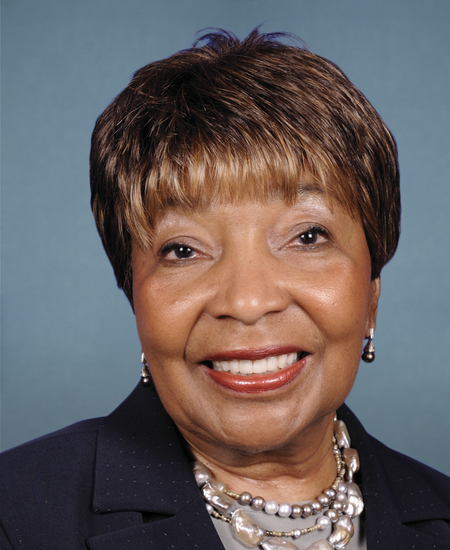
Rep. Eddie Bernice Johnson
Sponsored bills
COVID-19 Language Access Act This bill requires each federal agency that receives federal assistance related to the COVID-19 (i.e., coronavirus disease 2019) pandemic to translate any English language written material prepared for the general public relating to the pandemic, including COVID-19 vaccine distribution and education, into specified languages not later than seven days after such material is made available in English. Such languages shall include, at a minimum, the following: Spanish, Arabic, Cambodian, Chinese, Haitian Creole, French, Hindi, Hmong, Italian, Japanese, Korean, Laotian, Russian, Tagalog, Urdu, Vietnamese, Greek, Polish, Thai, and Portuguese.
"Six Triple Eight" Congressional Gold Medal Act of 2021 This bill directs the Speaker of the House of Representatives and the President pro tempore of the Senate to arrange for the award of a Congressional Gold Medal in honor of the women of the 6888th Central Postal Directory Battalion (commonly known as the Six Triple Eight) in recognition of their pioneering military service, devotion to duty, and contributions to increase the morale of personnel stationed in the European theater of operations during World War II. The medal shall be given to the Smithsonian Institution and made available for display and research.
Tech to Save Moms Act This bill supports the use of technology to improve, and address disparities in, maternal health outcomes. Specifically, the Center for Medicare and Medicaid Innovation may test telehealth models to screen and treat common pregnancy-related complications for Medicaid enrollees. In addition, the Department of Health and Human Services must award grants to evaluate and expand the use of technology-enabled collaborative learning models by entities that provide services to pregnant and postpartum individuals in medically underserved areas or from certain populations, and reduce racial and ethnic disparities in maternal health outcomes by increasing access to digital tools. The National Academies of Sciences, Engineering, and Medicine must also study the use of technology in maternal health care.
This bill requires the Surgeon General to report annually to Congress on the public health effects of gun violence and the status of actions taken to address those effects.
Future Advancement of Academic Nursing Act or the FAAN Act This bill authorizes the Health Resources and Services Administration (HRSA) to award grants to nursing schools to increase capacity to respond to public health emergencies and pandemics and otherwise enhance nursing education programs. In awarding these grants, HRSA shall prioritize historically Black colleges and universities and other minority-serving institutions, schools that are located in medically underserved communities, and schools in areas with shortages of health professionals.
Barriers to Suicide Act of 20 21 This bill requires the Department of Transportation (DOT) to establish a program to facilitate the installation of evidence-based suicide deterrents on bridges, including suicide prevention nets and barriers. DOT may award competitive grants to states and local governments to carry out the program. The Government Accountability Office must conduct a study to identify the types of structures, other than bridges, that attract a high number of individuals attempting suicide-by-jumping and the types of nets or barriers that are effective at reducing such suicides.
Supporting Children with Disabilities During COVID-19 Act This bill provides FY2021 supplemental appropriations for grants to assist states in providing special education and related services to children with disabilities and for specified early childhood education programs for children with disabilities. Additionally, the bill specifies reporting requirements related to the use of these funds. It also requires the Department of Education to publish on its website, and the Department of Health and Human Services to release, certain expenditure reports related to these funds. The amounts provided by the bill are designated as an emergency requirement pursuant to the Statutory Pay-As-You-Go Act of 2010 (PAYGO) and the Senate PAYGO rule.
Family and Medical Insurance Leave Act or the FAMILY Act This bill entitles every employee to a family and medical leave insurance (FMLI) monthly benefit payment of two-thirds of the employee's regular pay, limited to a maximum of $4,000, for not more than 60 days of qualified caregiving. The bill establishes the Office of Paid Family and Medical Leave within the Social Security Administration to administer the FMLI program. An FMLI benefit payment must be coordinated with any periodic benefits received under a state or local temporary disability insurance or family leave program. The bill imposes a tax on employers, employees, and self-employed individuals to fund FMLI benefits. It also establishes the Federal Family and Medical Leave Insurance Trust Fund to hold tax revenues.
Retail Revitalization Act of 2021 This bill modifies rules related to rents received by real estate investment trusts (REITs) from related parties. It increases the permissible stock ownership and constructive stock ownership percentage in a REIT to 50% and modifies rules for taxable REIT subsidiaries.