

National Wildland Fire Risk Reduction Program Act This bill directs the President to establish a National Wildland Fire Risk Reduction Program to achieve major measurable reductions in the losses of life and property from wildland fires. This program shall coordinate federal efforts to improve the assessment of fire environments and the understanding and prediction of wildland fires, associated smoke, and their impacts; develop and encourage the adoption of science-based and cost-effective measures to prevent and mitigate wildland fire and associated smoke impacts; and improve the understanding and mitigation of the impacts of climate change and variability on wildland fire risk, frequency, and severity and inform the other goals described here. Not later than 90 days after enactment of this bill, the Office of Science and Technology Policy shall establish an Interagency Coordinating Committee on Wildland Fire Risk Reduction to oversee the planning, management, and coordination of the program. The committee shall submit a strategic plan for the program to Congress. The Government Accountability Office shall submit a report to Congress on the progress and performance of the program. Further, the bill sets forth the responsibilities of the National Institute of Standards and Technology, National Science Foundation, National Oceanic and Atmospheric Administration, Federal Emergency Management Agency, National Aeronautics and Space Administration, Environmental Protection Agency, and Department of Energy with respect to the program.
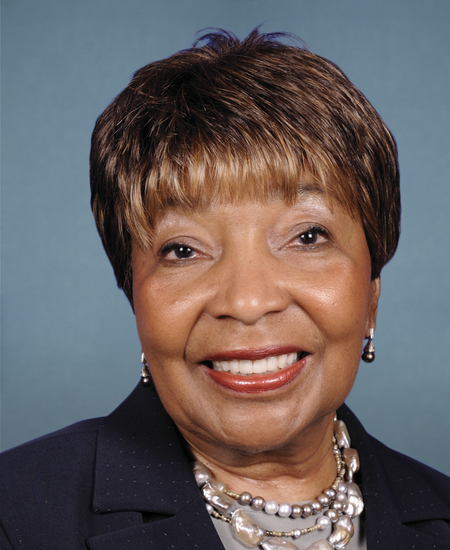
Rep. Eddie Bernice Johnson
Sponsored bills
Protect Older Job Applicants Act of 2021 or the POJA Act of 2021 This bill prohibits employers from limiting, segregating, or classifying job applicants based on an applicant's age. It also requires the Equal Employment Opportunity Commission to study and report on claims received from job applicants involving age discrimination.
Let Our Cities And Local businesses Help Employees Achieve Long-Term Health Act or the LOCAL HEALTH Act This bill authorizes private businesses and local governments and agencies to require the use of face masks and take other measures aligned with Centers for Disease Control and Prevention guidelines to prevent the spread of COVID-19, provided that the required measures accommodate individuals with disabilities and include exemptions for sincerely held religious beliefs. The bill also (1) prohibits a state from establishing or enforcing a law that restricts an authorized measure, and (2) provides immunity to private businesses and local government entities from federal or state claims arising from an authorized measure unless the claim involves negligent behavior or willful misconduct.
Ending the Monopoly of Power Over Workplace Harassment through Education and Reporting Act or the EMPOWER Act This bill makes it an unlawful labor practice for an employer to enter into, or attempt to enforce, a contract with an employee or job applicant that contains a nondisparagement or nondisclosure clause that covers workplace or sexual harassment, including retaliation for participating in a workplace harassment proceeding. The bill exempts certain settlement or separation agreements from such prohibition. The bill also requires the Securities and Exchange Commission to promulgate a regulation that requires any issuer of securities to submit a report for the most recent five-year period with respect to workplace and sexual harassment. The commission must provide for the development and dissemination of training programs and information regarding workplace and sexual harassment. The bill denies a tax deduction for amounts related to judgments and expenses in connection with litigation related to workplace or sexual harassment. It also excludes from gross income, for income tax purposes, any amount received in connection with a claim or settlement related to workplace or sexual harassment, or other unlawful discrimination.
Social Security 2100: A Sacred Trust This bill makes changes to Social Security benefits, taxes, and other aspects of the program, including by raising the primary insurance amount, increasing the maximum taxable earnings that are subject to Social Security payroll taxes, and requiring Social Security account statements to be mailed unless the individual recipient opts for electronic delivery.
Original National Domestic Violence Awareness Month Resolution of 2021 This resolution supports the goals and ideals of National Domestic Violence Awareness Month. Further, it expresses the sense of the House of Representatives that Congress should continue to raise awareness of and support programs to end domestic violence.
Public Service Freedom to Negotiate Act of 20 21 This bill provides minimum collective bargaining rights and procedures for public employees and prohibits strikes by certain public safety workers. The Federal Labor Relations Authority (FLRA) shall determine for each state whether the laws of such state substantially provide for each of the minimum standard collective bargaining rights and procedures specified by this bill, including the right of public employees and supervisory employees to self-organize, form or join a labor organization, or collectively bargain. The FLRA must issue rules and take actions to establish and administer bargaining rights and procedures for those states that do not substantially provide for them. No employers, emergency services employees, or law enforcement officers may engage in a lockout, strike, or any other organized job action that is likely to result in a measurable disruption of the delivery of emergency or public safety services. Furthermore, no labor organization may be the cause of a violation of such prohibition.
State, Local, Tribal, and Territorial Fiscal Recovery, Infrastructure, and Disaster Relief Flexibility Act This bill allows states, tribes, territories, and localities to use certain COVID-19 relief funds for new categories of spending, including for natural disasters and infrastructure projects. It also makes changes to expenditure deadlines and other aspects of this funding. Specifically, recipients may use funds for emergency relief from natural disasters and associated negative economic impacts of natural disasters. In addition, recipients may use a portion of their COVID-19 relief funds for designated infrastructure projects, such as nationally significant freight and highway projects. Furthermore, the bill allows recipients to expend COVID-19 relief funds on these types of infrastructure projects until September 30, 2026. Under current law, recipients must expend the funds by December 31, 2024. Other changes in the bill include (1) modifying eligibility and allocation requirements for funding set aside for counties and Indian tribes that are near public lands, (2) allowing Indian tribes an additional year to expend their COVID-19 relief funds, and (3) establishing a process for government entities to decline COVID-19 relief funds and requiring any declined funds to be used to reduce the federal deficit.
This concurrent resolution recognizes the disparity between wages paid to Latina women, and its impact on women, families, and the nation and reaffirms Congress' commitment to supporting equal pay and to narrowing the gender wage gap.
This resolution commemorates the 75th anniversary of The Links, Incorporated, a nonprofit volunteer organization with a mission of ensuring the cultural and economic survival of African Americans and other persons of African ancestry.