

Maddy summaryHR 506, the HARM Act, requires the U.S. Secretary of State to designate the Wagner Group as a foreign terrorist organization under immigration law within 90 days of the bill's enactment. This designation would directly affect the Wagner Group and its affiliated entities, subjecting them to sanctions under U.S. law. The bill mandates that the designation apply to any successor or affiliated groups engaged in activities against U.S. interests, including operations in Ukraine, Africa, and the Middle East. It also requires the Secretary of State to submit an annual report on the Wagner Group's international activities to specific congressional committees. The bill focuses on the legal process for designation, not on outcomes or advocacy.
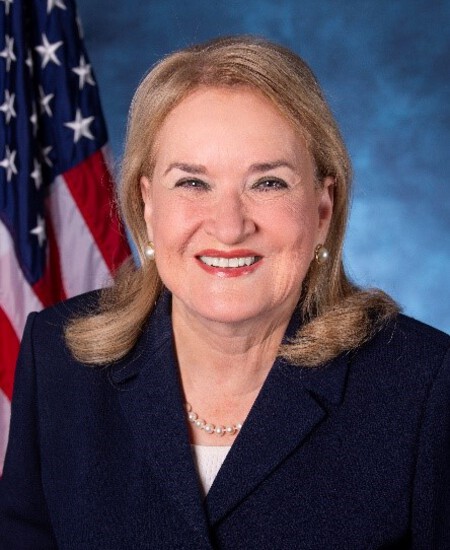
Rep. Sylvia R. Garcia
Sponsored bills
This resolution commends the role of the U.S. government in improving access to quality, inclusive education, and improved learning outcomes for the poorest and most marginalized children and adolescents around the world. It calls on the Department of State and the U.S. Agency for International Development to use all diplomatic, humanitarian, and developmental means to promote access to such quality education.
Maddy summaryHR 286, the Health Care Providers Safety Act of 2023, provides federal grants to healthcare providers to improve security at their facilities. The bill authorizes the Secretary to fund security services and physical/cyber security enhancements, including video surveillance, data privacy measures, and structural improvements. These grants directly help healthcare facilities, personnel, and patients by addressing safety concerns. The law specifies that funds must be used for necessary security costs to ensure safe access to healthcare services. It does not create new mandates but offers financial support for security upgrades.
Maddy summaryHR 396, the Closing the Bump Stock Loophole Act of 2023, defines "bump stock" as any device or modification that increases the firing rate of a semi-automatic weapon to mimic a machine gun. The bill amends federal tax and firearms laws to classify bump stocks as prohibited devices under the National Firearms Act, requiring existing owners to register them within one year of enactment. It directly affects individuals who currently own bump stocks by mandating registration to avoid future possession prohibitions. The law takes effect immediately for new sales but provides a one-year grace period for existing owners to comply with registration requirements.
Maddy summaryHRES 36 is a symbolic resolution supporting Korean American Day, introduced by multiple House members on January 13, 2023. It honors the 120th anniversary of the 1903 arrival of the first large wave of Korean immigrants to the U.S. and recognizes Korean Americans' contributions to U.S. society, economy, and the U.S.-South Korea alliance. The resolution urges all Americans to observe Korean American Day to appreciate these contributions but does not create new laws or affect any specific group through policy changes. It is a commemorative measure without binding requirements.
Maddy summaryThis bill requires colleges to notify students receiving federal work-study aid about their potential eligibility for the Supplemental Nutrition Assistance Program (SNAP). It mandates that institutions send electronic notifications (via email or other digital means) to these students, explaining SNAP eligibility requirements, state-specific application processes, and including a document confirming their work-study status to satisfy SNAP eligibility rules. The bill directly affects undergraduate and graduate students participating in federal work-study programs who may qualify for food assistance but lack awareness of SNAP. The key mechanism is the standardized notification developed by the Education and Agriculture Departments, designed to streamline access to nutrition benefits for students facing food insecurity.
This resolution condemns all acts of political violence, as well as attacks on health care facilities, health care personnel, and patients. The resolution also states that all people have the freedom to access reproductive health care services and medical advice without fear of violence, intimidation, or harassment. Finally, the resolution calls on the Biden Administration to use all appropriate authorities to uphold public safety, protect health care facilities, and safeguard health care personnel and patients.
Maddy summaryH.J.Res. 14 proposes amending the U.S. Code to require the President to issue an annual proclamation designating a day as "Democracy Day." The proclamation would call on state and local governments, educational institutions, and the public to observe the day with programs and activities promoting democratic values. It does not fix a specific date (though the preamble references January 6 as a potential day), leaving the annual designation to the President's discretion. The bill directly affects the President and state/local authorities by establishing a formal mechanism for nationwide civic observance of democracy.
Maddy summaryHR 51, the Washington, D.C. Admission Act, would admit Washington, D.C. as the 51st state, named "Washington, Douglass Commonwealth," granting its residents full representation in Congress with two Senators and one Representative. The bill establishes procedures for admission, including elections for state officials, with the state initially having one Representative until the next congressional apportionment. It would create a "Capital" area (including the White House, Capitol, and other key federal buildings) that remains under federal jurisdiction as the seat of the U.S. government, while the rest of the District becomes the new state. The bill also includes provisions to ensure continuity of federal services, property management, and legal procedures during the transition to statehood.
Commission to Study and Develop Reparation Proposals for African Americans Act This bill establishes the Commission to Study and Develop Reparation Proposals for African Americans. The commission must (1) compile documentary evidence of slavery in the United States; (2) study the role of the federal and state governments in supporting the institution of slavery; (3) analyze discriminatory laws and policies against freed African slaves and their descendants; and (4) recommend ways the United States may recognize and remedy the effects of slavery and discrimination on African Americans, including through a formal apology and compensation (i.e., reparations). The commission consists of individuals from civil society and reparations organizations and individuals appointed by the President and congressional leadership; Members of Congress and governmental employees may not serve on the commission. The commission may hold hearings, subpoena witnesses and records, and contract with other entities to conduct its work. The commission must submit its final report within 18 months of its first meeting.