

Maddy summaryHRES 1040 is a ceremonial House resolution recognizing February as Black History Month. It formally acknowledges the achievements of Black Americans throughout U.S. history and encourages continued celebration of this observance. The resolution highlights the cultural and artistic contributions of Black Americans, including historical figures and movements like the Harlem Renaissance and hip-hop. As a non-binding resolution, it does not create new programs or affect any specific group, but serves to affirm the importance of commemorating Black history.
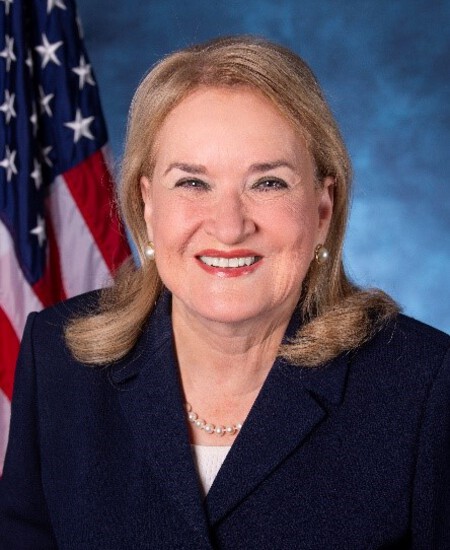
Rep. Sylvia R. Garcia
Sponsored bills
Expanding Opportunity for Minority Depository Institutions Act or the Expanding Opportunity for MDIs Act This bill establishes the Financial Agent Mentor-Protégé Program within the Department of the Treasury. The program provides participating minority deposit institutions and small financial institutions with mentorship from large financial institutions or from financial agents designated by Treasury. This mentorship prepares protégé institutions to improve service capacity or to perform as financial agents for the federal government.
Maddy summaryThis bill directs the Secretary of State to actively use U.S. diplomatic resources, including the voice and influence of U.S. diplomats and officials at the International Boundary and Water Commission, to advance efforts ensuring Mexico complies with the 1944 water treaty. It requires U.S. officials to work toward establishing reliable water delivery agreements under the treaty for the Colorado, Tijuana, and Rio Grande rivers. The key mechanism is mandating diplomatic engagement to address Mexico's compliance with treaty obligations, aiming to secure predictable water flows for U.S. users. The bill affects U.S. diplomatic operations and water management coordination with Mexico, focusing on treaty implementation rather than new water infrastructure.
Maddy summaryThe Peace Corps and AmeriCorps Student Loan Forgiveness Act amends federal student loan rules to count months of deferment or forbearance during service as Peace Corps volunteers or AmeriCorps members toward Public Service Loan Forgiveness. It applies to borrowers with eligible federal student loans who were in deferment or forbearance after October 1, 2007, while serving in approved Peace Corps or AmeriCorps roles. This change treats each qualifying service month as a "qualifying payment," reducing the time needed to reach the 120 required payments for loan forgiveness. The bill directly benefits current and former Peace Corps volunteers and AmeriCorps members with federal student loans.
Maddy summaryThis resolution proposes creating a Permanent Select Committee on Aging in the U.S. House of Representatives. The committee would study issues affecting older Americans - such as income security, healthcare, housing, and long-term care - without having the power to pass laws. It would review existing government and private programs, develop coordination strategies for aging-related services, and assess recommendations from the President or the White House Conference on Aging. The committee’s work would inform future policy discussions but would not directly change legislation.
Maddy summaryThis symbolic resolution (HRES 1026) recognizes Black History Month and honors the 94 African-American recipients of the Congressional Medal of Honor for their military bravery, heroism, and valor. It does not create new laws or policies but formally acknowledges their contributions, referencing historical context like Sergeant William Harvey Carney’s 1863 actions and the 1993 study revealing racial discrimination in Medal of Honor awards during WWII. The resolution specifically calls for the House to recognize Black History Month and honor these 94 service members. It is a non-binding expression of support with no concrete policy changes.
Maddy summaryHRES 1024 is a symbolic resolution recognizing World Thinking Day (observed February 22) as an annual event where Girl Scouts and Girl Guides worldwide, including U.S. members of Girl Scouts of the USA (GSUSA), celebrate international friendship and advocate for issues affecting girls. It specifically highlights the 2024 theme focused on environmental stewardship and global poverty, noting that over 9 million girls in 153 countries participate annually. The resolution has no policy or funding impact - it solely affirms the significance of this global observance for girls' leadership and advocacy.
Maddy summaryHR 7424, the Renewable Roadsides Act, requires the U.S. Departments of Transportation and Energy to study the feasibility of developing solar energy projects (including generation, storage, and transmission) on federal land adjacent to the National Highway System. The study, due by December 2025, will assess land suitability, identify barriers like safety concerns or competing land uses, and evaluate federal requirements. By December 2026, the agencies must submit a report to Congress with findings, recommendations for enabling such projects, and a process for entities to apply for leases or agreements to build and operate these facilities. The bill does not fund or mandate solar projects but sets the stage for potential future development by analyzing logistical and regulatory pathways. It directly affects federal agencies and could influence future policy on utilizing highway-adjacent federal land for renewable energy.
Maddy summaryThe Connect the Grid Act modifies federal energy regulations to improve grid connectivity, primarily affecting ERCOT (Texas' grid) and neighboring transmission organizations like SPP and MISO. It repeals exemptions for ERCOT under the Federal Power Act and establishes minimum power transfer requirements between ERCOT and other grids (e.g., 4.3-12.6 gigawatts to SPP). The bill requires joint planning by grid operators to build or upgrade transmission facilities by 2035, prioritizing grid-enhancing technologies, existing infrastructure corridors, environmental justice communities, and renewable energy access. Projects must follow environmental reviews under NEPA and the Endangered Species Act, with mandatory community outreach to tribal, Indigenous, and low-income groups.
Maddy summaryHR 7378, the Frederick Douglass Congressional Gold Medal Act, authorizes Congress to posthumously award a gold medal to honor Frederick Douglass's legacy as a pivotal abolitionist, writer, and advocate for civil rights. The medal, designed by the Treasury Secretary, will be presented to the National Museum of African American History and Culture for display, with bronze duplicates available for sale to cover costs. This ceremonial bill does not create new laws or affect current policies - it solely commemorates Douglass's historical contributions to ending slavery and advancing equality.